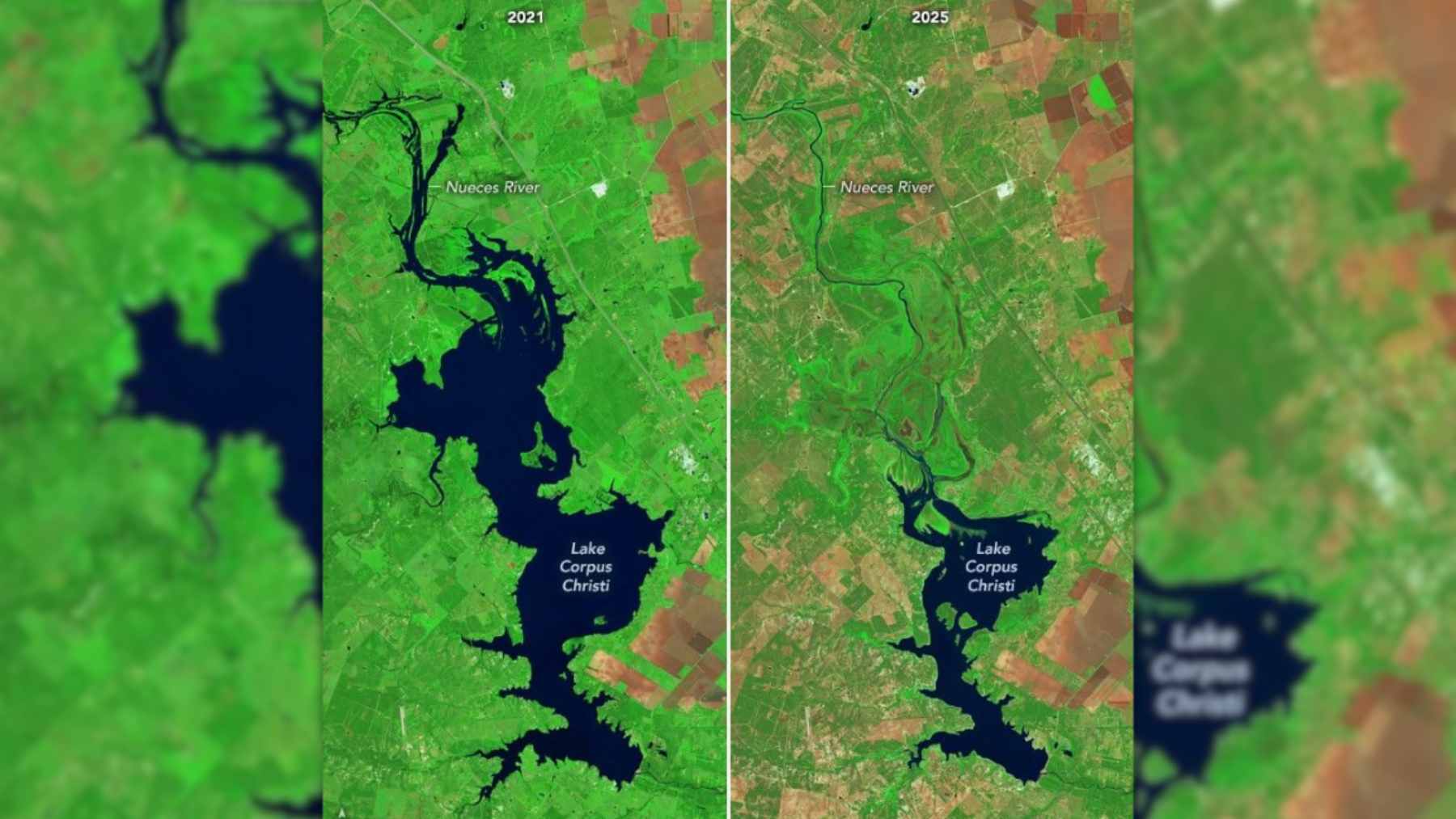
Lake Corpus Christi and the nearby Choke Canyon Reservoir are down to 8.2% combined storage. This one system helps supply roughly 500,000 people across seven counties, plus a dense cluster of refineries and chemical plants along the Gulf Coast.
What happens when the city that helps fuel the nation starts running short on water? Corpus Christi is now racing to stretch a shrinking reservoir supply while it decides whether desalination and water reuse can keep industry growing without leaving residents and ecosystems behind.
Reservoirs nearing empty
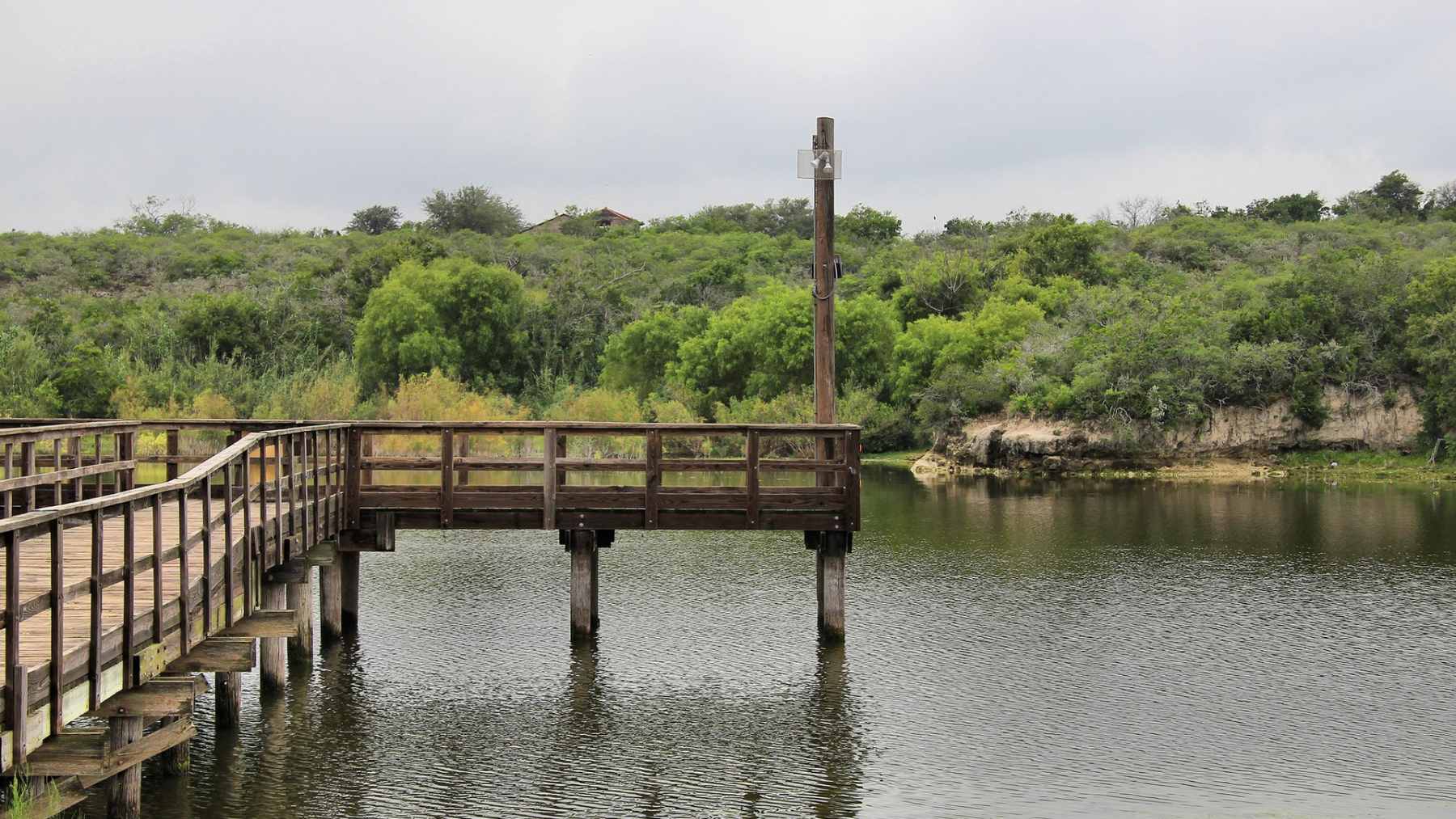
Corpus Christi’s Stage 3 drought dashboard puts the moment in stark numbers, with the two main reservoirs at 8.2% as of March 27, 2026. Residents have described docks stretching over dry ground and lakebed that has turned into grass.
Stage 3 restrictions largely pause outdoor watering, while indoor use like showers and laundry can continue. Violations can bring fines of up to $500 per day, which is a pretty sharp penalty when all you wanted was to keep a few plants alive through the burning summer heat.
The city’s water supply dashboard uses a blunt trigger for a “Level 1” water emergency, roughly when projected supply is only 180 days ahead of demand. Recent reporting suggests some scenarios could bring that point forward, even if no one can pin down the exact week yet.
Industry’s water math
City and industry officials say industrial users account for roughly 50% to 60% of Corpus Christi’s water demand. That is why this drought story is not only about lawns and pools, it is also about refinery cooling systems and manufacturing lines.
A flashpoint is the city’s “Drought Surcharge Exemption Fee” program, which allows participating large industrial users to pay $0.31 per 1,000 gallons each month as a fixed payment structure if emergency surcharges are implemented.
City officials say that does not let industry ignore Stage 1 through Stage 3 restrictions, and they estimate the program generates about $6 million per year for future water projects, but community groups are still pushing for changes.
The stakes go well beyond city limits. The Texas Tribune reports the region has close to 1 million barrels per day of refining capacity, including about 450,000 barrels of gasoline, and officials say that is roughly 5% of the nation’s refined products, including jet fuel.
If water limits force units offline, it could tighten supplies and nudge prices, which is the kind of ripple effect you feel at the pump.
Desalination and the energy tradeoff
Seawater desalination is back at the center of the plan, with an April 2026 council review and an emergency meeting set for April 9. A new team, Corpus Christi Desal Partners, presented a preliminary guaranteed maximum price of $978.77 million, which the city says is 25.5% lower than a prior $1.3 billion estimate.
Desalination is often pitched as “drought-proof,” but it comes with an energy bill that shows up on utility budgets, and eventually, household rates. An IRENA and IEA technology brief says large-scale seawater reverse osmosis typically uses about 3.5 to 5.0 kilowatt-hours of electricity per cubic meter of water–it is not free water.
Then there is the bay itself. UNEP has warned that brine and treatment chemicals can harm marine ecosystems if discharge is not properly managed, and it notes that desalination can generate more wastewater concentrate than freshwater.
Corpus Christi officials argue their modeling shows no adverse impacts to the bay, and they point to a high-force jet diffuser design intended to return salinity toward ambient levels quickly.
Reuse and groundwater as the bridge
Even if the seawater plant moves ahead, it is not the only lever. The city says a nearly $1 billion portfolio of projects is expected to add up to 76 million gallons per day of new capacity over the next 24 months, leaning heavily on groundwater and reclaimed water.
One practical step is industrial reuse. Corpus Christi approved a reclaimed water agreement with Flint Hills Resources that starts at up to 1 million gallons per day of treated wastewater and could expand to 2 million gallons per day, pushing some industrial demand away from potable supplies.
Brackish water desalination is also moving, and it is a different flavor of the same tech. The city says a brackish desalination project tied to its western well field is designed to ramp up to 21.3 million gallons per day by the second year, while sending water straight to treatment to reduce evaporation losses.
Water security is also national security
Water stress is on the radar of defense planners, not just city managers. A GAO review found that Pentagon-level assessments identified 95 active-duty installations as at risk of water scarcity, and it notes that shortages can curb mission-related activities.
Corpus Christi adds another layer because it is an energy and fuels hub where water limits could slow production of gasoline and jet fuel.
The next checkpoints are what the city council does in April on Inner Harbor desalination and how quickly reuse and groundwater projects translate into real water for homes and industry.
The press release was published on City of Corpus Christi.