China says it has built a compact twenty gigawatt microwave power system that could sit at the heart of future antisatellite weapons.
The device, called TPG1000Cs, is already being framed in Chinese and international media as a potential “Starlink killer” aimed at low Earth orbit constellations such as Starlink.
A lab box that hides a huge amount of power
Researchers at the Northwest Institute of Nuclear Technology in the city of Xi’an describe the system in a new peer reviewed paper on pulsed power engineering.
The TPG1000Cs is a Tesla transformer based driver that produces short pulses with a peak power of about twenty gigawatts, repeating up to fifty times per second for a full minute, all inside hardware roughly four meters long and about five metric tons in mass.
For earlier high power microwave drivers, engineers usually had to choose between brute force and practicality. Many were bigger, heavier and could only stay at maximum output for a few seconds before overheating or running out of stored energy.
The Chinese team reports continuous one minute runs that add up to around two hundred thousand test pulses, and outside summaries say the setup can deliver roughly three thousand high energy shots in a single operating session.
In everyday terms, this is less a ray gun and more the power plant behind one. The TPG1000Cs does not emit microwaves on its own. It feeds that energy into a separate high power microwave source and antenna, which would then shape and aim the beam.
Why low orbit networks feel exposed
So why does a pulsed power box worry people who just want their satellite internet to work on a road trip or in a remote village. High power microwave weapons focus intense bursts of radio energy on electronics.
Instead of blowing a satellite apart, they can couple into antennas and circuit boards, scrambling or burning out components while leaving no debris cloud behind.
Chinese experts quoted by the South China Morning Post argue that even a ground based microwave weapon around one gigawatt could seriously disrupt satellites in low orbit, including commercial systems.
A driver capable of twenty gigawatts, paired with the right microwave source and a precise tracking system, could in principle target constellations such as those operated by SpaceX from the ground, from ships or from aircraft.
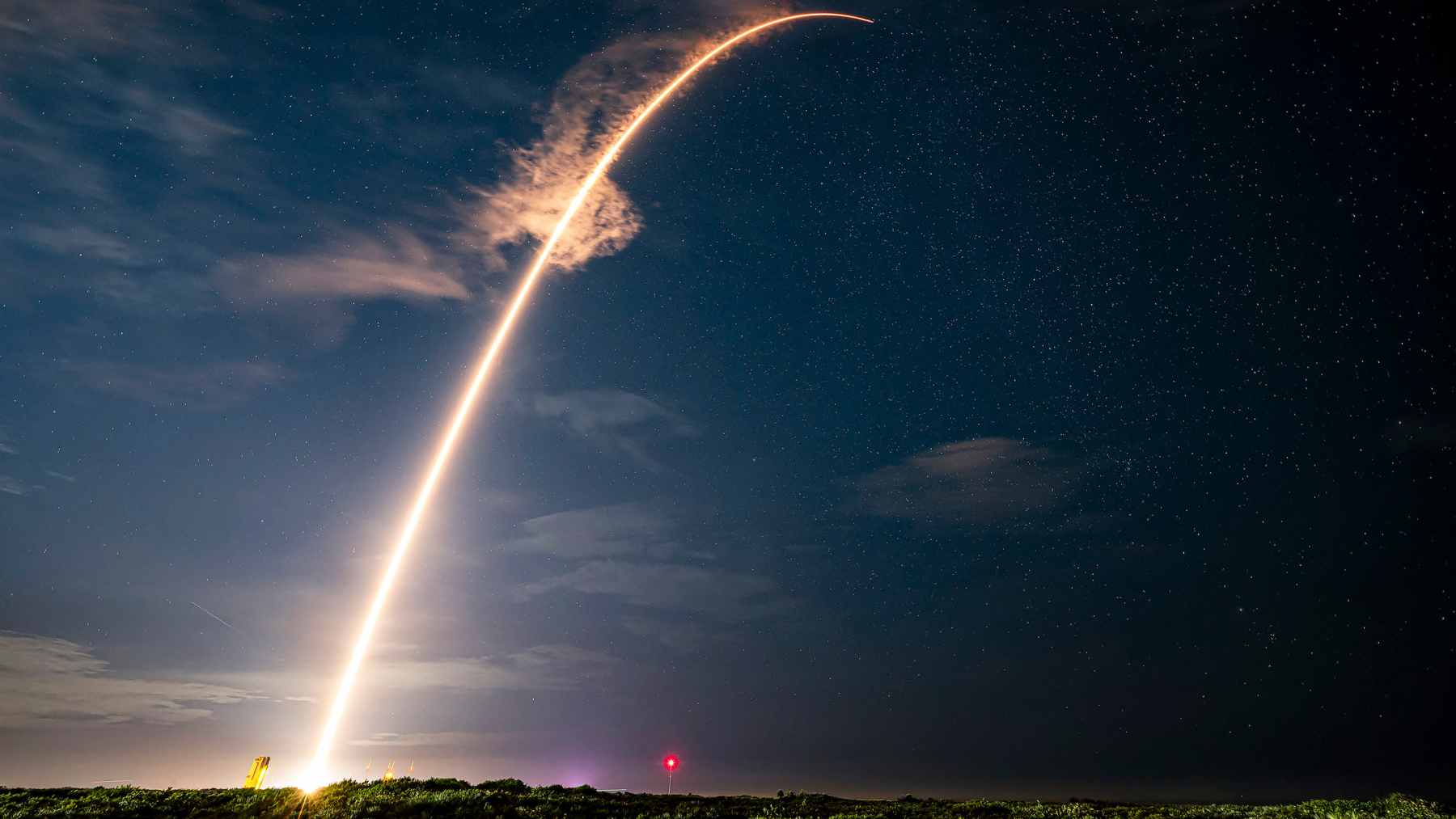
At the same time, Starlink itself is moving. Early this year, company executives confirmed that about four thousand four hundred satellites will be lowered from roughly five hundred fifty kilometers to about four hundred eighty kilometers altitude as part of a safety driven reconfiguration of the network.
That change shortens the lifetime of failed satellites and helps with debris, but it also brings the constellation a little closer to any future directed energy systems sitting on the surface.
Inside the TPG1000Cs engineering leap
Behind the headlines, the technical paper reads like a careful piece of power electronics design. Lead author Wang Gang and colleagues describe a compact Tesla transformer driver that uses a high energy density insulating liquid called Midel 7131 along with a dual width pulse forming line and an optimized short transmission path.
Those choices let the system reach its twenty gigawatt peak while keeping pulse shape variations under roughly two percent during one minute runs.
The team also redesigned the internal layout and insulation. Grooved support plates and a refined vacuum oil impregnation process are meant to reduce tiny electrical breakdowns that would otherwise limit reliability.
A comparison table in the paper shows the TPG1000Cs matching or beating earlier twenty gigawatt class drivers while holding weight at about five tons and sustaining operation for sixty seconds rather than a handful of seconds.
A quieter path to space warfare
For militaries, high power microwaves promise relatively cheap shots and less visible damage than missiles.
For everyone else, experts warn that they raise the risk of “invisible” attacks on communications, navigation and earth observation satellites that support daily life, from GPS in a delivery van to emergency calls routed through satellite links after a storm.
Right now, TPG1000Cs is a laboratory driver rather than a deployed weapon. Real systems would still need rugged microwave sources, agile pointing, and would have to contend with the physics of spreading beams over hundreds of kilometers.
Yet the pace of this work suggests that rules for directed energy in space can no longer stay hypothetical.
The study was published on High Power Laser and Particle Beams.