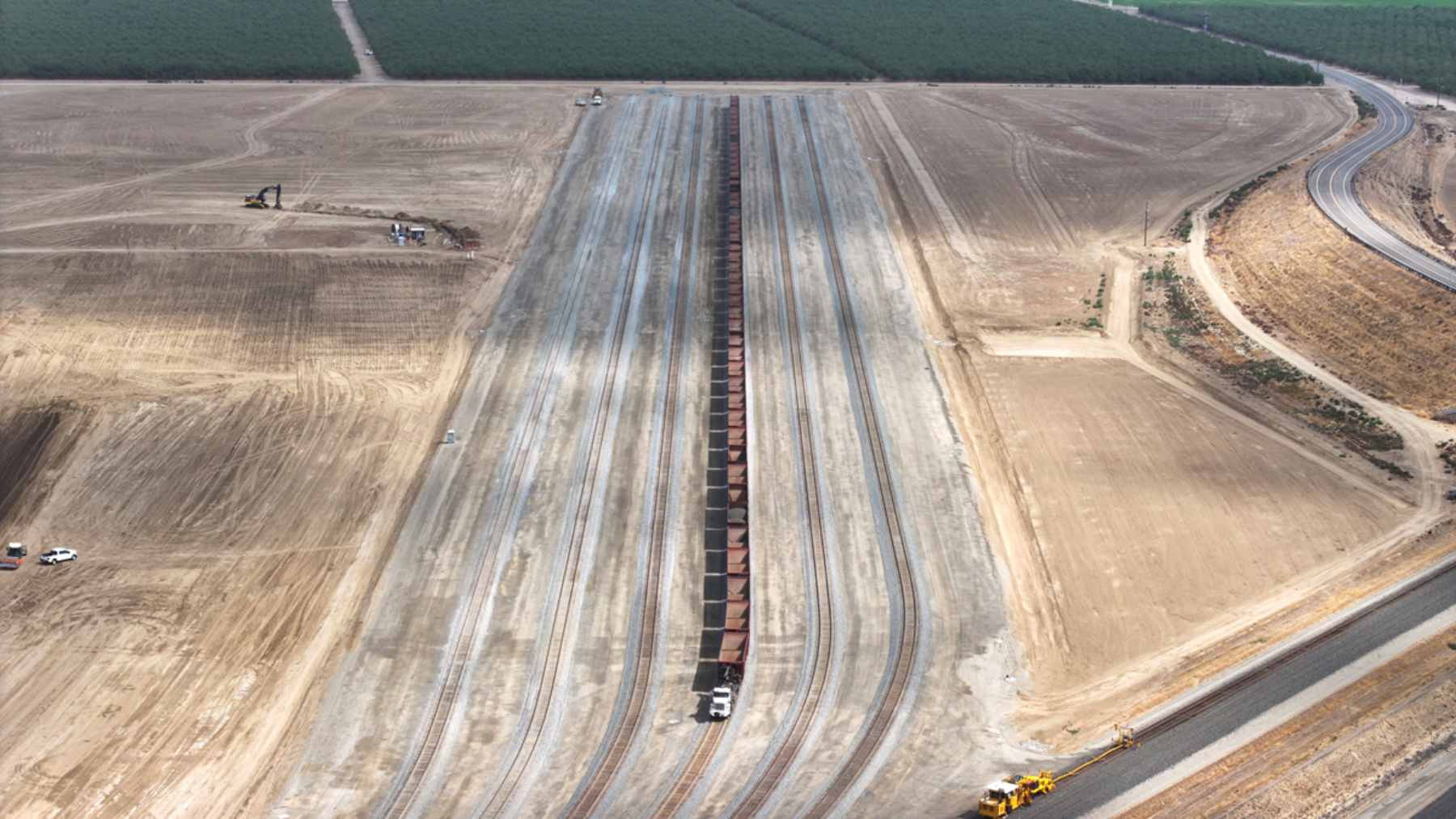
California’s long-running high-speed rail effort has reached a surprisingly important checkpoint. State officials say the 150-acre Southern Railhead Facility near Wasco in Kern County is now complete, which means crews can start receiving, storing, and deploying the materials needed for track and electrified systems.
It’s not the kind of milestone that makes for flashy photos like a new bridge span. But if you care about cleaner transportation and what it takes to actually build it, this rail yard is where the promise starts to become physical. And yes, the questions about cost and timelines are still there, hanging in the air like shimmering freeway heat.
The railhead effect
A railhead is basically a construction supply hub where heavy materials arrive by train, get staged, and then move out to active work zones.
California’s new southern railhead is the first built specifically for the state’s high-speed rail program, and it connects directly to the national freight rail network with about 10 miles of temporary siding and storage tracks built with BNSF Railway.
This is key because steel rail, concrete ties, ballasts, poles, and other bulky items move better in bulk. Fewer trucks hauling oversized loads up and down Central Valley roads can mean less congestion, less diesel exhaust near towns, and fewer of those slow-moving convoys that turn a normal drive into a long one.
This is also happening in a state where transportation is the biggest source of U.S. greenhouse gas emissions overall, according to the EPA. So even before the first passenger boards, decisions about how materials move and how the final system runs are part of the environmental math.
The business math
Governor Gavin Newsom’s office framed the railhead as the step that kicks off the “track installation phase,” and he called it “another critical step in the track-laying stage.”
The same announcement says the broader project now has 119 miles under active construction, more than 80 miles of guideway finished, and 58 major structures completed, which is the state’s way of showing this is not just planning work anymore.
Money, however, is still the headline behind the headline. The state points to a stronger funding runway after the renewal of California’s Cap-and-Invest program, describing a fixed annual appropriation of $1.0 billion through 2045.
That kind of predictability is what big infrastructure projects usually beg for, especially when they’ve spent years lurching from one funding patch to the next.
The cost picture remains complicated, and the state is now putting newer numbers on the record. In the California High-Speed Rail Authority’s 2026 Draft Business Plan, Phase 1 capital costs are listed at about $126.2 billion in year-of-expenditure dollars, with about $14.8 billion shown as expended through December 2025.
The same table also notes how estimation methods can swing the story, including a line stating that applying a newer “bottom-up” method to the 2024 plan’s full Phase 1 scope would have raised that estimate to $231.3 billion.
The tech bottleneck
This railhead milestone matters because the project is gradually shifting from heavy civil work into systems.
The Authority has already been teeing up that transition with a roughly $3.5 billion procurement for track and systems work, which includes track, overhead contact system electrification, train control, communications, testing, and safety certification.
The railhead factsheet gives a clear hint about what’s coming next. It says bids are being sought for key components like ballasts, overhead contact system poles, long welded rail, and concrete ties, and it anticipates awarding a track and overhead contact system construction contract in 2026.
That’s the part where high-speed rail stops being “earthmoving” and starts being “precision engineering.”
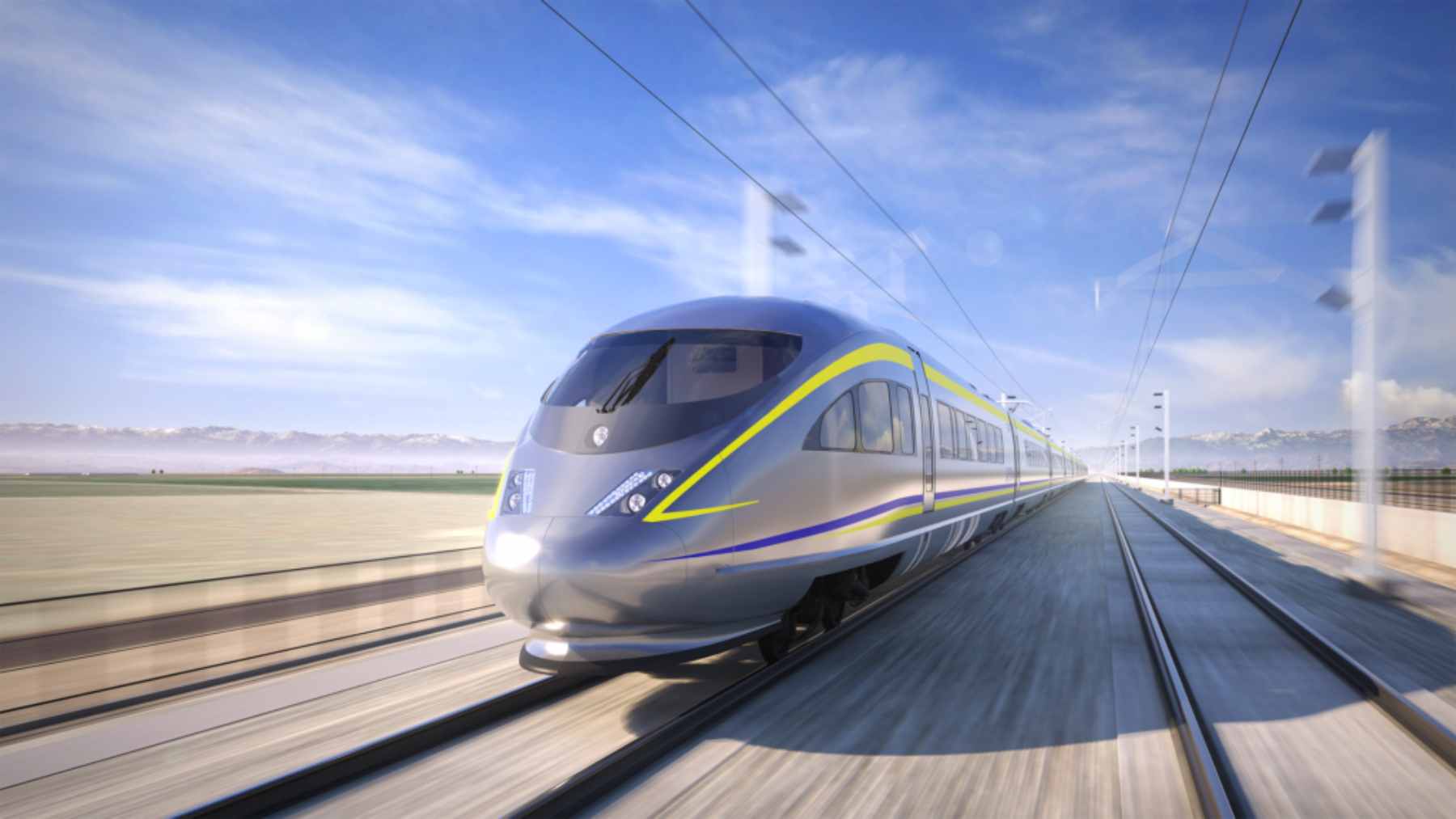
Speed is also why the tech stack is unforgiving. California’s system is designed for trains that can travel up to 220 miles per hour, and at those speeds, everything from signaling to power delivery has to work exactly right, every time.
Security and resilience
Environmental projects don’t live in a bubble, especially when they become critical infrastructure. The Authority’s own reporting argues that grade separations and crossing upgrades can improve emergency response times and help freight trucking operate more efficiently, even before high-speed trains run.
It also says reduced vehicle miles traveled could prevent 1,346 fatal crashes and produce $56 billion in total benefits, which is a reminder that safety and emissions often move together.
Then there’s cybersecurity, which is easy to overlook until something goes wrong. Federal transit guidance points to TSA-driven cybersecurity expectations for rail and transit operators, including designating a cybersecurity coordinator, reporting incidents to CISA, and completing vulnerability assessments and incident response planning.
When a rail project’s next phase includes train control and communications systems, those requirements are not background noise.
Rail also matters in the defense world, even if this project is civilian. The U.S. Army has described STRACNET as a network of key rail lines that supports moving equipment among defense sites, and a Department of Defense manual describes STRACNET as the minimum rail network required to support DoD missions.
That’s part of why rail corridors, yards, and control systems tend to get extra attention once they become operationally important.
What to watch
If you’re trying to track real progress, the next signals are pretty tangible. Watch for the 2026 contract award the Authority expects for track and overhead contact system work, and for visible delivery and staging of materials at the Wasco-area railhead as procurement ramps up.
Also keep an eye on the test timeline, because testing is where promises meet physics. The Authority’s Central Valley project page says testing of the initial electrified high-speed rail line is planned to commence in 2028, which effectively puts the next two years in the spotlight for power, signaling, and system integration work.
At the end of the day, this railhead is a reminder that the climate impact of transportation is built one supply chain decision at a time.
The official statement was published on CA.gov.