Germany has thrown its political weight behind an ambitious plan to pull electricity straight from the Sahara into its own grid. The Sila Atlantik project would link Morocco and Germany with roughly 4,800 kilometers of subsea cable and deliver up to five percent of Germany’s current power demand from solar and wind.
In a recent letter to Morocco’s investment minister, State Secretary Frank Wetzel at the German economy ministry welcomed the project, praised its “ambitions and potential” and signaled Berlin’s readiness to keep talks moving.
Officials on both sides describe it as a new milestone in the long running Moroccan German energy partnership.
Why would Germany look thousands of kilometers south for electricity instead of building everything at home. In simple terms, Moroccan sunshine and steady trade winds can deliver more hours of clean power than many European sites, which is valuable when winter clouds roll in and demand is still high.
How the green cable would work
Sila Atlantik plans up to 15 gigawatts of new solar and wind farms in Morocco, paired with large battery systems that developers say can provide more than twenty hours of clean electricity on an average day.
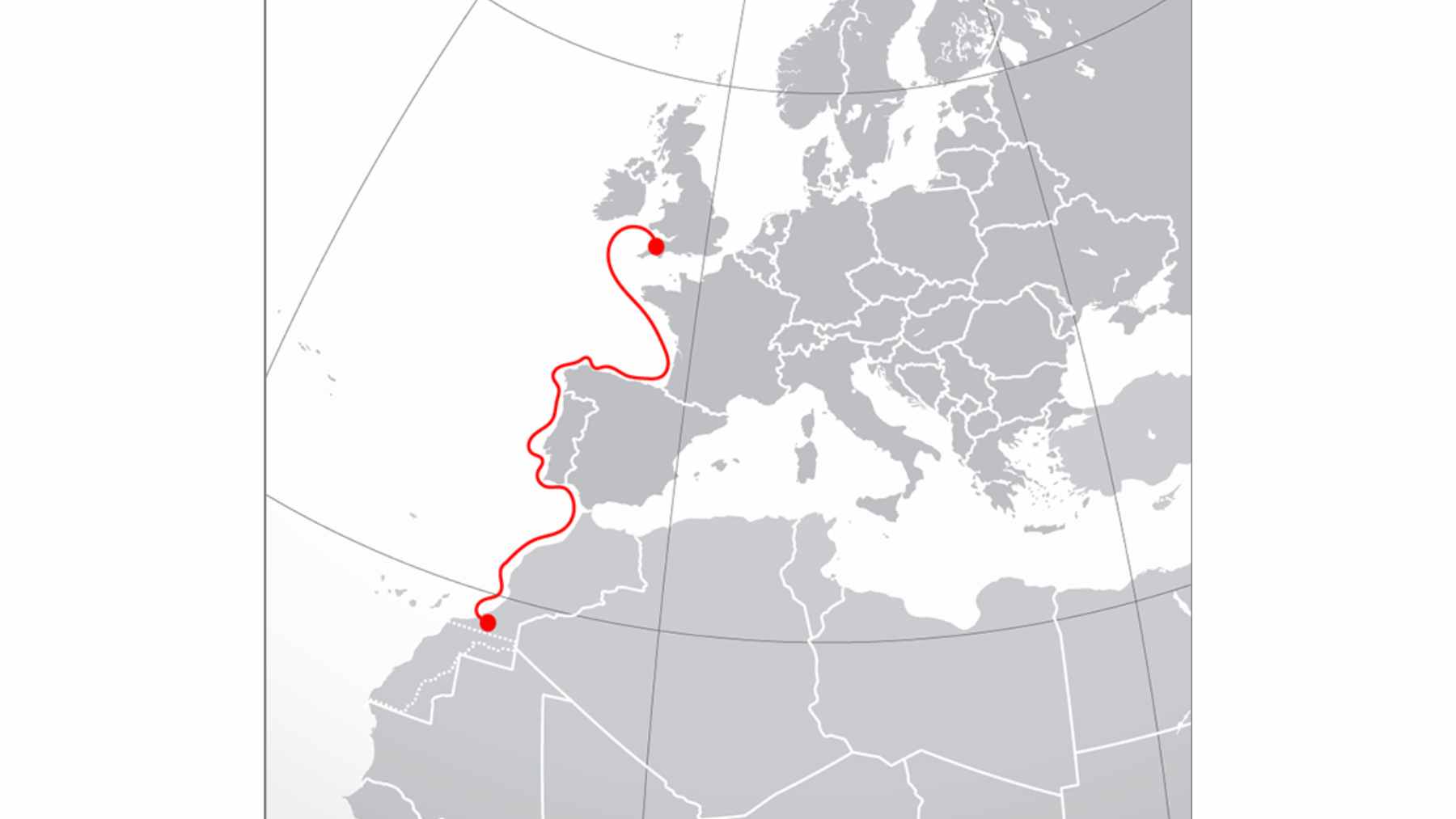
Electricity would flow through two high voltage direct current cables, together rated at 3.6 gigawatts. The route would trace the Atlantic seabed past the maritime zones of Portugal, Spain, France, Belgium and the Netherlands before landing in Germany.
At full output the link could send about 26 terawatt hours of power to Germany every year, close to five percent of national consumption and comparable to the output of three large fossil fuel plants, thanks to more than seven thousand full load hours.
Independent legal and industry analyses put total investment somewhere between 30 and 40 billion euros, which would place Sila Atlantik among the largest renewable energy projects ever proposed for Europe. Utilities such as E.ON and Uniper have shown interest, and rail operator Deutsche Bahn is looking at the project as a possible source of green power for its trains.
For households watching the electric bill climb every time there is a cold snap, developers argue that access to long duration desert renewables could help steady prices over the long run, although concrete tariffs are still a distant discussion.
Lessons from a stalled British cable
The concept is not entirely new. A sister venture, the Morocco UK Power Project by Xlinks, aimed to build a shorter cable to southwest England, yet London pulled its financial backing in 2025 and the project was put on hold after concerns about cost, risk and the need for long term price guarantees.
That experience shows how fragile such mega projects can be once politics, marine permits and public money enter the picture. Sila Atlantik’s supporters are keen to present it as privately financed, but it will still need deep coordination across several governments.
Obstacles between vision and reality
For now the project sits at an exploratory stage in the European grid planners’ Ten Year Network Development Plan, which gives visibility but not a construction go ahead.
To a large extent the schedule will depend on how fast regulators, investors and grid operators in countries such as Morocco and Germany can align on permits, cable routing and technical standards. Project backers are even discussing new cable manufacturing capacity in Germany to relieve tight global supply lines.
Sila Atlantik will not switch on anyone’s lights tomorrow. Yet it offers a glimpse of a future in which Europe’s clean energy system stretches far beyond its own borders and everyday power use is tied to distant deserts as well as local wind farms.
The official statement was published on Energy Partnership Morocco Germany.