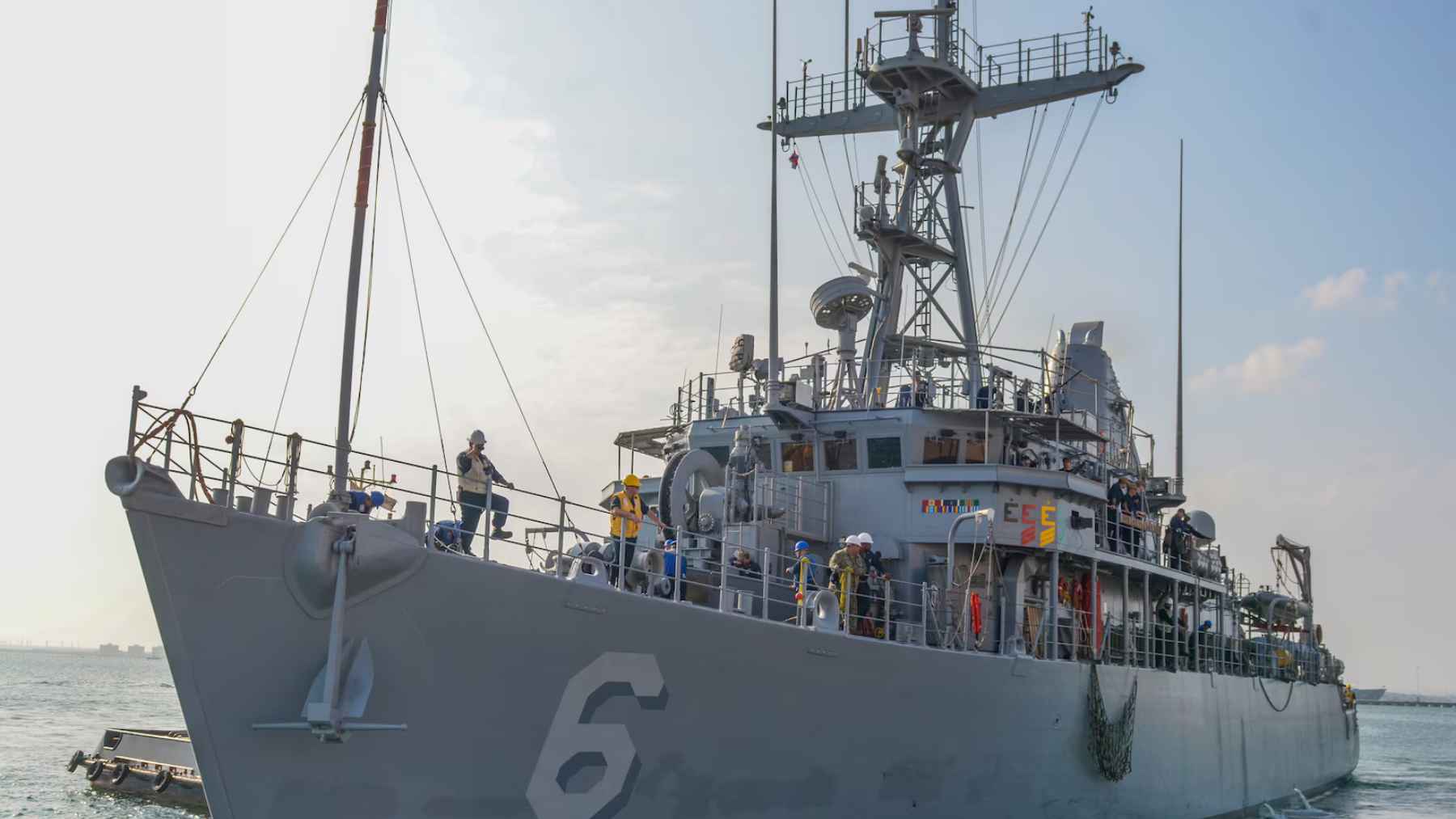
Last year, the U.S. Navy took a big step by retiring half of its Avenger-class mine countermeasures ships in the Middle East and leaning harder on littoral combat ships equipped with a mine countermeasures mission package.
The shift is arriving at a tense moment, with U.S. officials tracking renewed mine-laying activity tied to Iran and a region where a single incident can freeze shipping overnight.
What gets missed is how quickly this becomes an ecology and business story, not just a military one. When a chokepoint carries so much energy traffic, a mine scare can morph into an oil shock, pushing prices at the pump and raising the odds of maritime accidents in already stressed waters.
Why mines hit more than navies
Sea mines are a classic asymmetric weapon because they are relatively cheap to lay and expensive to clear. Even the fear of mines can keep commercial vessels out of a corridor, which is the whole point if you are trying to squeeze an opponent’s economy without firing a missile.
And that’s where the Strait of Hormuz comes in. The U.S. Energy Information Administration says oil flows through the strait averaged about 20 million barrels per day in 2024, which is roughly one-fifth of global petroleum liquids consumption, so disruption is never just local.
From wooden hulls to standoff mine hunting
The Avenger-class ships were built for the mine fight in a very physical way. Their low magnetic signature and quiet profile let them operate closer to mine-threatened waters, using sonar, cable cutters, and neutralization charges to deal with mines on or near the seafloor.
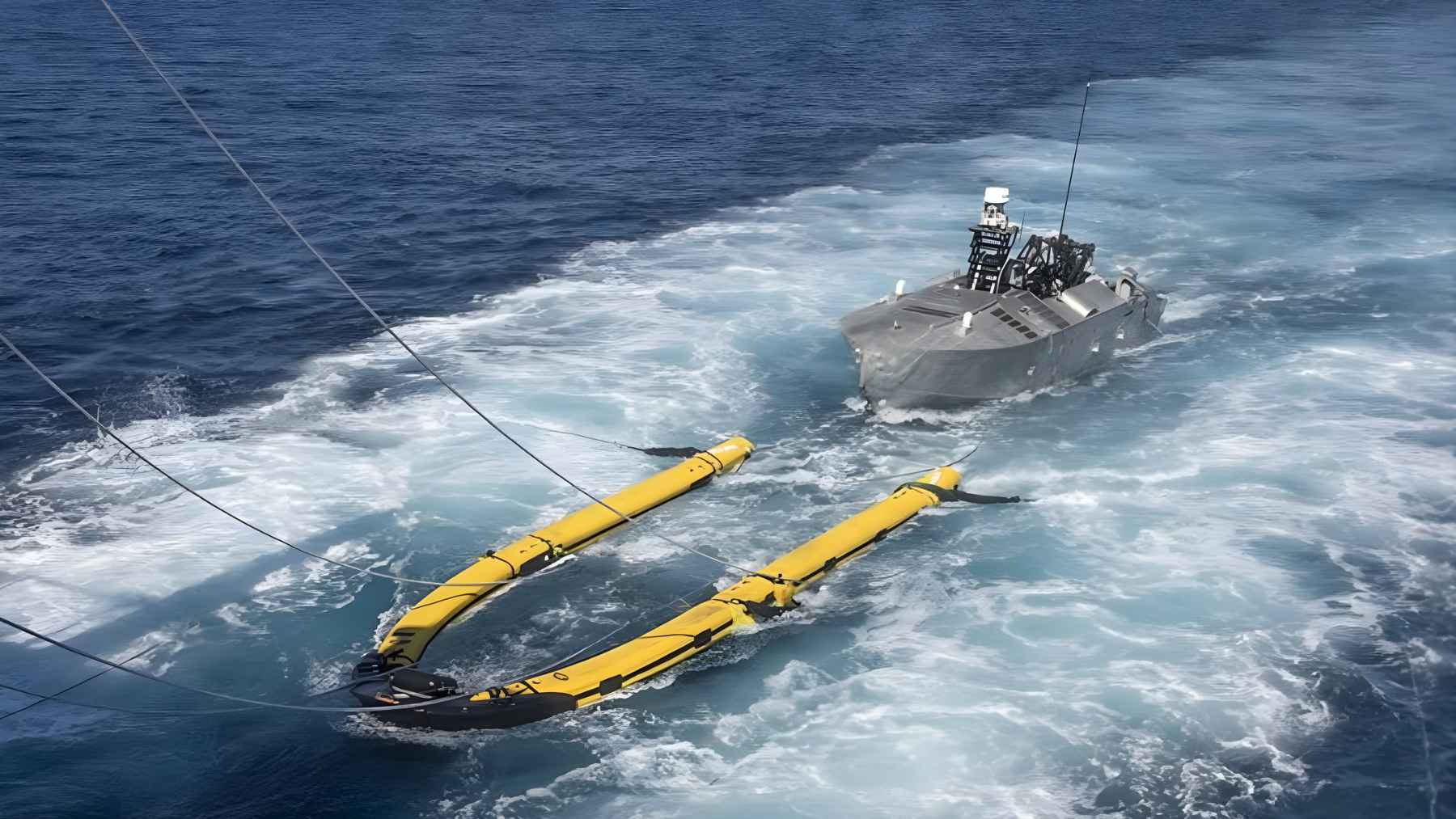
The new approach leans into distance instead. Rather than sending the ship into the mine danger area, the littoral combat ship is supposed to stay farther out and push the risky work to helicopters, remotely operated vehicles, and autonomous platforms, which sounds safer until you ask a simple question: what happens when the system has to perform under real pressure?
A tech bet with a real combat question
On paper, the new kit is a sophisticated mix of sensors and unmanned systems, and the Navy has already declared it operational. NAVSEA says the mission package reached Initial Operational Capability after testing and evaluation, but operational readiness and battlefield reliability are not the same thing.
This is where skepticism starts to sound reasonable, not cynical. Even in the best-case scenario, autonomous systems can be finicky in rough seas, with cluttered littorals and noisy environments, the broader question of how the Pentagon validates new capabilities is now part of the public debate.
So yes, the swap reduces direct risk to crews, and that should not be ignored. But if a crisis erupts and the new fleet struggles, decision-makers may be tempted to improvise with faster, louder, more disruptive clearance methods, and that can spill into the environment quickly.
The underwater noise problem is not theoretical
Mine hunting and mine clearing generate noise, and sometimes detonations, in a part of the ocean that is already busy with shipping, sonar, and industrial activity. For marine mammals that rely on sound to navigate and feed, these impulses can be a serious stressor, especially if they stack up over days.
NOAA has spent years building tools to assess this, including NOAA’s marine mammal acoustic technical guidance and the detailed thresholds laid out in NOAA Technical Memorandum NMFS-OPR-59. In practical terms, that means planners have a clearer science-based framework for estimating when sound exposure risks hearing impacts, but it does not magically remove the risk.
Then there is the blunt-force reality of explosions. Underwater blasts create shock waves that can cause blast injury and other trauma in marine animals, which is why modern navies often layer mitigation steps like monitoring, timing restrictions, and stand-off techniques whenever they can.
The business incentives are pushing fast modernization
Mine countermeasures is becoming an industrial ecosystem, not just a niche mission. Drones, sonar arrays, underwater vehicles, and data fusion all sit at the intersection of defense procurement and commercial robotics, which is why this shift is also feeding a broader push into defense manufacturing and supply chain scale-up.
That has consequences that are easy to overlook at street level. More production and more deployments can mean more port activity, more maintenance cycles, and more training in littoral zones, and coastal communities are the ones living next to the noise and the discharge permits, not the policymakers in distant capitals.
There is also a weird paradox here. The same mine threat that can spike oil prices and make your commute more expensive can also accelerate investment in alternatives, but it can just as easily trigger short-term decisions that increase fossil fuel burn. The market usually cares about the next few weeks, while ecosystems pay for the next few decades.
What readers should watch next
The next big test is whether the new mine countermeasures fleet can prove itself in a real crisis without escalating the risk to crews or the marine environment. If Iran continues to lean on mine warfare, the pressure to demonstrate a fast, credible clearing capability will only grow.
Watch the operational choices as closely as the headlines. A careful, measured response looks boring, but it can reduce the chance of accidents and limit acoustic and explosive impacts, while a rushed response can turn a military problem into an environmental cleanup story.
If the mine threat becomes part of Operation Epic Fury, the first question will be whether mines get cleared. The second question, the one that lasts longer, will be what else gets damaged along the way.
The official statement was published on “U.S. Central Command.”