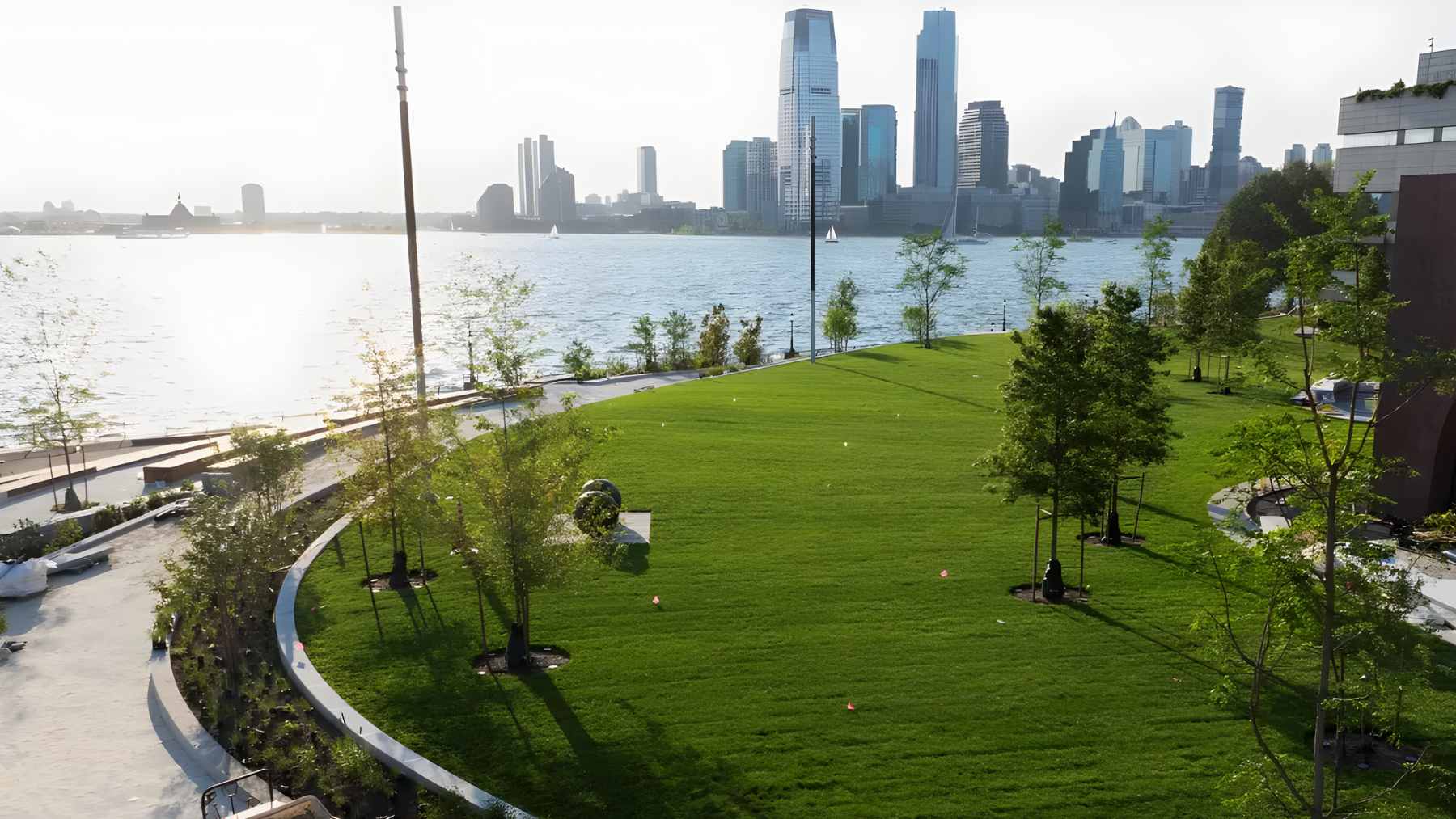
On March 24 and March 25, 2026, Battery Park City quietly added something rare to New York’s waterfront toolkit–a brand-new indoor venue with huge windows facing the harbor and the Hudson. It’s called “The Classroom,” and it opened inside the Wagner Park Pavilion as a flexible space for community events, meetings, and performances, with sunset views built in.
But the real story is what sits underneath that calm, gallery-like room. “The Classroom” is the most visible new piece of a much bigger climate resilience rebuild at Wagner Park, part of the push to protect Lower Manhattan from storm surge, sea level rise, and heavy rain while still keeping the shoreline usable and welcoming.
In practical terms, it’s flood protection you can actually walk through, and that’s the point.
A park built for storms
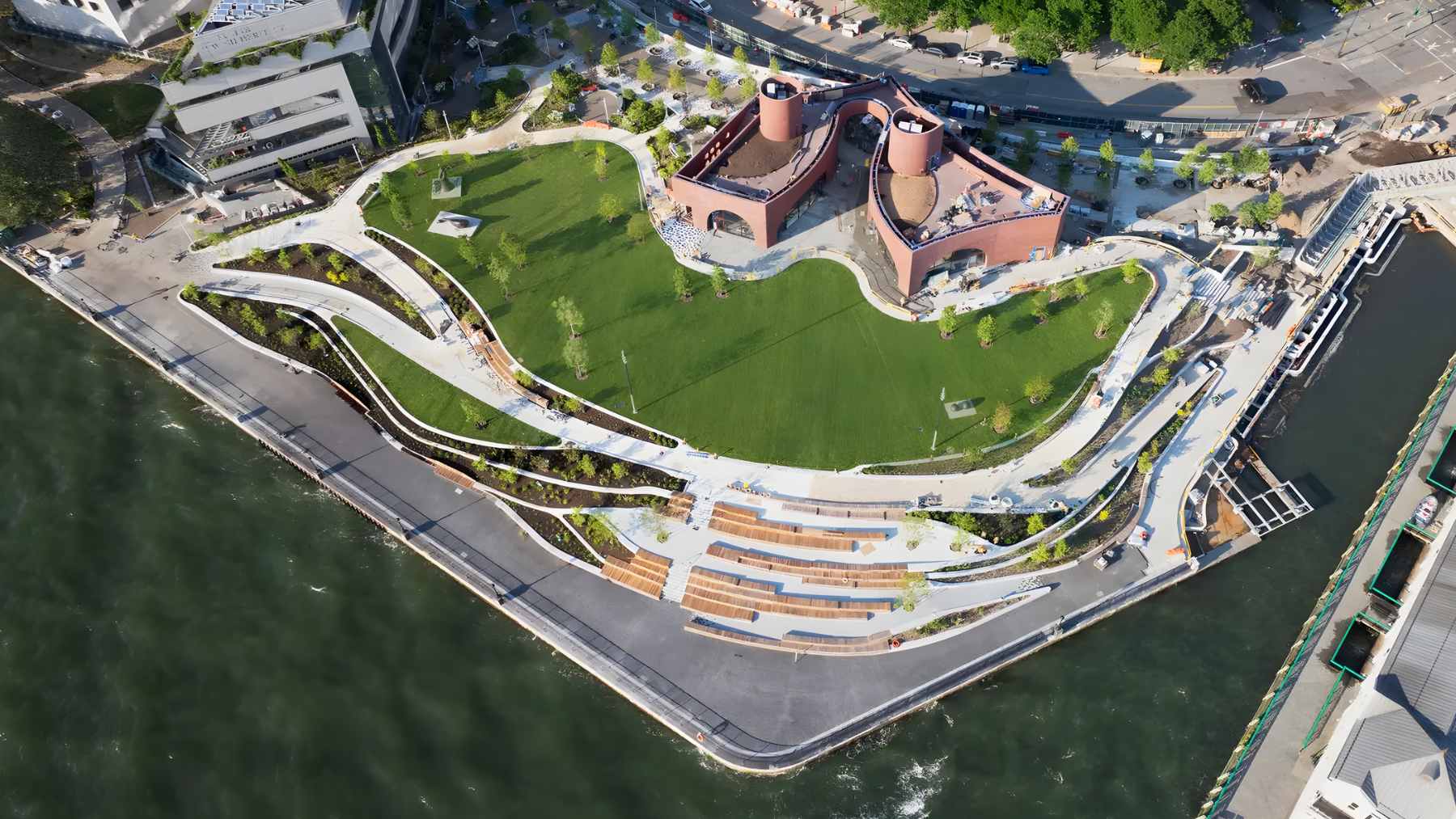
Wagner Park’s redesign is not just landscaping with better views. The Battery Park City Authority (BPCA) says the park’s flood risk reduction system mixes passive and deployable measures, delivering immediate protection for a 100-year storm, and once broader resiliency work is finished, protection will align with projected sea level rise through the 2050s.
That engineering is intentionally easy to miss. The park includes a buried floodwall and a 63,000-gallon underground cistern designed for rainwater reuse, which matters when a normal downpour can feel like it lasts forever and puddles turn into ankle-deep surprises.
BPCA also frames the project as sustainability work, not just emergency planning. The official reopening release highlights features like subsurface irrigation that cuts turfgrass water use by over 30%, dark sky-compliant lighting, heat island reduction choices, and planted ecological zones designed to support local biodiversity.
Tech that hides in plain sight
Step inside “The Classroom” and the tech story becomes obvious fast. The 1,200-square-foot room is built for quick changeovers, with modular furniture, staging pieces, and a full AV setup that includes microphones, a projection screen, a large portable monitor, and flexible lighting.
Those are small details with a big message: how many climate projects come with a sound system and a seating plan, and still count as serious infrastructure?
The pavilion itself is also designed to run cleaner than older public buildings. BPCA has said it is pursuing International Living Future Institute net-zero carbon goals, with features that include geothermal heating and cooling, stormwater reclamation, LED lighting and occupancy sensors, high-performance glazing, and energy recovery ventilation.
This is very much a phased rollout, not a one-day ribbon cut. BPCA’s earlier pavilion update pointed to a classroom and community space arriving after the rooftop opened, and reporting this week says a restaurant is expected later in 2026, which signals a plan to keep people on site longer, not rush them back into subway stairs.
The business case for resilience
These upgrades are not cheap, and no one involved is pretending otherwise. Reporting around the Wagner Park rebuild puts the overhaul at nearly $300 million, a figure that helps explain why cities increasingly talk about climate adaptation like long-term capital planning, not a seasonal cleanup.
Zoom out a bit and the numbers get even bigger. BPCA’s November 2025 release describes a $1.7 billion Battery Park City Resiliency Project using a progressive design-build model, aiming to create an integrated coastal flood risk management system across more of the neighborhood.
There’s also a workforce and procurement layer that often gets lost in the climate conversation.
The same BPCA release ties the project to a labor agreement meant to support thousands of union careers and expand participation by minority and women-owned businesses and service-disabled veteran-owned businesses and service-disabled veteran-owned businesses, making resilience spending a jobs story as much as an engineering one.
Climate security reaches the waterfront
This is where the environment beat starts overlapping with Military and Defense in a way that feels surprisingly direct.
The Department of Defense has warned in its Climate Risk Analysis that climate change is “reshaping” the operating environment and can strain readiness, infrastructure, and even critical supply chains, which is another way of saying coastal disruptions do not stay local.
NATO uses even more direct language, calling climate change a “threat multiplier” that affects operations, infrastructure resilience, and planning.
For the most part, that means militaries and city governments end up staring at the same reality: stronger storms, higher water, and the messy domino effects when a coastal hub takes a hit.
DoD’s own Climate Assessment Tool materials emphasize installation-level flood mapping and actionable climate intelligence, and that mindset translates well to dense cities where a seawall is never just a seawall.
At the end of the day, projects like Wagner Park are prototypes for a world where public space, climate tech, and risk planning are being designed as one system.
For now, Battery Park City is betting that the most durable climate infrastructure is the kind people want to use on an ordinary day, not only after a storm.
The press release was published on Battery Park City Authority.