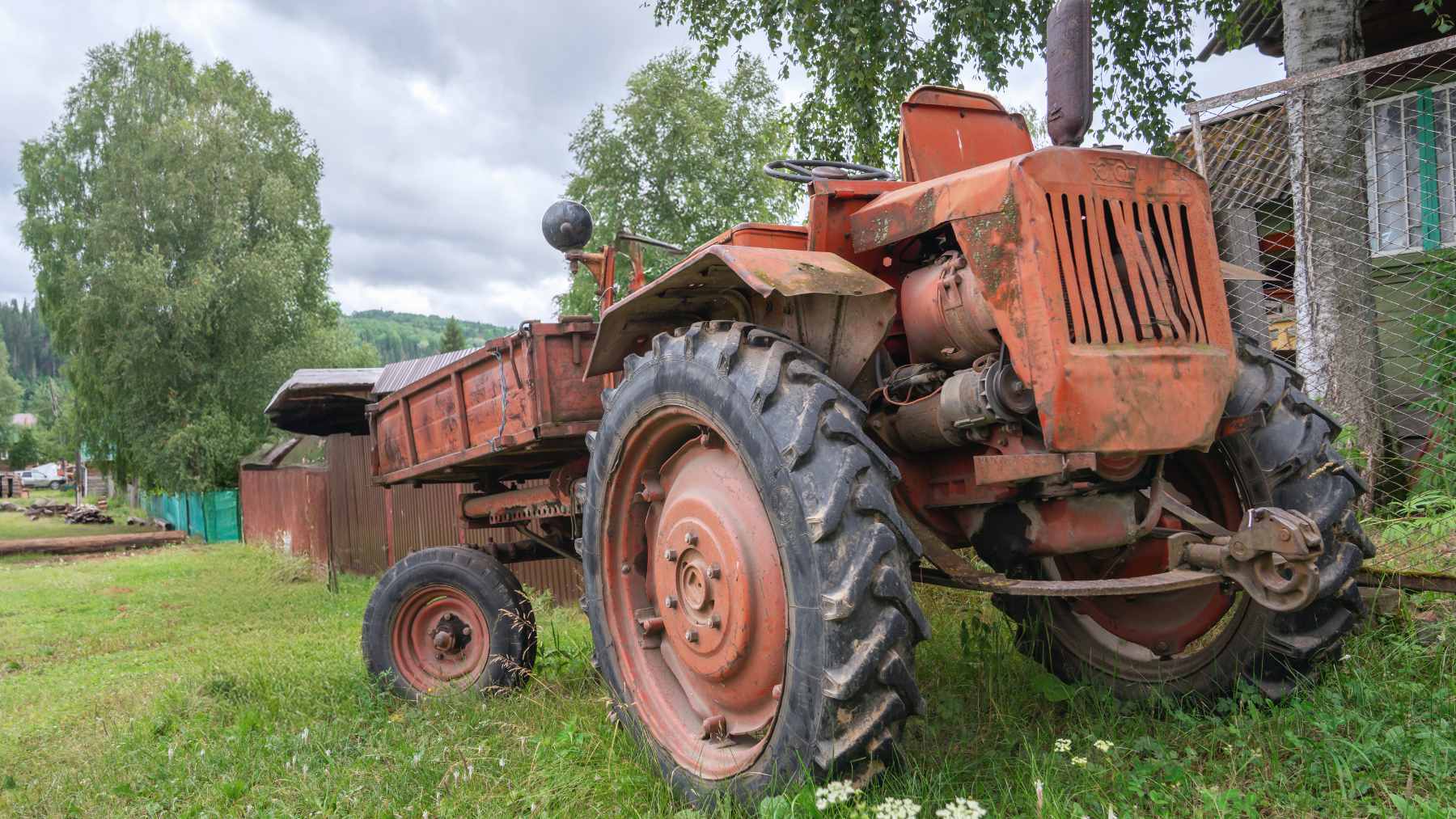
In West Virginia, farmer Dusti Snider restored his grandfather’s 1957 Ford 640 until it looked almost factory new. He still left one small patch of bare steel on the right fender, the spot worn down by his grandfather’s gloved hand after years of cutting hay.
It is a sentimental detail, but it also raises a modern question: when equipment is packed with electronics and locked software, what happens to the environment when repairs get harder and farmers swap machines earlier than they want to?
On February 2, 2026, the U.S. Environmental Protection Agency said manufacturers can no longer use the Clean Air Act as a reason to block access to repair tools or software for nonroad diesel equipment.
The handprint on the fender
The Ford 640 came from a period when U.S. agriculture was racing toward mechanization and smaller utility tractors had to do a little of everything. Built as part of Ford’s 600 Series, the model is typically listed at about 30 horsepower, enough for hay work and chores without the size and cost of bigger machines.
Snider’s restoration took years and included new wiring, lights, and paint, but he treated the worn fender like a historical marker instead of damage. A custom memorial decal for Otis G. “Poppy” Reed sits next to the bare spot, turning ordinary wear into a family record.
Repair has a climate footprint, too
Most people think of farm pollution as tailpipes and dust, but a machine’s impact starts long before the first engine hour. Steelmaking alone is a major climate driver, and the International Energy Agency estimates the iron and steel sector emits about 2.6 gigatons of CO2 per year, roughly 7% of the global total from the energy system.
That is why remanufacturing and rebuilding are showing up in sustainability plans, not just in shop manuals. Caterpillar says its remanufacturing uses about 80% to 90% less new material and 65% to 87% less energy than making comparable new parts, based on the company’s stated system boundaries.
Still, “keep it running” is not automatically the lowest impact option. Research on remanufacturing notes that the use phase can flip the math if the older machine burns significantly more energy over time, even if it was cheaper to keep it out of the scrapyard.
The same research also points out a hard reality on the balance sheet, with remanufactured products often selling for about 50% to 80% of the price of new.
Cleaner engines need repair access
Older tractors like a 1957 Ford 640 are mechanically simple, but they also sit outside today’s air pollution controls. For modern nonroad diesel engines, the EPA finalized Tier 4 standards in 2004 and phased them in from 2008 through 2015, aiming for about a 90% reduction in key pollutants like particulate matter and nitrogen oxides compared with earlier levels.
So why do some farms still lean on older iron? The EPA’s February 2026 guidance says repair restrictions have pushed some farmers toward older equipment that lacks modern emission controls because they can fix it themselves, especially when a breakdown hits in the middle of planting or harvest and the clock does not care.
The agency’s message is that repair and clean air do not have to be enemies. It says temporary overrides of emission controls are allowed when the purpose is to repair and the equipment is returned to its certified configuration, and it stresses the guidance does not weaken the underlying standards.
Tech is pushing tractors in new directions
Emissions also depend on how farms operate, not just what they drive. The EPA estimates agriculture accounted for 11% of U.S. greenhouse gas emissions in 2022, which helps explain why precision tools that cut wasted fuel, fertilizer, and field passes are getting serious attention.
Manufacturers are also testing alternatives to diesel in specific niches. John Deere says its E Power tractor prototypes were tested through 2025 and are intended for uses like orchards and vineyards, where “zero tailpipe emissions” can matter when workers are nearby and the air can feel heavy on a hot day.
Business and defense see the same pressure points
Repair is also a business fight over who controls downtime, parts, and software. The Federal Trade Commission has said manufacturer restrictions can limit third-party repairs and competition, and that can raise costs for equipment owners in the real world.
Now add national security politics to the mix. On March 26, 2026, two U.S. senators called for a Commerce Department investigation into imports of heavy construction and farm equipment from Mexico under Section 232, arguing the supply chain for critical machinery has become a strategic concern.
At the end of the day, a handprint on a fender is also a reminder that durability is a climate strategy when it does not lock farmers out of cleaner tech.
The press release was published on U.S. Environmental Protection Agency.