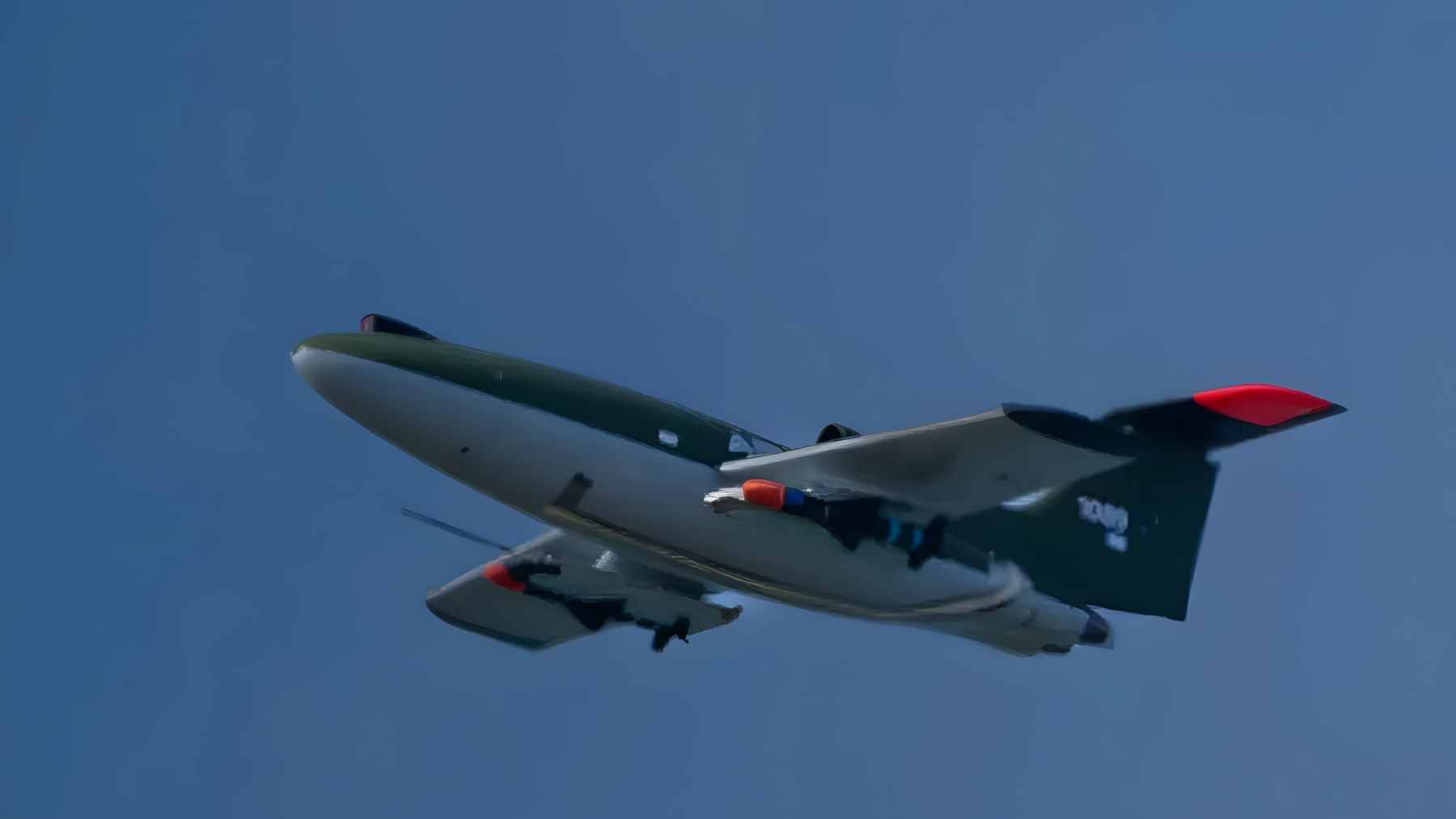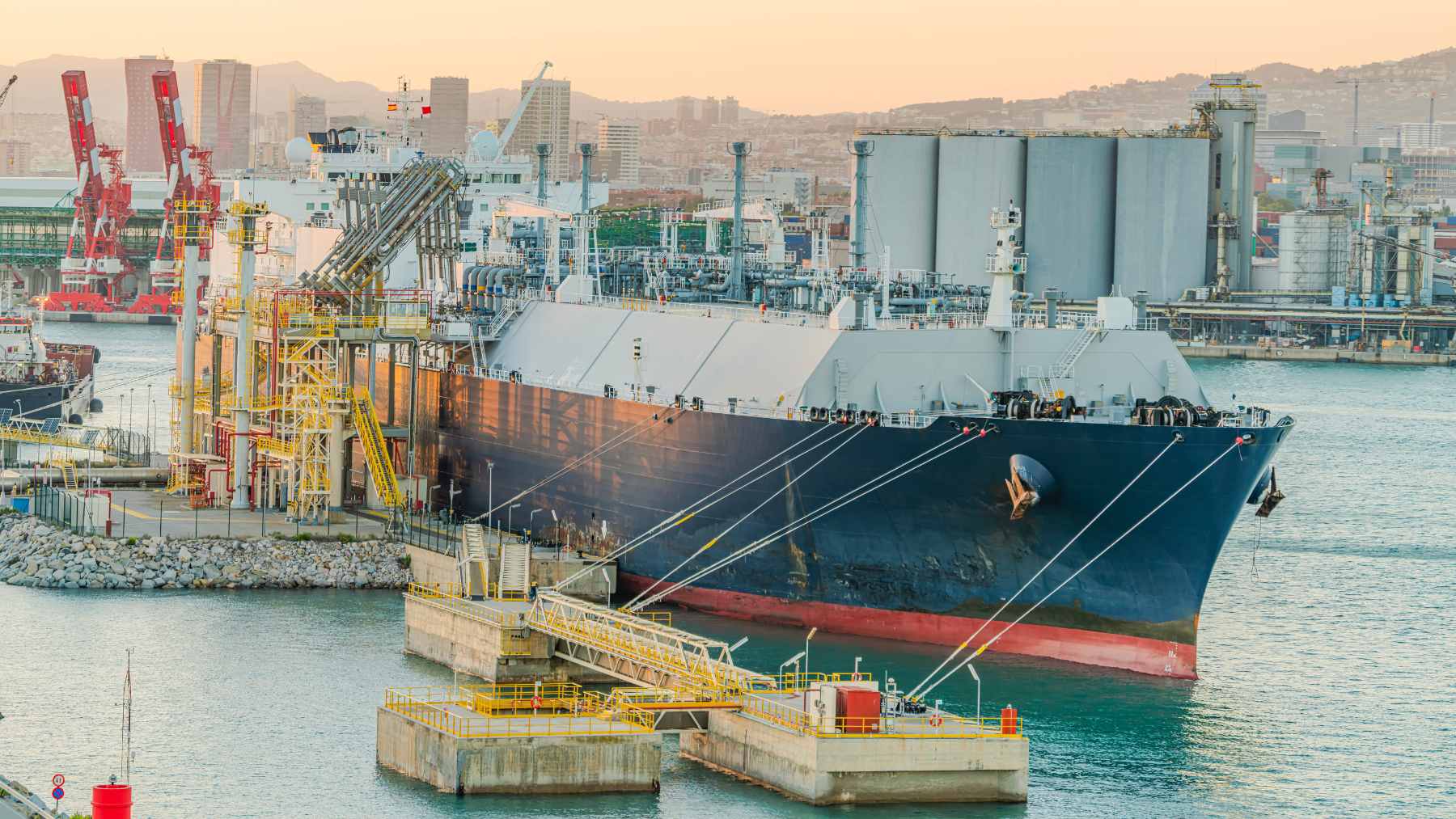
The rescue itself sounds like a movie script. U.S. President Donald Trump said American forces pulled a downed airman out of Iran’s mountains after the crew member hid for roughly two days, while U.S. teams and the CIA worked to locate him and keep Iranian forces from getting there first.
But the detail that lingers is not just the daring extraction–it is what happened afterward, when U.S. aircraft reportedly could not depart from a makeshift landing area because of wet ground, leading to the destruction of helicopters and cargo aircraft to prevent sensitive gear from being captured.
As such, the environment was not background scenery. It was a hard constraint with real costs.
The Little Bird advantage
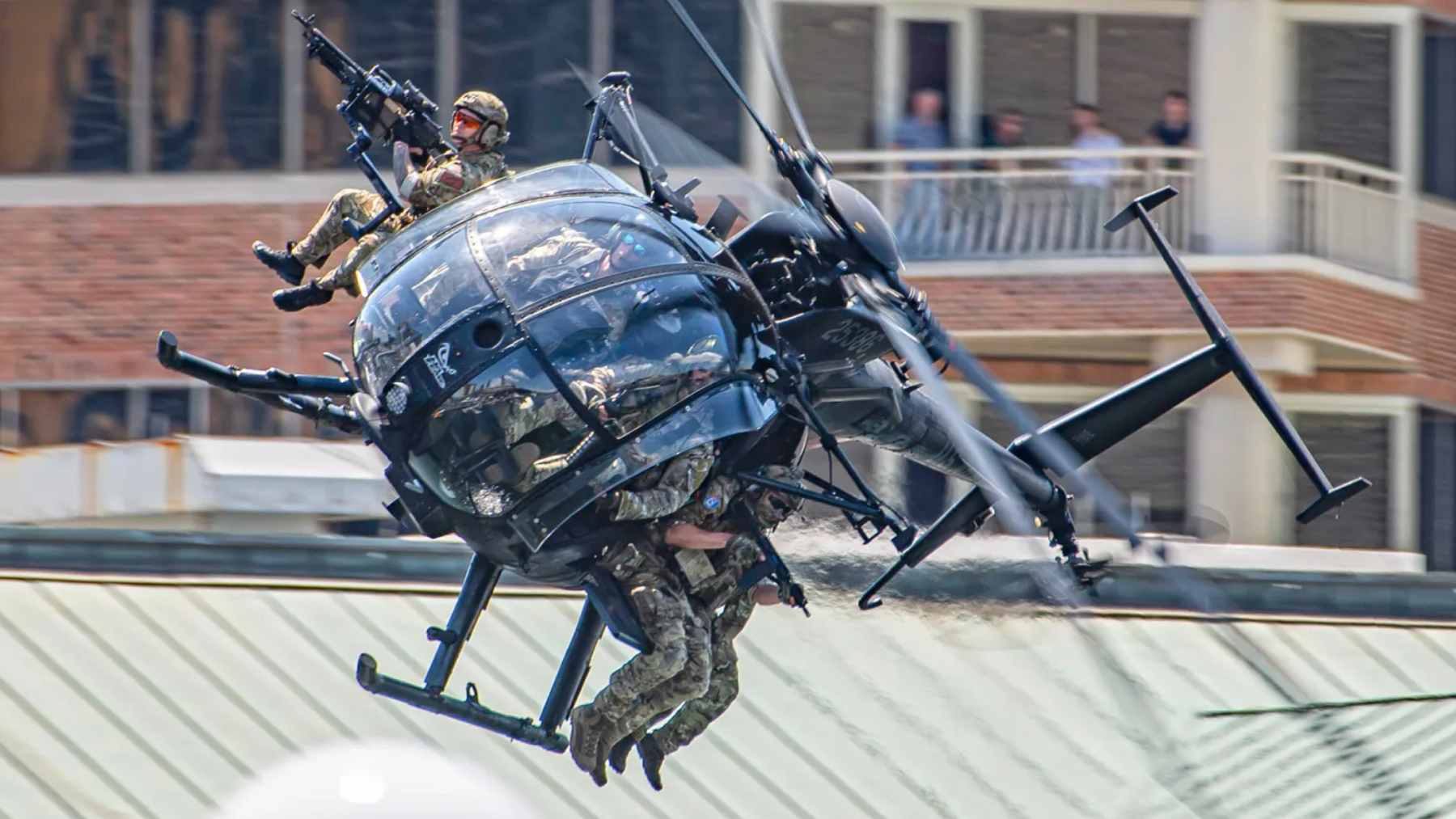
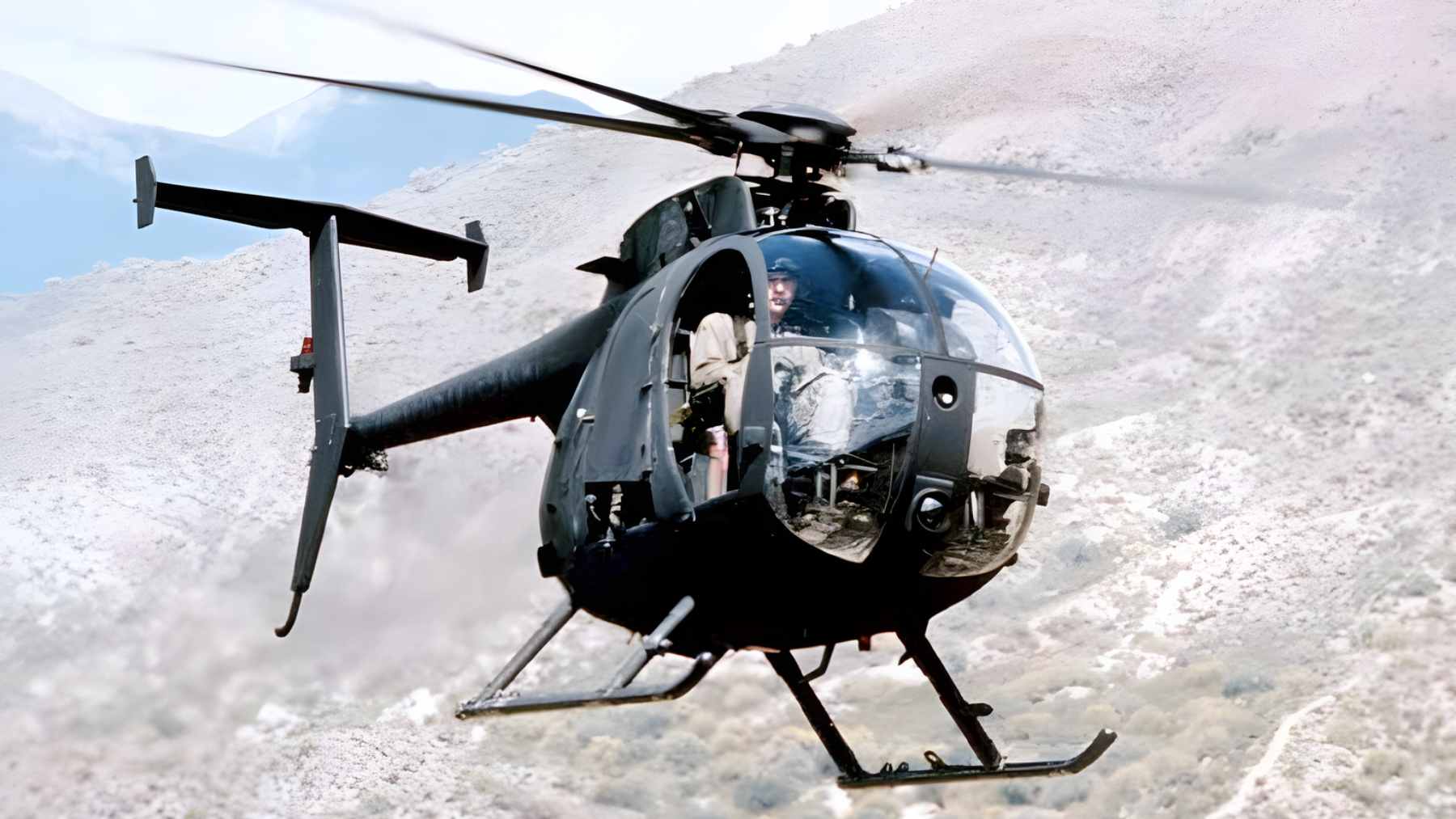
Trump and subsequent reporting put the AH 6 and MH 6 “Little Bird” family at the center of the story because it is built for speed and flexibility. Boeing says ground crews can transition the AH 6 from transport to flight configuration “in minutes,” and it highlights blade-fold capability designed for fast deployment and recovery.
That design philosophy is not just cool engineering. It is logistics, which is where military technology quietly intersects with energy use and emissions. Boeing lists a maximum cruise speed of 126 knots, a maximum range of 179 nautical miles, and a maximum endurance of 2.1 hours for the AH 6.
Mud was the unexpected enemy
Here is the part that feels almost too relatable. Plenty of us have watched a car tire sink into soft ground and thought, “This is going to be a long day.” In this operation, Reuters reported teams tried to lift aircraft out of wet sand, and other reporting described C-130s getting stuck at the improvised strip.
That kind of friction matters more than it used to, because militaries are increasingly planning around climate and terrain volatility.
The Defense Department’s own Greenhouse Gas Plan explicitly ties resilience to threats like extreme weather that can disrupt power and operations, even before anyone fires a shot. (media.defense.gov)
Burning hardware leaves a footprint
According to Trump’s account and follow-up reporting, the U.S. destroyed aircraft after the extraction because equipment onboard was too sensitive to risk leaving behind.
The War Zone described imagery that appeared to show demolished special operations C-130s and burned out Little Birds at the forward site, with the general logic being denial of advanced systems to an adversary.
From an environmental lens, that kind of decision has two layers. First is the immediate pollution problem that can come with destroyed aircraft, from burned fuel to scattered debris and damaged materials, even when the tactical reasoning is straightforward.
Second is the replacement problem, because any lost platform has to be rebuilt, moved, maintained, and fueled again, and fuel is the big one.
The Pentagon’s April 2023 plan reports that in FY 2021, Department of Defense Scope 1 and Scope 2 emissions totaled 56 million tons of CO2 equivalent, and it says jet fuel combustion accounted for 80% of operational emissions and 50% of total DoD emissions.
Decarbonizing defense is now a procurement issue
If you want the business angle, follow the contracts. The DoD plan points out that emissions beyond direct fuel and electricity include supply chain emissions, and it notes that Scope 3 emissions may be equal to or greater than the Department’s Scope 1 and 2 emissions.
It also flags a proposed Federal Acquisition Regulation rule that would require major federal contractors to disclose greenhouse gas emissions, identify climate-related financial risks, and set science-based reduction targets.
That kind of policy pressure can ripple through the defense industrial base, shaping what gets designed, how it gets manufactured, and what “readiness” looks like in a world where energy is both a vulnerability and a cost line.
What comes next for climate and conflict reporting
The rescue in Iran shows why this debate is getting louder. Modern missions can involve “hundreds and hundreds” of personnel, and the supporting aircraft and logistics can be extensive, even when the public only hears about the final extraction.
On the global scale, researchers at Scientists for Global Responsibility say the world’s militaries have been estimated at roughly 3,025 million tons of CO2 equivalent, or about 5.5% of global emissions, with important caveats about uncertainty and what is included.
So, the question is not whether militaries matter to climate math, but how transparent governments can realistically be while still protecting operational security.
The official plan was published on media.defense.gov.