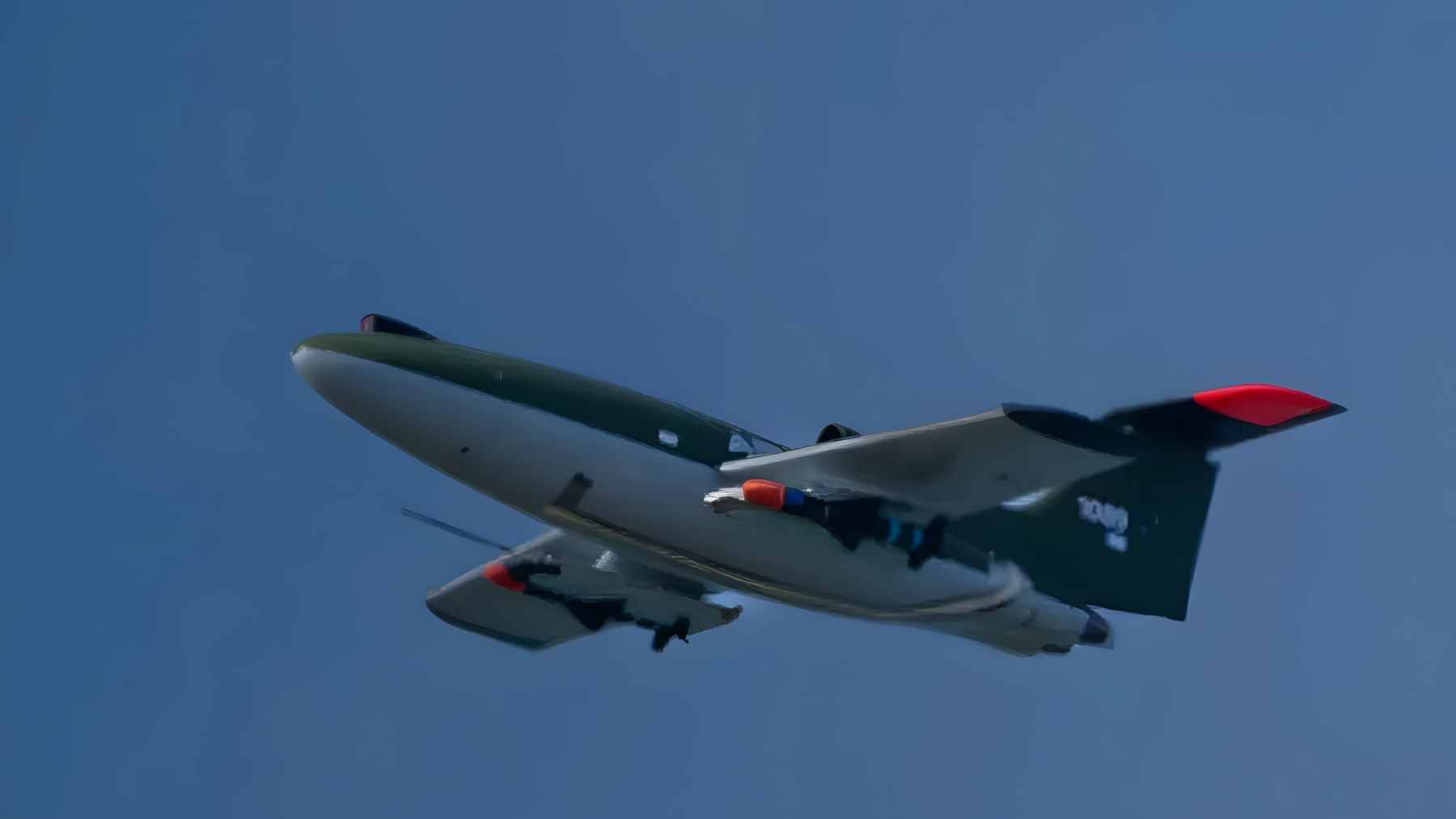
Airbus says it has completed the first demonstration flight of Bird of Prey, an uncrewed interceptor designed to spot and take down “kamikaze” drones before they reach their targets.
In a test at a military training area in northern Germany, the system reportedly ran the whole sequence on its own, from searching to firing a Mark I air-to-air missile built by startup partner Frankenburg Technologies.
On its face, this is a military and defense story about cost and speed. But there is another layer that is easy to miss. As drone warfare scales up, so do the emissions, debris, and cleanup headaches that follow modern fighting.
A drone built to hunt drones
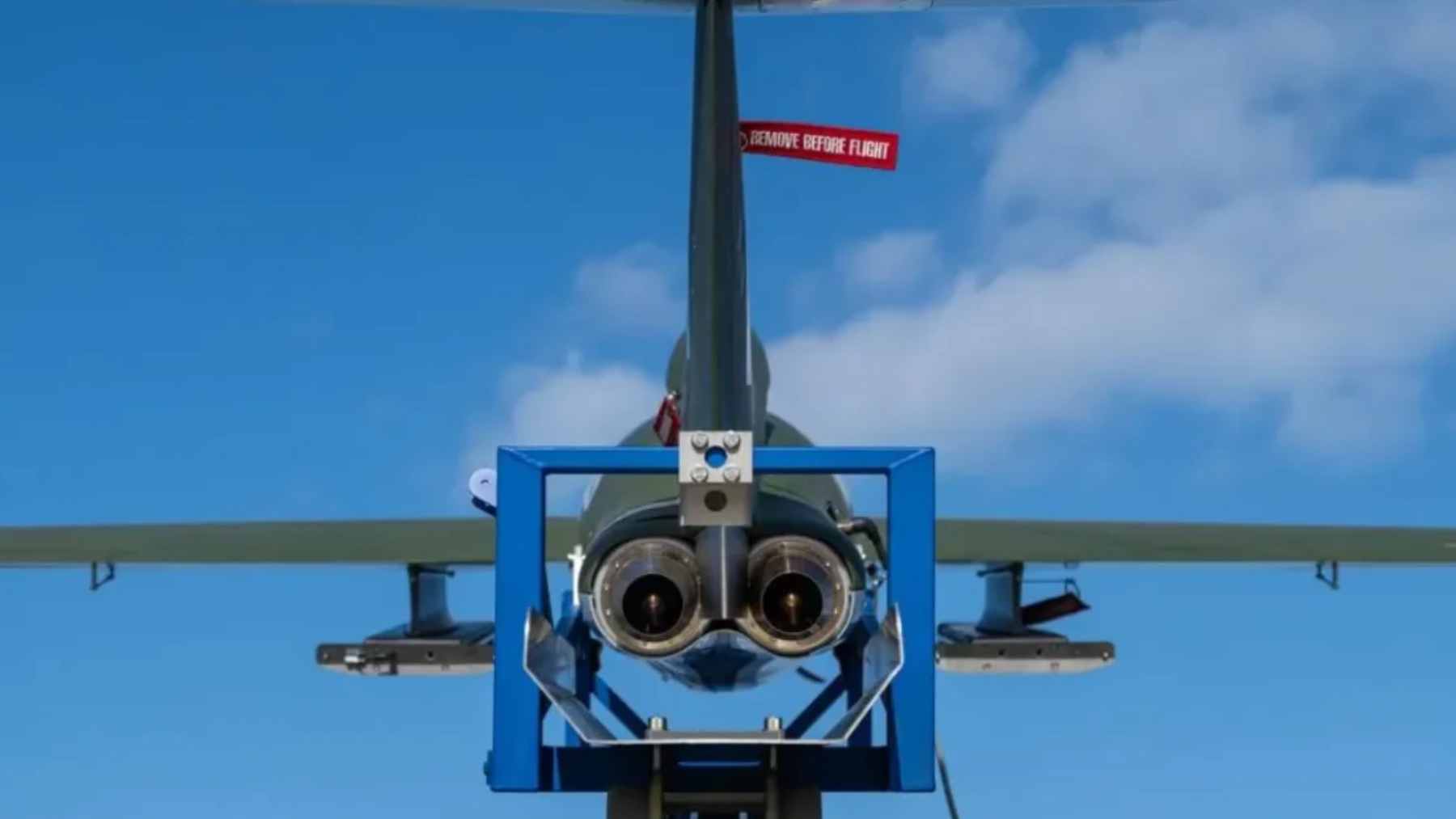
The March 30 test shows how far autonomy has moved into air defense. Airbus says Bird of Prey autonomously searched, detected, and classified a medium-sized one-way attack drone, then engaged it with a Mark I missile after identification.
The interceptor itself is based on a modified Airbus Do DT25 drone with a wingspan of 2.5 meters (8’3”) and a maximum takeoff weight of 160 kilograms (352 lbs.). The prototype carried four missiles, and Airbus says an operational version could carry up to eight, letting one reusable aircraft deal with multiple threats in a single mission.
The new cost curve is also a manufacturing story
Airbus Defence and Space CEO Mike Schoellhorn framed the problem in blunt terms, calling defense against kamikaze drones an urgent tactical priority and pitching Bird of Prey plus “affordable” Mark I missiles as a way to fill a capability gap.
Frankenburg CEO Kusti Salm went further, saying the pairing is meant to create a “new cost curve” by putting mass manufacturable interceptor missiles on a drone. That is the bet.
That business logic is already showing up in industrial plans. Estonian broadcaster ERR reports that Frankenburg is planning a Polish production facility that could make up to 10,000 anti-drone missiles a year, under a framework agreement with Poland’s state-owned defense group PGZ.
If that kind of output becomes normal, it will not just change procurement, it will change logistics and the sheer volume of hardware moving through Europe.
Drone warfare leaves more than craters
When people talk about war and the environment, they often jump to burning fuel or damaged oil facilities. But the day-to-day impacts can be messier, like chemicals from munitions, damaged infrastructure that leaks pollutants, and debris that ends up in soil and waterways.
That is part of why UNEP has warned of a “toxic legacy” from the conflict in Ukraine, even while stressing how hard it is to fully measure impacts in real time.
Europe’s Joint Research Centre has also pointed to long-term risks from pollutants linked to military activity, including impacts on air quality and soils, plus secondary effects like higher wildfire risk and disrupted environmental monitoring.
In other words, the environmental bill does not arrive all at once, it shows up over years, in cleanup budgets and public health–that is the slow burn.
A smaller interceptor can mean less waste, but only to a point
Bird of Prey’s Mark I missile is tiny by the standards of guided weapons. Airbus says each missile weighs less than 2 kilograms (4.4 lbs.), measures about 65 centimeters long (2’2”), and can engage targets out to 1.5 kilometers (about 0.9 miles), while using a “fire and forget” guidance approach and a fragmentation warhead designed for close proximity.
In practical terms, that suggests a shift away from using oversized interceptors on slow, inexpensive drones, which is like paying a luxury car repair bill to fix a bicycle.
Still, “lighter” does not automatically mean “greener,” especially if lower costs make it easier to fire more shots, run more training cycles, and accept more disposable hardware on both sides of a conflict.
What policymakers and buyers should ask next
One overlooked backdrop is emissions reporting. A joint submission to the UNFCCC Global Stocktake notes that reporting disaggregated military fuel data is voluntary and inconsistent, and that estimates suggest the world’s militaries are responsible for about 5.5% of global greenhouse gas emissions, with major uncertainty and exclusions such as emissions from warfighting itself.
Another analysis argues that, at that scale, the world’s militaries would rank around the fourth largest national carbon footprint if treated like a country.
So, what should procurement officials ask when a new “low cost” defense product is pitched? Beyond price, they can press for life cycle accounting, repairability, and disposal plans for propellants, electronics, and airframes, because those costs tend to land on taxpayers later, like a surprise fee on the electric bill.
Airbus and Frankenburg say they plan additional flights with a live warhead throughout 2026, and those results will help show whether the interceptor’s “new cost curve” can also become a smarter environmental curve.
For now, Bird of Prey is a technical milestone, and also a reminder that modern defense tools come with modern environmental side effects.
The press release was published on Airbus.