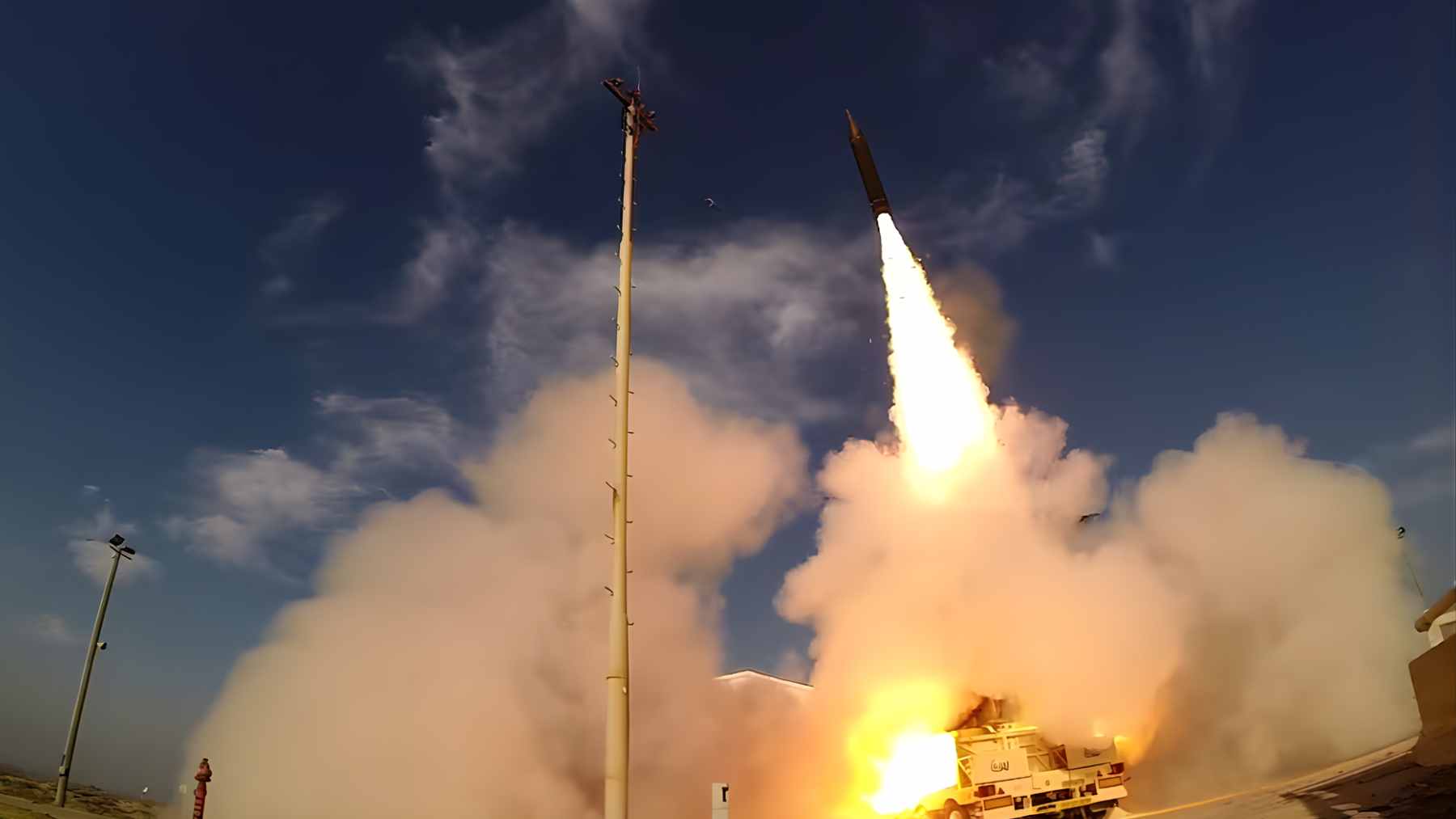
Israel’s Ministry of Defense says it is moving to dramatically ramp up production of Arrow interceptor missiles, after a ministerial procurement committee approved a major additional push to expand output and stockpiles.
The plan aims to keep Israel’s upper layer of missile defense ready as the war with Iran continues and long-range ballistic threats remain a central concern.
It is tempting to treat this as a pure military and defense story and move on. But what does a missile interceptor have to do with ecology and the environment, especially when factories are running hot and the electric bill does not care whether the customer is civilian or military?
Why Arrow production is being accelerated
Defense Minister Israel Katz has rejected claims that Israel is running out, saying the country has “sufficient interceptors to protect its citizens,” while framing the ramp-up as a way to preserve operational freedom and endurance.
Multiple Israeli reports say the expanded effort is expected to be formalized in an agreement with Israel Aerospace Industries, the lead manufacturer of the Arrow system.
This is also a continuation of a trend, not a one-off. In July 2025, Israel’s defense ministry and IAI announced a large-scale contract to accelerate Arrow serial production, with officials crediting the system’s interceptions with having “saved many lives” and reduced economic damage.
A high-tech shield built with US partners
Arrow is one piece of Israel’s layered air defense, alongside David’s Sling and Iron Dome, each designed for different ranges and altitudes. The ministry’s Israel Missile Defense Organization, housed within its Directorate of Defense Research and Development, works with the US Missile Defense Agency on joint ventures and development.
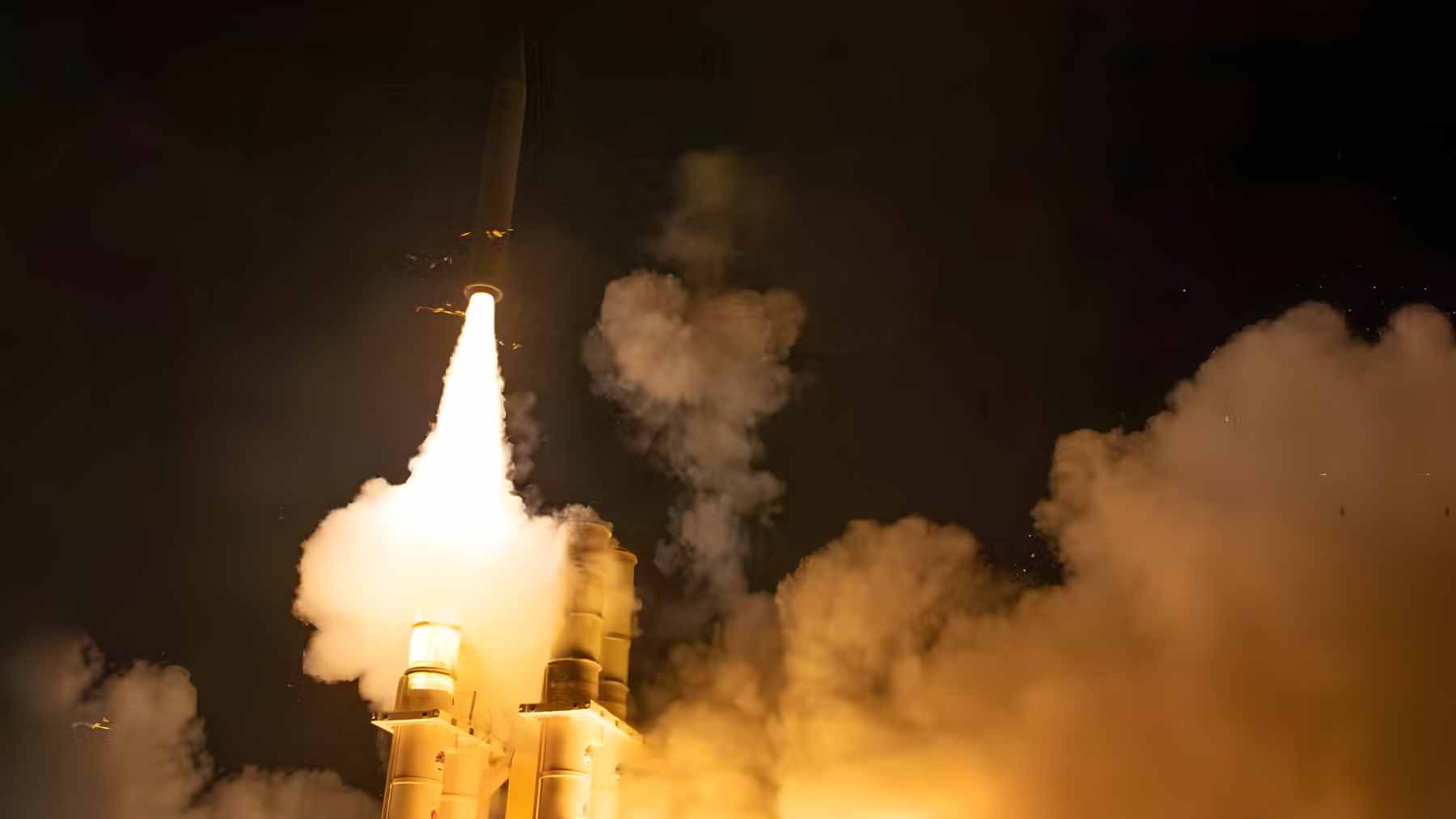
Arrow 3 is built for high altitude engagements, including exo-atmospheric interceptions, meaning it can attempt to hit ballistic threats during the space flight portion of their trajectory.
Missile defense is often described as “hit to kill” for a reason, and that precision depends on advanced sensors, communications, and manufacturing quality that cannot be rushed without risk.
On the industry side, Israel’s defense ministry describes IAI as the primary contractor through its MLM division, with Boeing, Tomer, and Rafael among key partners on Arrow 3 development and integration. It is a reminder that modern air defense is less a single product than a networked system, built across multiple suppliers and test facilities.
Factories, suppliers, and scarce materials
Herein lies the practical challenge for any rapid production push. Modern interceptors rely on specialized components, and scaling output can mean chasing bottlenecks across electronics, energetic materials, and high-grade industrial capacity.
The Wall Street Journal has reported that Arrow interceptors are costly and complex, with long manufacturing cycles that can be constrained by scarce raw materials.
The wider market context matters, too. SIPRI says world military expenditure reached $2.718 trillion in 2024, up 9.4% in real terms, and that surge tends to tighten supply chains for missiles, radars, and air defense across multiple countries at once.
Add a third shift at a plant, and you usually add freight, testing, and energy use right along with it.
The environmental footprint we rarely see
This is where the climate angle becomes hard to ignore. A 2022 estimate by Scientists for Global Responsibility and the Conflict and Environment Observatory put the total military carbon footprint at about 5.5% of global greenhouse gas emissions, roughly 3.025 billion tons of CO2 equivalent, while stressing that the calculation is built on incomplete reporting.
That incompleteness is not just academic. A submission to the UN climate process has pointed out that only a limited number of states provide detailed military fuel use data, leaving a sizable blind spot in national inventories and global totals.
Researchers tracking that blind spot say the “military emissions gap” is getting wider as spending rises, partly because reporting remains patchy. NATO has also published a methodology for estimating greenhouse gas emissions from civilian and military facilities and installations, which is a step toward measuring what can be managed.
What greener missile defense could mean in practice
None of this changes the security logic behind missile defense, and it does not pretend that sustainability is the top priority during an active war.
Still, as production scales up, governments and contractors may face increasing pressure to document energy use, reduce waste, and tighten supply chain reporting, especially when climate targets sit alongside defense budgets.
In practical terms, that can look surprisingly ordinary, like factories switching to cleaner power, improving heat and energy efficiency, and asking suppliers for emissions data the same way they already ask for quality and cybersecurity controls.
The press release was published on Israel Ministry of Defense.