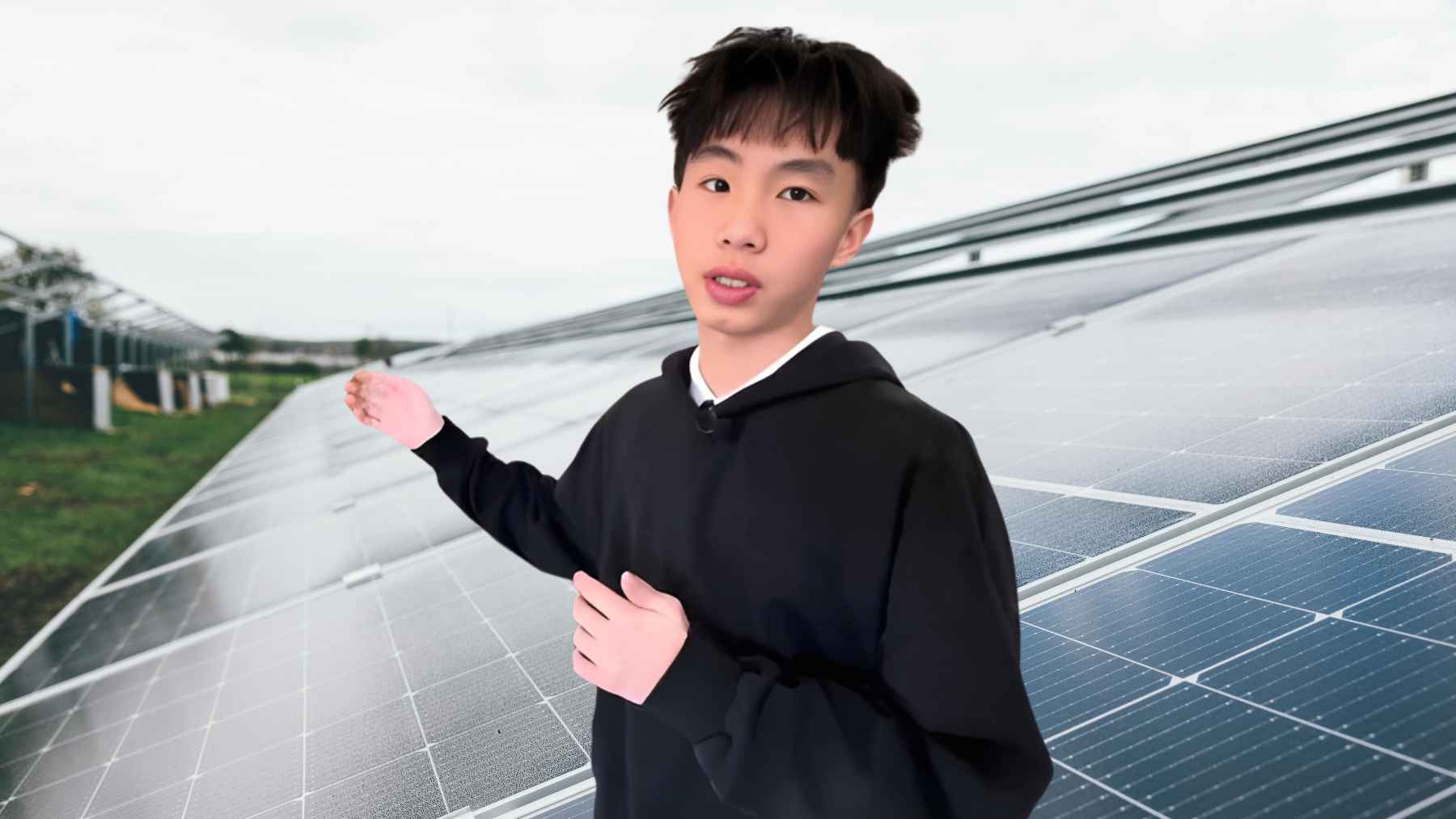
A seventh grader in Worcester, Massachusetts, has built a solar tracking device for under $25 that follows the sun without motors, sensors, or any external electricity. In outdoor tests, Jason Chang says his design produced about 20% more voltage than a standard fixed panel, and it has now earned him a spot on a national stage in Washington, D.C.
It is a small project with a surprisingly big takeaway. While much of today’s clean-energy conversation is about advanced batteries and smart grids, Chang’s idea leans the other way, toward simple physics, recycled materials, and fewer failure points.
And that’s exactly why it deserves attention beyond the science fair circuit.
A tracker without electronics
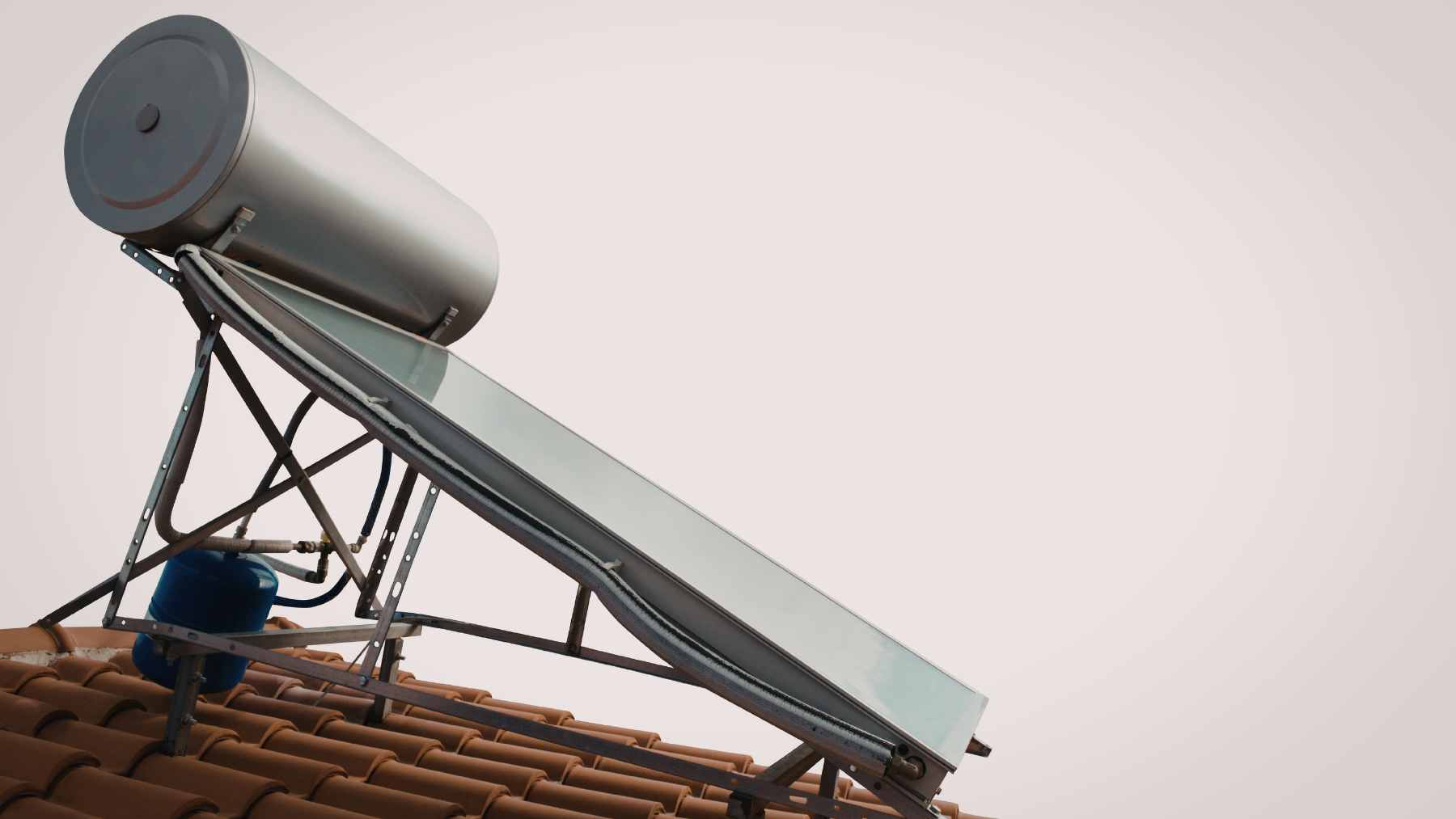
Chang’s “eco-efficient solar tracking system” tackles a basic problem with fixed solar panels. If the panel is stuck in one position, it will only face the sun perfectly for a slice of the day, and then the angle gets worse as the sun moves.
His workaround is almost charmingly low-tech. Using water-filled containers, a seesaw-like structure, and a timed fluid control setup, the panel’s weight shifts gradually, tilting it as sunlight changes direction.
“All you have to do is pull on the plug and the water starts flowing,” he explained, describing how the slow transfer of water helps the panel track the sun’s movement.
Why 20% is a big deal in solar
Chang’s headline result is simple to grasp. In side-by-side outdoor comparisons, he reported about 20% more voltage than a fixed solar panel, which is the kind of bump that can matter when power is scarce.
What’s interesting is that his number lines up with what the larger solar industry often sees from tracking. A techno-economic study hosted by the U.S. National Renewable Energy Laboratory notes that single-axis tracker systems, in general, increase yields by about 20% over fixed-tilt setups, though the exact improvement depends on location and site specifics.
There’s also a useful nuance here. Voltage alone is not the same as energy delivered over a day, since real output depends on current, power, and total watt-hours produced. Still, as a proof of concept, it points in a clear direction–more time facing the sun usually means more usable electricity.
The business promise and the practical hurdles
In the commercial solar world, tracking is not new, but it is not free, either. The same NREL-hosted study reports tracker cost ranges of roughly $0.06 to $0.14 per watt for single-axis systems and about $0.20 to $0.40 per watt for two-axis trackers, and it flags how materials and supply chain pressures (think steel, concrete, and shipping schedules) can shape real project costs.
That’s where a “no motors, no sensors” idea gets business people curious. Fewer electronics can mean fewer things to break, fewer parts to source, and less maintenance in remote areas. But getting from a classroom prototype to a reliable product is its own marathon, especially with weather, wind loading, durability, and industry standards like UL 3703 and IEC 62817 that exist specifically for solar trackers.
Defense and disaster response care about energy, too
Clean energy is often framed as an environmental story, but in defense planning it can also be a logistics story. A National Academies report on military logistics notes that in the initial phase of Operation Iraqi Freedom, bulk fuel accounted for 38.6% of tonnage moved into theater, and it cites an average of one casualty per 50 supply convoys in Iraq and Afghanistan. Anything that reduces fuel demand can, in that context, reduce risky resupply trips.
This is one reason microgrids and renewables keep showing up in resilience discussions. An HDIAC article on military microgrids argues that systems integrating renewables can reduce dependence on fuel supply chains while supporting operations in remote bases and even disaster response, when the normal grid is not reliable.
Less diesel also means less exhaust, less noise, and fewer fuel deliveries rumbling in like an unwanted daily appointment.
Washington is next, and the real test follows
Chang is headed to Washington, D.C., where National STEM Champions present projects at the National STEM Festival scheduled for June 24-27, 2026. An EXPLR announcement says 55 students were named 2026 National STEM Champions, with an acceptance rate of under 5%, and the festival is designed to connect student innovation with leaders across business, government, and academia.
He is also already thinking about what breaks first. His current design can run into a basic winter problem, water freezes, and he has said he is working on a version that can function year-round. “I think most problems in life… instead of working hard, you should work smarter,” he added, which is a pretty good summary of the whole approach.
Small inventions do not solve the energy transition by themselves, but they can shift how people think about it, especially when they cut cost and complexity at the same time.