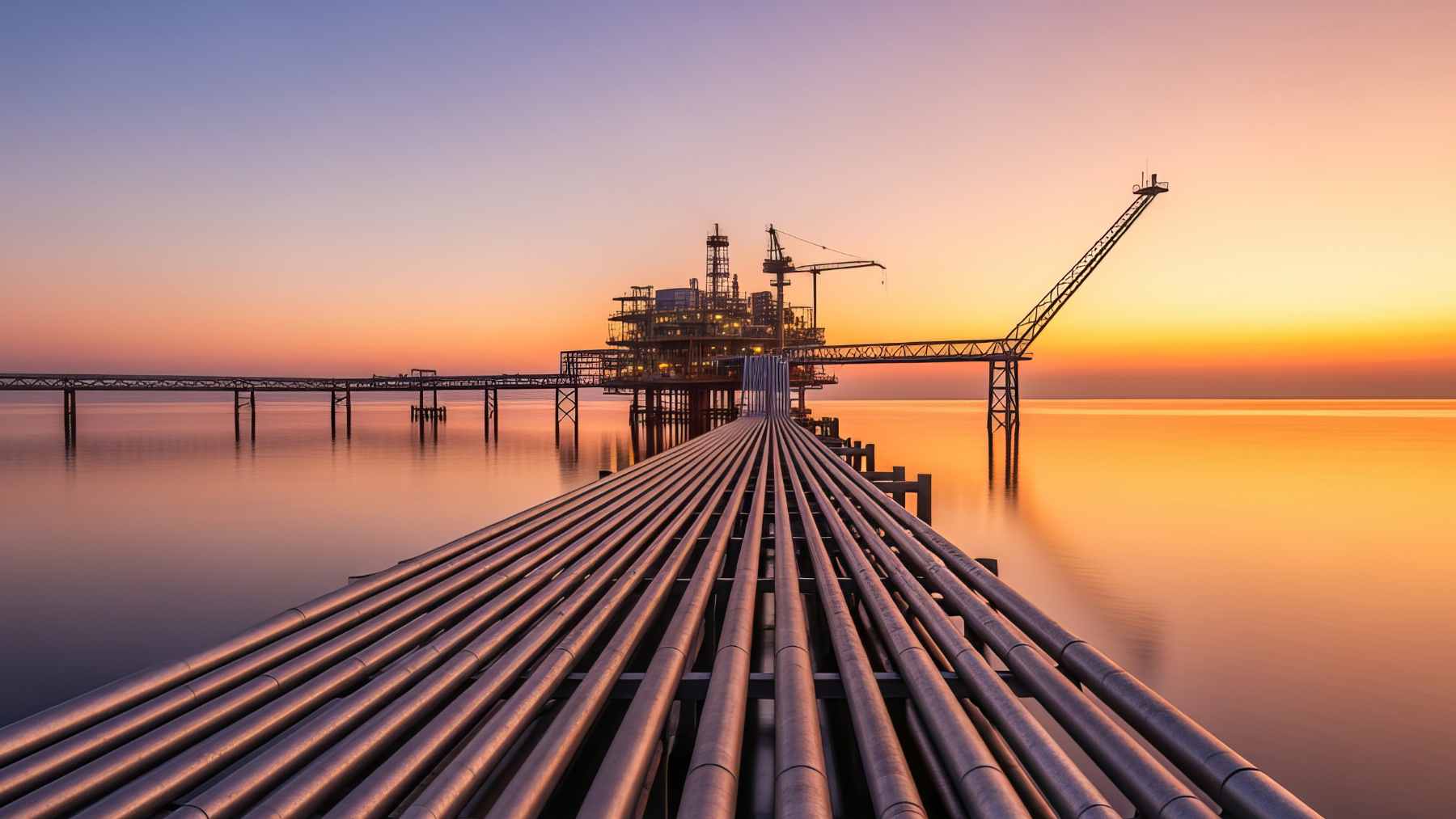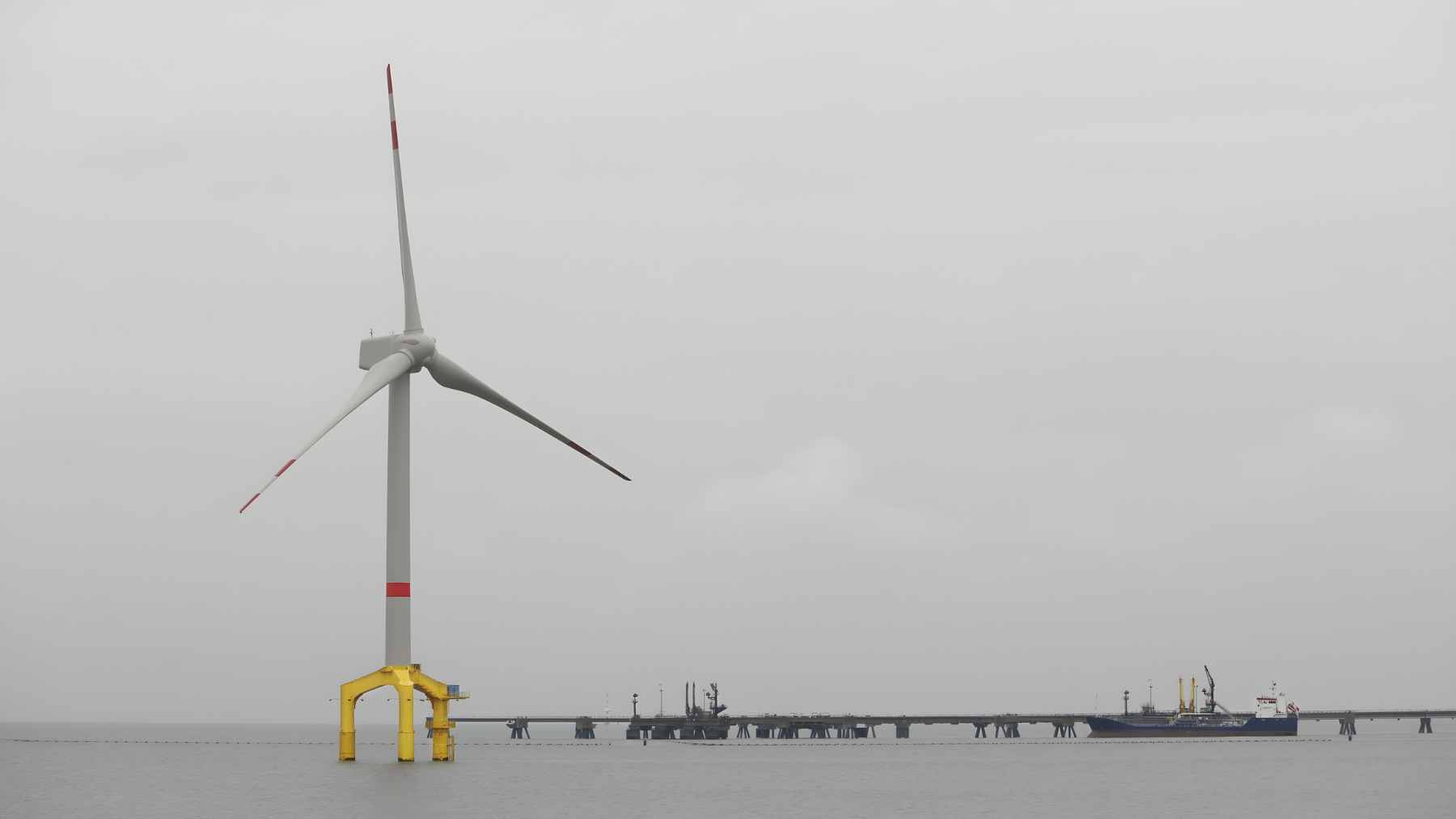
Offshore wind turbines used to have one job, making electricity. Now Aikido Technologies says its floating platforms could also host AI-grade computing in sealed modules tucked into three ballast tanks that keep the turbine stable in rough seas.
“Before we go off-world, we should go offshore,” CEO Sam Kanner said.
It is a pitch for a real problem. AI computing is growing fast, and so are the land, water, and grid headaches that come with it, but putting “the server room” out at sea changes the environmental and security calculus. Is the North Sea about to become part wind farm, part data center?
Why offshore computation is on the table
The International Energy Agency says data centers used around 415 terawatt hours of electricity in 2024, about 1.5% of global demand, and it projects consumption rising to around 945 TWh by 2030. It also notes that global investment in data centers nearly doubled since 2022 and hit about $500 billion in 2024.
To get some perspective, the average U.S. home used about 865 kilowatt hours per month in 2024, so a constant 10 to 12 megawatt IT load would roughly match the monthly electricity use of about 8,000 to 10,000 homes.
A wind platform built for servers
Aikido’s AO60DC concept pairs a 15 to 18 megawatt wind turbine with 10 to 12 megawatts of “AI-grade computing” and integrated battery storage on a semi-submersible platform with three ballast tanks.
It says the grid connection is a backstop and would be used mainly in summer months, when conditions can be less favorable for wind generation.
The company says a 100-kilowatt proof of concept unit is under development in Norway, with a first commercial project targeted for the UK in 2028.
It is also pitching the idea as “sovereign” infrastructure, claiming deployments within 200 miles of load centers with low latency. For now, it is a prototype, not a finished product.
Cooling with seawater sounds simple, until you build it
Cooling is the make-or-break detail for AI hardware, and Aikido is leaning hard on the ocean. In its announcement, the company said it expects a power usage effectiveness below 1.08 by transferring heat through the steel hull into surrounding seawater, with thermal impact limited to a local area only a few meters from the structure.
That is an eye-catching number because Uptime Institute’s survey data puts the industry average PUE at 1.58 in 2023, and it has hovered around 1.55 to 1.59 for years.
Less overhead means more of the electricity goes to actual computing, not pumps, fans, and chillers, which matters on those summer days when everything is already running hot. But ocean cooling is not magic, and researchers warn that marine heat waves and other ocean conditions can affect underwater cooling continuity.
Germany already tried the “data center in a turbine” idea
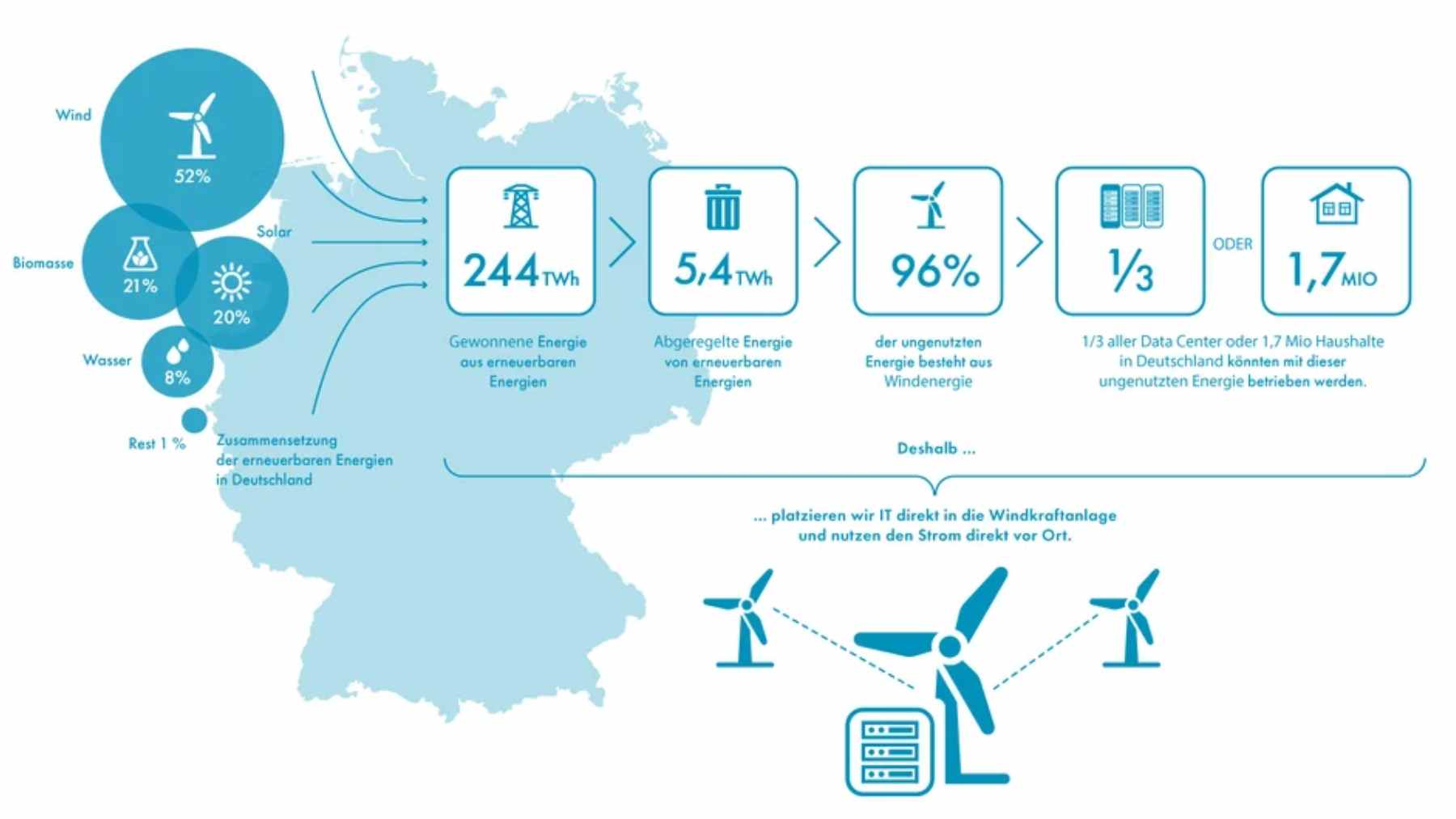
If this sounds far-fetched, it has been done on land. WestfalenWIND IT’s windCORES concept put data center infrastructure inside wind turbine towers, and a Rittal case study says the electricity comes directly from the turbine’s generator for about 90% of the year, with the rest supplied by the public grid.
The same story highlights two realities that offshore projects cannot dodge. First, a modern data center needs serious connectivity, and windCORES relied on redundant backbone links to the DE-CIX internet hub in Frankfurt.
Second, retrofitting in tight spaces is hard, described as “like a ship in a bottle” because equipment has to fit through small entrances and be assembled in place.
When clean tech becomes critical infrastructure
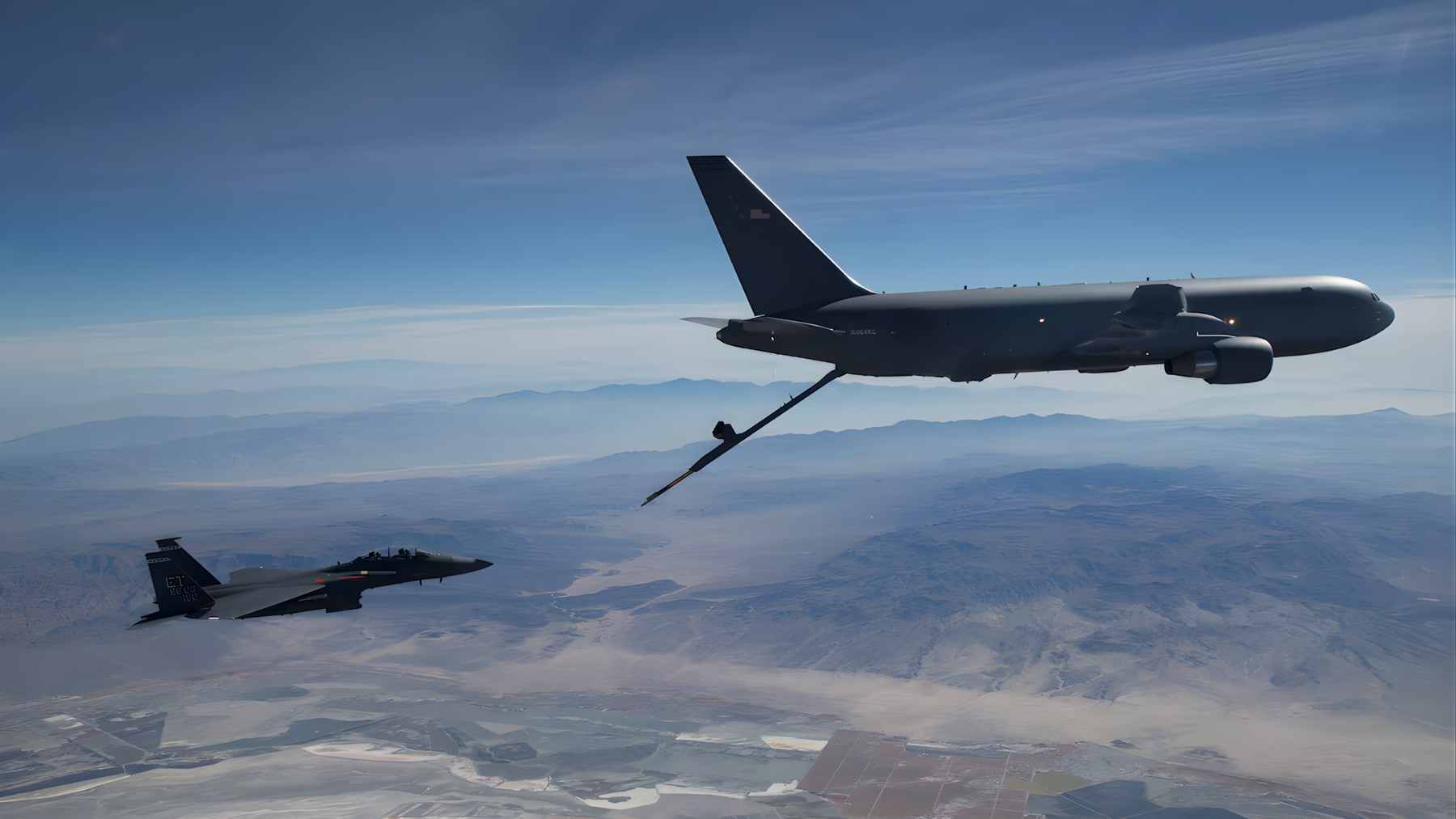
Put computing offshore and you are no longer just talking about green energy. You are talking about critical infrastructure that depends on cables, vessels, and dependable operations in contested waters, which is why defense and security agencies are paying closer attention to what sits on the seabed.
NATO, for example, has been building cooperation with industry to protect undersea cables and pipelines that support connectivity and energy security.
Europe is moving in the same direction. The European Commission has rolled out work on a “submarine cable security toolbox” aimed at strengthening prevention, detection, response and deterrence for data and power cables.
If offshore wind platforms start hosting AI workloads, the incentives for physical sabotage and cyber intrusion rise, even if the turbines look like ordinary energy assets from the shoreline.
What matters for the environment next
From an ecology standpoint, the promise is straightforward, and the IEA warns that data centers can hit local grids hard even when the global share looks small. Offshore siting can reduce the land footprint of new data halls and, in some designs, avoid the freshwater demands of cooling towers, which have become a flashpoint in drought-prone regions.
For context, the Environmental and Energy Study Institute says a medium-sized data center can consume up to roughly 110 million gallons of water per year for cooling.
But the tradeoffs shift rather than disappear. Heat still has to go somewhere, salty air still corrodes equipment, and more offshore activity means more vessels, more maintenance windows, and more environmental monitoring to confirm claims about localized thermal effects.
The press release was published on GlobeNewswire.