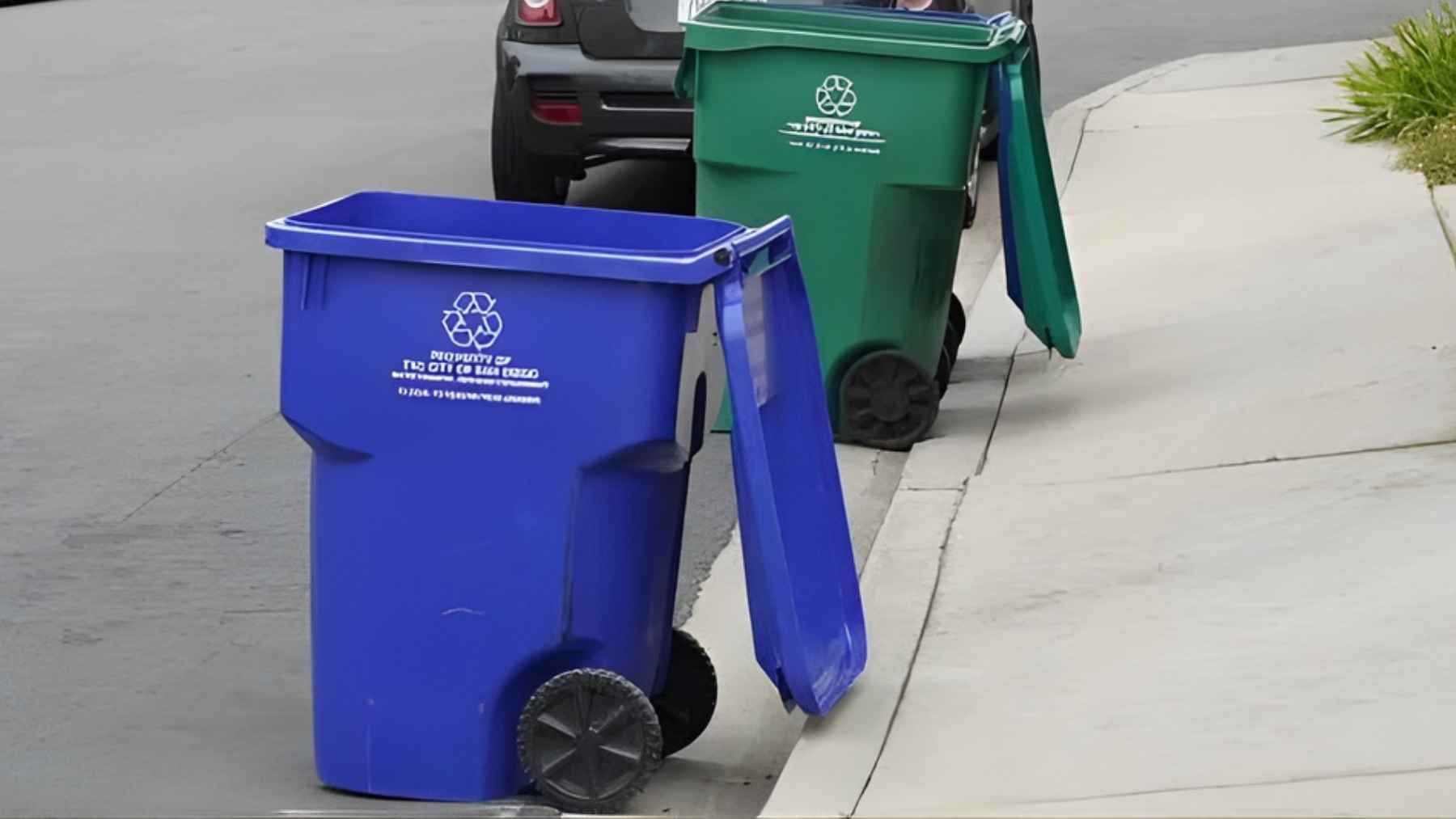
San Diego is swapping out its familiar dark-blue recycling bins for a lighter blue version that comes with scannable tags, clearer labeling, and a new rule that is easy to miss: once the new bin lands at your curb, the old one is done.
It sounds like a routine city service update, but it is really a test of how modern “smart” infrastructure works when it hits real life. The bins are tied to a new paid trash system, a push to tighten eligibility, and a growing political effort to roll parts of the fee back right when the city wants to ramp up recycling service.
Light blue bins go citywide
Starting with a phased rollout, the city says it will deliver the new light blue recycling bins to households that are eligible for city-provided trash and recycling collection, replacing the older dark blue bins. For most customers, the delivery should happen on their normal trash day, and crews are expected to remove the old dark-blue bin that day, too.
With more than 225,000 eligible households, this is not a one week project, and the city expects the rollout to stretch over months. The new bins are designed to be easier to identify and track, and the city has also pointed residents to tools like the bin delivery lookup so people do not have to guess when their neighborhood is up next.
Fines for the last holdouts
Alongside the rollout, San Diego is still dealing with a smaller but stubborn problem. Some properties that are no longer eligible for city collection have not transitioned to private hauling, and the city has been issuing final notices of violation to push the last group to comply.
As of the rollout announcement, the city said 95% of newly ineligible property owners had successfully transitioned, which leaves a minority that can still create real public health headaches if trash and recycling pile up.
Earlier reporting on the transition described citations that can start at $200 and then rise on a repeating schedule if the property remains out of compliance.
Fees and the ballot fight
All of this sits on top of a bigger change that many residents still feel in their wallets. After Measure B cleared the way for charging for city-provided trash services, San Diego adopted a solid waste management fee that starts in the low $30s per month and can reach $43.60 per month in the first year depending on container size, according to the city’s own schedule and calculator.
City officials have argued the fee is about matching costs to service, not politics, but the numbers show why it gets political anyway. A city update tied to the fee rollout projected waste collection services at $112.6 million in the current fiscal year and $139.4 million in FY2026, which is the kind of budget line that can crowd out other priorities fast.
Now comes the pressure campaign. A proposed ballot measure backed by the Lincoln Club Business League aims to temporarily repeal the trash pickup fee from 2027 to 2029, reviving the same debate in a new election cycle.
Smart tags and circular plastics
The city’s core pitch is that the new bins are not just a color refresh. Officials say the scannable tags help track performance and improve accountability, and they can also help return a bin to its assigned home if it wanders down the street after pickup. Anyone who has chased a rolling bin in a gusty coastal wind knows why that matters.
The environmental case hinges on what happens to the old containers. In a separate city release, San Diego described a process at its Miramar operations yard where old bins are disassembled and then chipped into plastic that is sent out to be pelletized and remade into new bins or other products, including pallets, composite railroad ties, and conduit fittings.
City officials also said chipping bins on site reduces trips and lowers the overall carbon footprint, and they framed it as a circular process meant to keep plastic out of landfills.
A security and resilience test
It is easy to laugh at the idea of a “high tech trash bin,” but the underlying system is becoming more like critical infrastructure than a simple public works route. The Department of Defense makes a similar point in its own sustainability planning, saying efficient waste management and recycling support mission preparedness and operational success. Different mission, same lesson.
And when everyday services become data driven, the risk profile changes too. From billing portals to asset tags, cities now run more digital plumbing than most residents realize, which is why federal guidance like CISA’s ransomware resources exist for organizations trying to reduce the likelihood and impact of attacks.
Nobody wants to think about cybersecurity while dragging a bin to the curb, but that is exactly when it becomes invisible enough to be taken for granted.
The official press release was published on “The City of San Diego.”