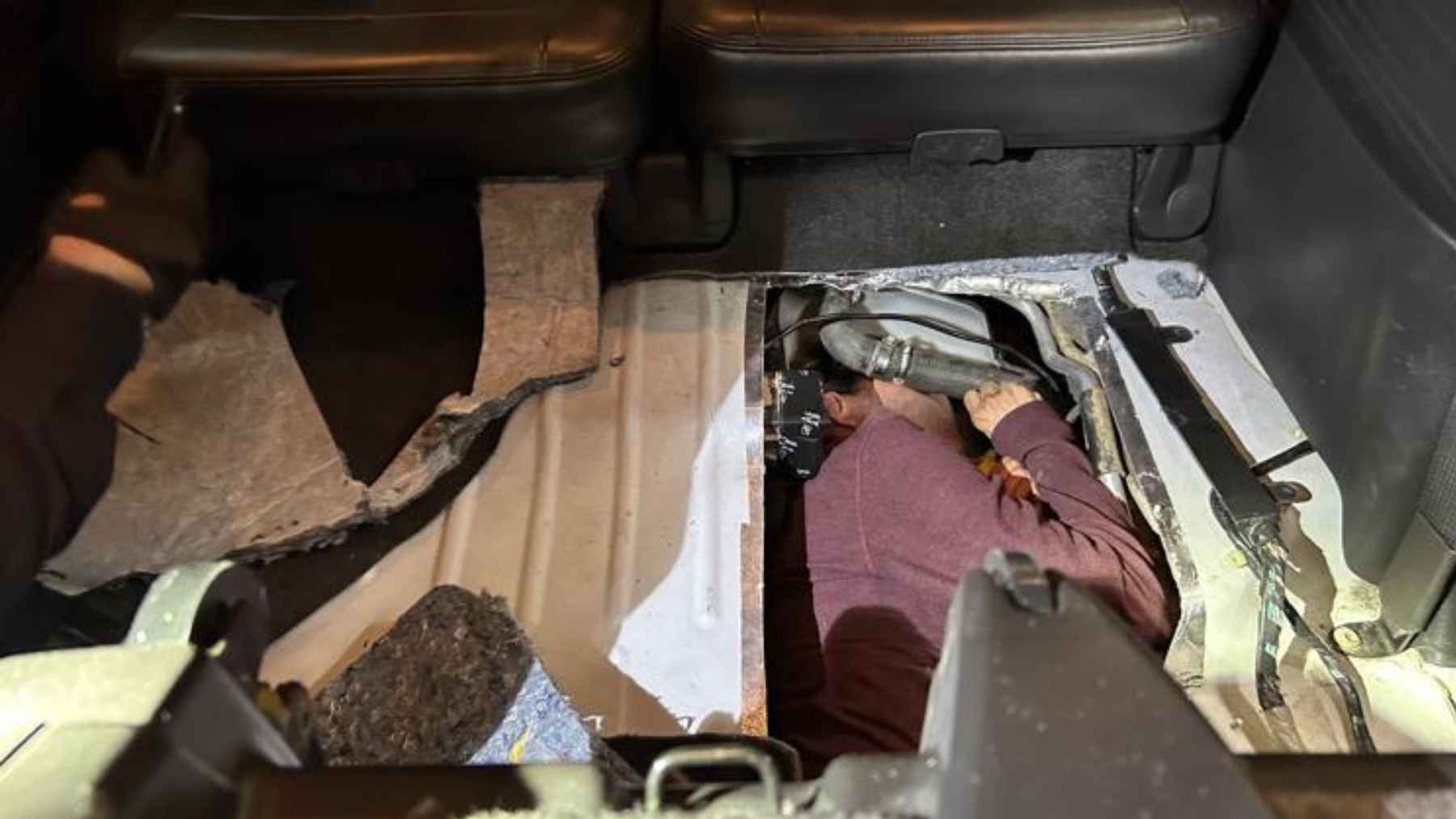
U.S. Customs and Border Protection officers at the San Ysidro Port of Entry arrested a driver after finding a Mexican national hidden in a “non-factory compartment” built into the vehicle’s gas tank area.
Emergency personnel transported the person to Scripps Mercy Hospital in Chula Vista to treat burn injuries linked to the smuggling attempt.
It’s a shocking story on its own, but it also points to something easy to miss. When smugglers turn fuel-system spaces into hiding places, the danger is not only human. It’s environmental, too, especially at a crossing that handles millions of northbound vehicle entries each year and sits in a region already grappling with air and water quality problems.
What happened
According to CBP and local reporting, the incident began on February 27 when officers encountered a driver in a 2005 GMC SUV entering at San Ysidro.
A CBP canine team alerted to the vehicle’s undercarriage, prompting a secondary inspection that revealed a person concealed in a compartment in the gas tank area.
The person found in the compartment was taken to Scripps Mercy Hospital in Chula Vista for burn treatment, while the driver was arrested and booked into the Metropolitan Correctional Center in San Diego. CBP has not publicly released the driver’s name, and reports note that identifying details remain limited.
San Ysidro Port Director Mariza Marin called the tactic “dangerous and inhumane,” saying the rescue was possible because officers caught the anomaly before it became even worse. That line matters because it frames this as more than an immigration case. It’s a hazardous-conditions case.
Fuel tank risk
A gasoline tank area is not just another spot on a vehicle. It’s the neighborhood of a highly flammable chemical mixture, and gasoline vapors can include hazardous components such as benzene. Federal health agencies warn that gasoline exposure can cause serious harm, and benzene is widely recognized as a carcinogen.
Indeed, a hidden compartment around the fuel system raises a basic question. If a vehicle has been cut, resealed, or modified to create space, what happens when seams fail, fumes build up, or a leak reaches a hot surface? Even without any spill in this specific case, the risk profile is obvious.
And the environmental side is not theoretical. Oil and chemical releases into waterways can kill wildlife, damage habitat, contaminate food chains, and disrupt local economies. A port of entry is built to keep traffic moving, so a fuel leak or fire can quickly become a public safety problem with knock-on impacts.
Air and water pressure
San Ysidro is not a quiet checkpoint. It’s one of the busiest land ports in the Western Hemisphere, and federal transportation data shows it handled 14,829,472 cars entering the U.S. from Mexico in 2024, plus 6,766,420 incoming pedestrian crossings. That’s a lot of idling engines, brake dust, and exhaust on ordinary days.
Air quality around the crossing has been studied for years because residents have raised concerns about traffic impacts.
In a project funded by EPA Region 9, the San Diego Air Pollution Control District monitored PM2.5 at the port and noted that while idling vehicles add to local pollution, regional background concentrations from the Tijuana metro area were a dominant contributor in the border region.
PM2.5 sounds abstract until you picture it. These are particles about 2.5 micrometers across, roughly one ten-thousandth of an inch, small enough to get deep into the lungs.
In one setup, monitors were placed roughly 62 feet from the nearest northbound lanes and about 52 feet above lane level, specifically to capture the impact of queued traffic.
This matters because the region is already dealing with overlapping pollution sources.
EPA has repeatedly described long-running, cross-border sewage flows in the Tijuana River Valley as a problem that can foul air and close beaches, and UC San Diego researchers have reported evidence that wastewater-related pollutants can transfer from water to air along the coast through sea spray aerosols.
Add any fuel-related incident into that mix, and it’s one more stressor on an already stressed system.
Inspection tech
This case was triggered by a classic tool that still works extremely well: a trained canine team. But the bigger trend at land ports is a push toward layered detection, including non-intrusive inspection portals that can scan vehicles before an officer ever opens a panel.
A January 2026 Government Accountability Office report describes CBP’s expansion of large-scale non-intrusive inspection systems at land ports, including low-energy portals for passenger vehicles and multi-energy portals for commercial traffic.
GAO says CBP awarded contracts beginning in fiscal year 2020 to procure and deploy 153 large-scale systems, with 52 fully operational as of February 2025 and the rest still in planning, design, or construction.
The payoff is measurable, but incomplete. GAO reports scanning of passenger vehicles rose from 2% in fiscal year 2020 to 8% in fiscal year 2024, while commercial vehicle scanning rose from 16% to 27% over the same period.
It’s progress, but it also shows how much remains unscanned at the most crowded crossings.
The business side
Smugglers do not build these compartments as a hobby. Marin’s statement points directly at profit incentives, and that is the uncomfortable truth behind a lot of “how did anyone think this would work” moments.
On the other hand, the legitimate economy surrounding the border depends on predictability. Millions of yearly crossings mean long lines are already part of daily life, with commuters watching the gas gauge drop and breathing exhaust while they inch forward.
When an incident forces extra inspections or slows lanes, the costs show up in time, fuel, and air pollution.
What’s interesting is that the port itself has been redesigned with sustainability in mind, at least on paper. A GSA fact sheet describing the San Ysidro Land Port of Entry highlights features such as solar photovoltaic systems, geothermal heat exchange, rainwater retention and reuse, and other measures intended to reduce the facility’s carbon footprint.
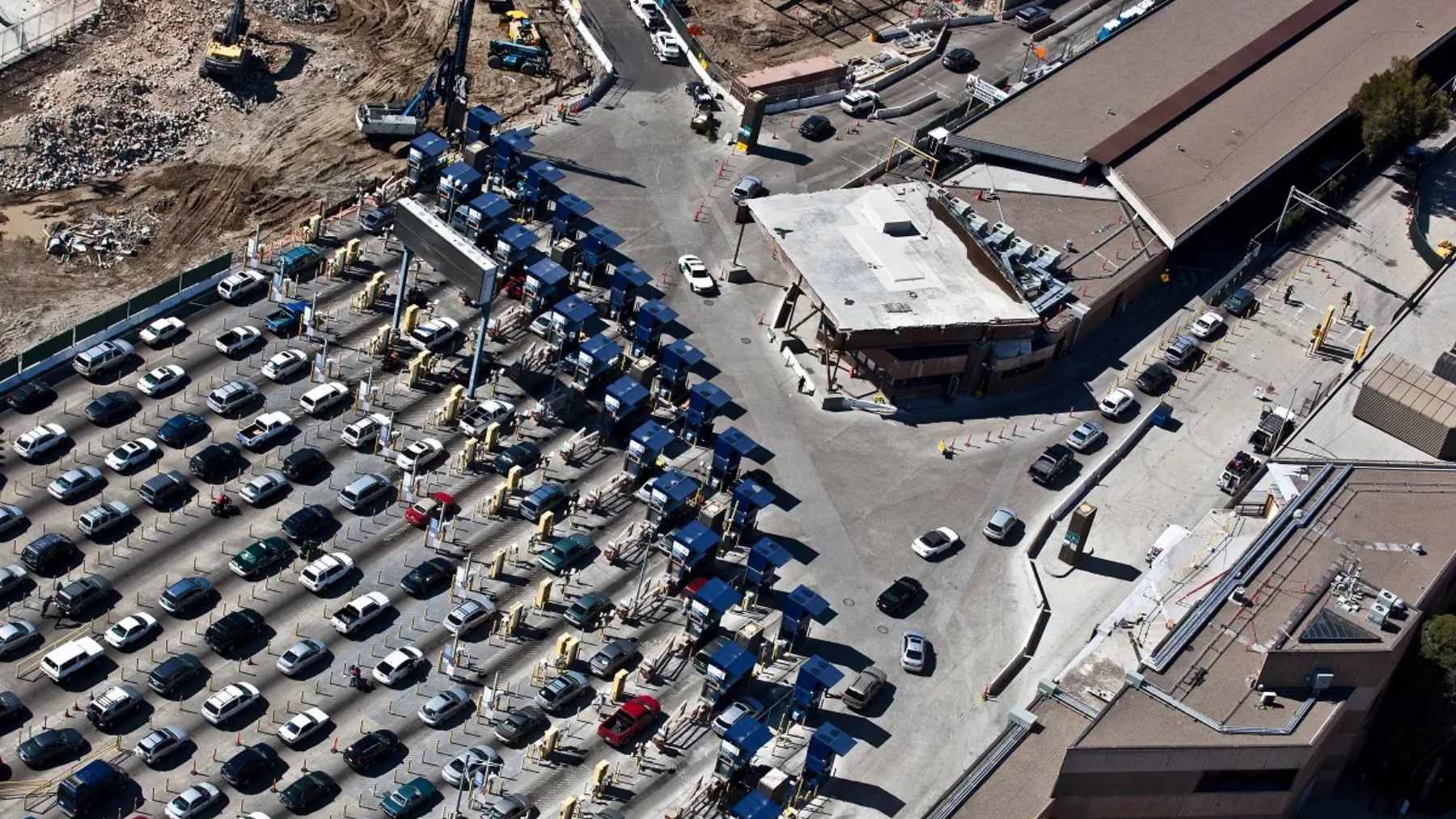
That’s the twist–border security infrastructure is trying to go greener while it faces risks created by dangerous vehicle modifications.
What to watch
For now, investigators will focus on criminal accountability and the specifics of the compartment build, plus the circumstances that led to burn injuries for the person hidden inside.
The public information available so far is limited, so it’s worth being cautious about any claims that go beyond what CBP and local outlets have reported.
The broader takeaway is about resilience. Border security investments increasingly look like dual-use infrastructure, meant to catch contraband and trafficking while also reducing risk at a chokepoint that concentrates vehicles, emissions, and hazardous materials in one place.
GAO’s findings on costs, staffing limits, outages, and long deployment timelines suggest the tech buildout is real, but it’s not yet moving at the pace policymakers often promise.
At the end of the day, this was a rescue and an arrest, but it was also a reminder that “non-factory” fuel-tank compartments can threaten people and the environment at the same time.
The press release was published on U.S. Customs and Border Protection.