A federal judge has ordered the Trump administration to temporarily unfreeze about $2 billion for two major Chicago Transit Authority projects, the Red Line Extension and the Red and Purple Line Modernization.
The money had been paused since October while the U.S. Department of Transportation and the Federal Transit Administration said they were reviewing the grants to ensure funds were not “flowing via race-based contracting.”
It sounds like a narrow legal fight, but it lands in the middle of a bigger environmental problem. Transportation is the largest source of U.S. greenhouse gas emissions, so when a large electric rail build hits a funding freeze, the climate timeline does not just pause on paper.
What the ruling does right now
U.S. District Judge Thomas Durkin granted the CTA’s request for a temporary restraining order and directed the federal government to resume funding, with the order’s enforcement held until Friday morning to allow time for an appeal.
CTA said that without court intervention it would have been forced to stop work on both projects this Friday, and it noted that payments should resume by Friday at 10 a.m. unless the federal government obtains a stay.
Durkin’s central point was timing. He said CTA followed federal rules that were in place when it applied for and received the grants, including requirements to set participation goals for women- and minority-owned subcontractors, and he called it improper to apply new rules retroactively after the money had already been awarded.
He also raised a sharp eyebrow at how narrowly the new scrutiny was applied. Durkin wrote that, among hundreds of transportation grants nationwide, the administration suspended payments only to Chicago and New York, suggesting the compliance reviews may be a “pretextual” justification for something else.
Why transit funding shows up in climate math
The climate logic here is pretty straightforward. EPA data shows transportation accounted for 28% of total U.S. greenhouse gas emissions in 2022, which is why policymakers keep circling back to cleaner mobility options.
And every-day driving adds up in a way people feel in their wallets and their lungs. EPA estimates the average passenger vehicle emits about 0.88 lbs. of CO2 per mile, which is one reason traffic jams do more than waste time.
Public transit is not automatically “zero carbon,” but it can be meaningfully lower per passenger for the most part, especially when ridership is strong and electricity is getting cleaner.
In a Federal Transit Administration analysis presented in an EPA webinar, a single-occupant vehicle was shown at about 0.96 pounds of CO2 per passenger mile, while heavy rail was shown at about 0.22 pounds (with transit averages varying by mode and system).
An electric rail build with local air quality stakes
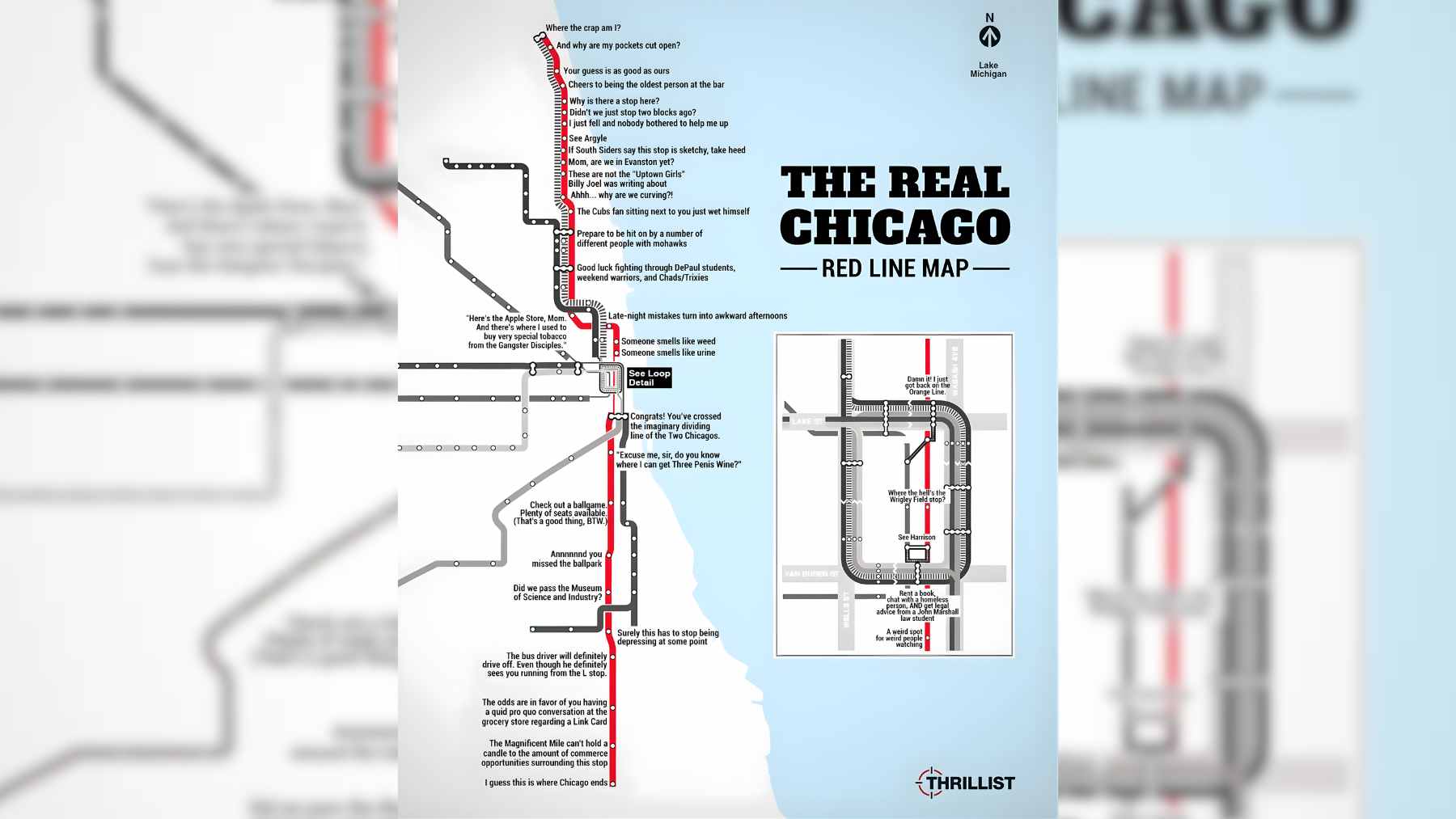
The project at the center of the Chicago dispute is not small. The Red Line Extension would extend the Red Line about 5.6 miles south to 130th Street, add four new stations, and include a new rail yard and related facilities near 120th Street, with the project estimated at $5.7 billion in total cost.
For the Far South Side, the value is not just a new map line. CTA has framed the extension as an access project that can connect residents to jobs and services, and agency planning materials project tens of thousands of daily trips on the extension in the future.
There is also a quiet environmental detail that matters. CTA trains run on an electrified third rail carrying 600 volts, which means the trains have no tailpipe emissions on the street level where people live and breathe, even though the grid’s power mix still affects overall emissions.
The business costs of stopping work midstream
When federal reimbursements stop, it is not just a budget spreadsheet problem. Reuters reported that CTA said the federal government had withheld at least $9.5 million in reimbursements since October, and it warned it would halt work by Friday without emergency relief, a scenario the judge referenced when discussing contractor and public reliance on promised payments.
This is where the business and environmental stories overlap. Major infrastructure projects are long supply chains of labor, materials, and specialized firms, and a stop-and-start funding environment can raise costs, stretch schedules, and make bidders more cautious the next time a public agency goes to market.
The contracting debate itself is also tied to who benefits economically. Durkin noted that federal rules required participation goals for women and minority-owned subcontractors when CTA applied, and he rejected punishing CTA for following those requirements before the administration changed course.
Modern signals and the security lens on infrastructure
The Red and Purple Line Modernization is often described as in a “state of good repair,” but it is also a technology upgrade.
A Federal Transit Administration project profile describes Phase One work that includes a grade-separated flyover, replacement of the signal system, power substation upgrades, and the purchase of 32 new railcars, all aimed at adding capacity and improving operations in a corridor where parts of the infrastructure are nearly a century old.
More tech can mean more resilience, but it can also mean a bigger attack surface, from cyber risks to extreme weather disruptions.
The U.S. Department of Transportation notes that the Department of Homeland Security identifies transportation systems as one of 16 critical infrastructure sectors, with an emphasis on bolstering resilience against natural or human-caused disasters and threats.
That framing is not limited to cities. The Department of Defense has explicitly described climate change as a “critical national security issue and threat multiplier,” warning that extreme weather is already costing the department billions and degrading capabilities.
The official statement was published on transitchicago.com.