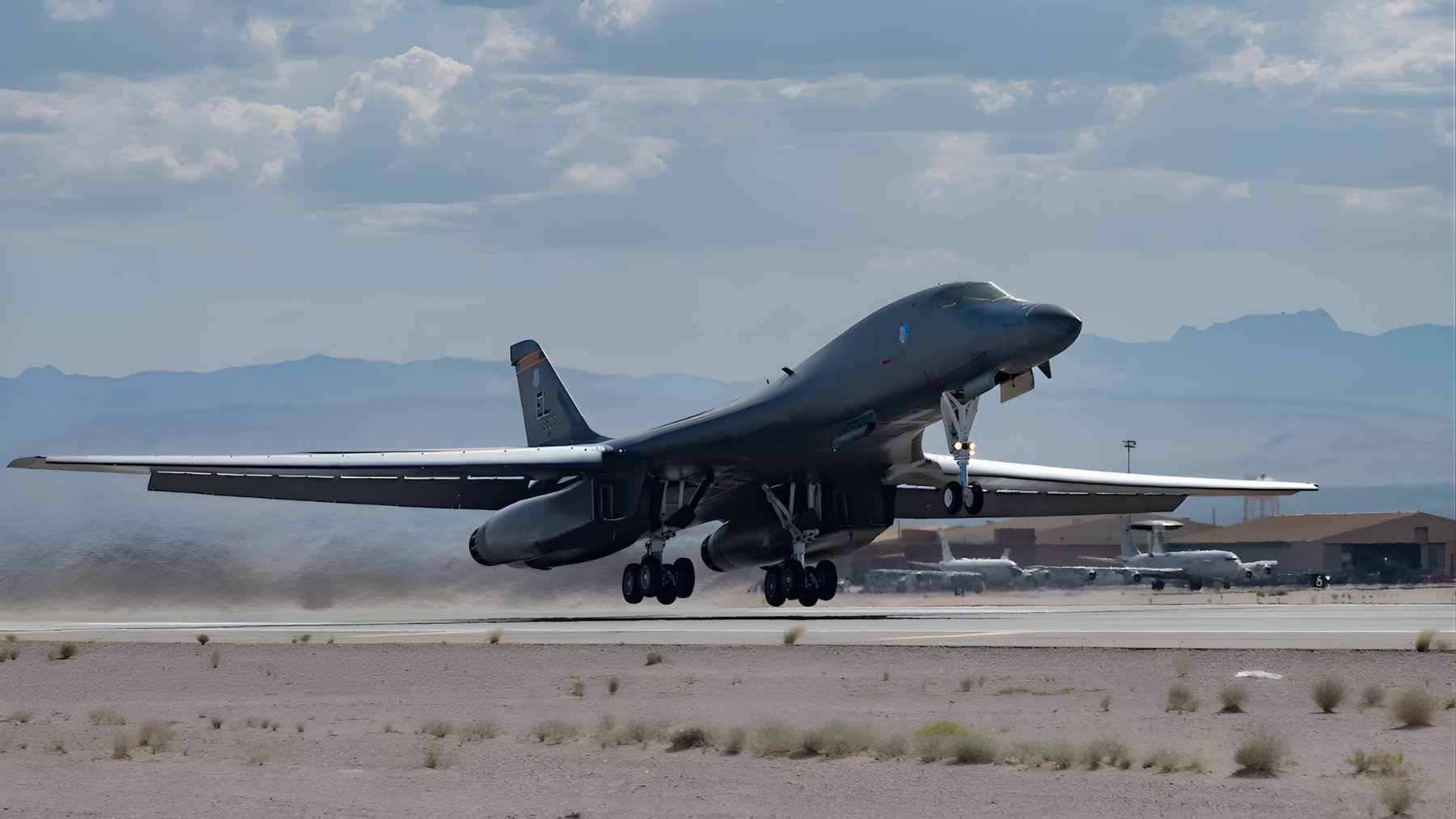
A U.S. Air Force B-1B Lancer recently returned to RAF Fairford in the United Kingdom after missions tied to the escalating conflict involving Iran, but the route back did as much talking as the aircraft itself.
Open-source tracking described a wide arc over the Atlantic and the Mediterranean that avoided large parts of continental European airspace, a sign that even within NATO, alignment can get messy fast.
There is a quieter consequence, too, and it is environmental. When military aircraft are forced into longer corridors, they burn more fuel, emit more carbon dioxide, and can add to aviation’s broader climate footprint, including heat trapping contrails that look harmless from the ground.
That is a hard reality at a moment when aviation is under growing pressure to clean up, from commercial airlines all the way to defense planners.
A bomber’s long way home
Flight tracking databases identified the aircraft as a B-1B with tail number 86-0120, landing back at RAF Fairford around 5:05 UTC on March 18, 2026. Public tracking can be incomplete because the B-1B does not reliably broadcast the same signals civilian flights use, so the visible route should be treated as a partial picture, not a perfect playback.
Even with those limits, the pattern stood out. Open-source analysts described sorties that headed west over the Atlantic, approached the Mediterranean via the Strait of Gibraltar, then pushed east toward operational areas, bypassing French airspace and much of mainland Europe.
So why take the long way? There have been no official public statements explaining the rerouting, and some observers say it could be linked to diplomatic clearances or mission planning choices.
Spain’s government, for its part, has publicly said it would not allow jointly operated bases on Spanish territory to be used for attacks on Iran, which shows how politics can quickly spill into the logistics of airpower.
More miles mean more emissions
Aviation is not a niche climate issue anymore. The International Energy Agency estimates that in 2023, aviation emitted almost 950 million metric tons of energy-related carbon dioxide (roughly 1.05 billion short tons), around 2.5% of the global total.
The carbon math is blunt. The U.S. Energy Information Administration puts jet fuel at about 21.5 pounds of carbon dioxide per gallon burned, so extra time in the air stacks up emissions quickly, especially when long-range missions rely on aerial refueling as part of the plan.
Then there are contrails, the thin white streaks you have probably watched from a parking lot or stuck-in-traffic commute, only thousands of feet higher.
Research in Atmospheric Chemistry and Physics found that in 2019 only about 2% of flights caused 80% of the annual contrail warming impact, which is why avoiding a relatively small set of high-impact conditions can matter a lot.
Fuel logistics show up on the balance sheet
For the military, fuel is both an environmental issue and a business problem. Research summarized by ScienceDaily reported that in 2017 the U.S. military purchased about 269,230 barrels of oil per day (about 11.3 million gallons), and that the Air Force alone bought about $4.9 billion worth of fuel that year.
That is why detours are not just a map detail. Every extra hour aloft can mean more planning, more tanker support in the background, and more demand on the same global jet-fuel supply system that also feeds commercial aviation, airports, and the prices that ripple through the wider economy.
It also explains why energy security and emissions keep getting mentioned in the same breath. The Defense Innovation Unit has pointed to on-site or locally sourced synthetic fuel concepts as a way to reduce supply chain risk while also cutting greenhouse gas emissions, at least in certain environments.
Tech can cut the footprint but politics can override it
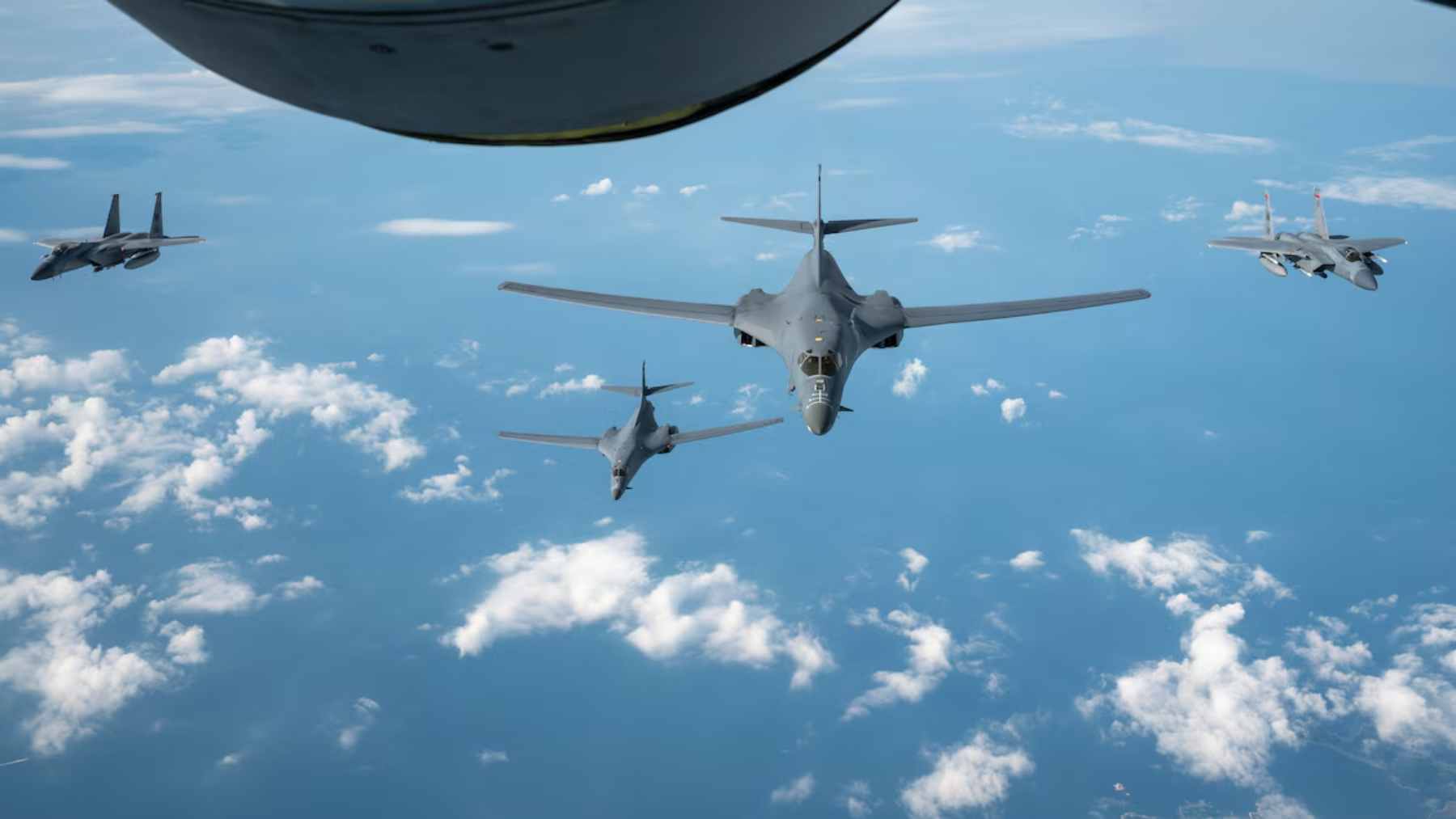
The B-1B is a reminder that modern military aviation is deeply technical, not just muscular. U.S. Air Force fact sheets describe capabilities such as GPS-aided inertial navigation, a synthetic aperture radar for tracking and targeting, and Link 16 connectivity meant to improve situational awareness and coordination.
Commercial aviation is also testing tech that targets climate impact directly. In a transatlantic trial reported by the Associated Press, American Airlines and Google used AI-based forecasting to help crews avoid contrail-prone regions, cutting contrail formation by 62% and reducing the estimated warming effect on the flights that used the tool, without a meaningful rise in fuel use.
But routing is not only about weather, efficiency, and clever software. The bomber detours linked to the Iran operation show the other constraint, sovereign airspace, where political decisions can force longer or less flexible corridors even if a more climate-friendly option exists on paper.
Sustainable fuels are the long game
If there is a brighter thread here, it is the push to scale alternatives to conventional jet fuel.
The U.S. Department of Energy’s Sustainable Aviation Fuel Grand Challenge sets targets that include at least a 50% lifecycle emissions reduction compared to conventional fuel, 3 billion gallons per year of domestic sustainable aviation fuel by 2030, and 35 billion gallons by 2050 to meet domestic demand.
The Air Force has also backed early stage work on new fuel pathways, including a project it said could turn captured carbon dioxide into jet fuel, while the Defense Innovation Unit has explored synthetic fuel prototypes designed for contested environments where fuel supply chains are fragile.
None of this changes the footprint of an urgent long-range sortie overnight, but it shows where defense tech and procurement are trying to go.
For readers, the takeaway is straightforward. When you see reports of bombers taking wide detours because allies disagree, you are also seeing how geopolitics can raise the environmental cost of military operations in real time.
The official statement was published on Department of Energy.