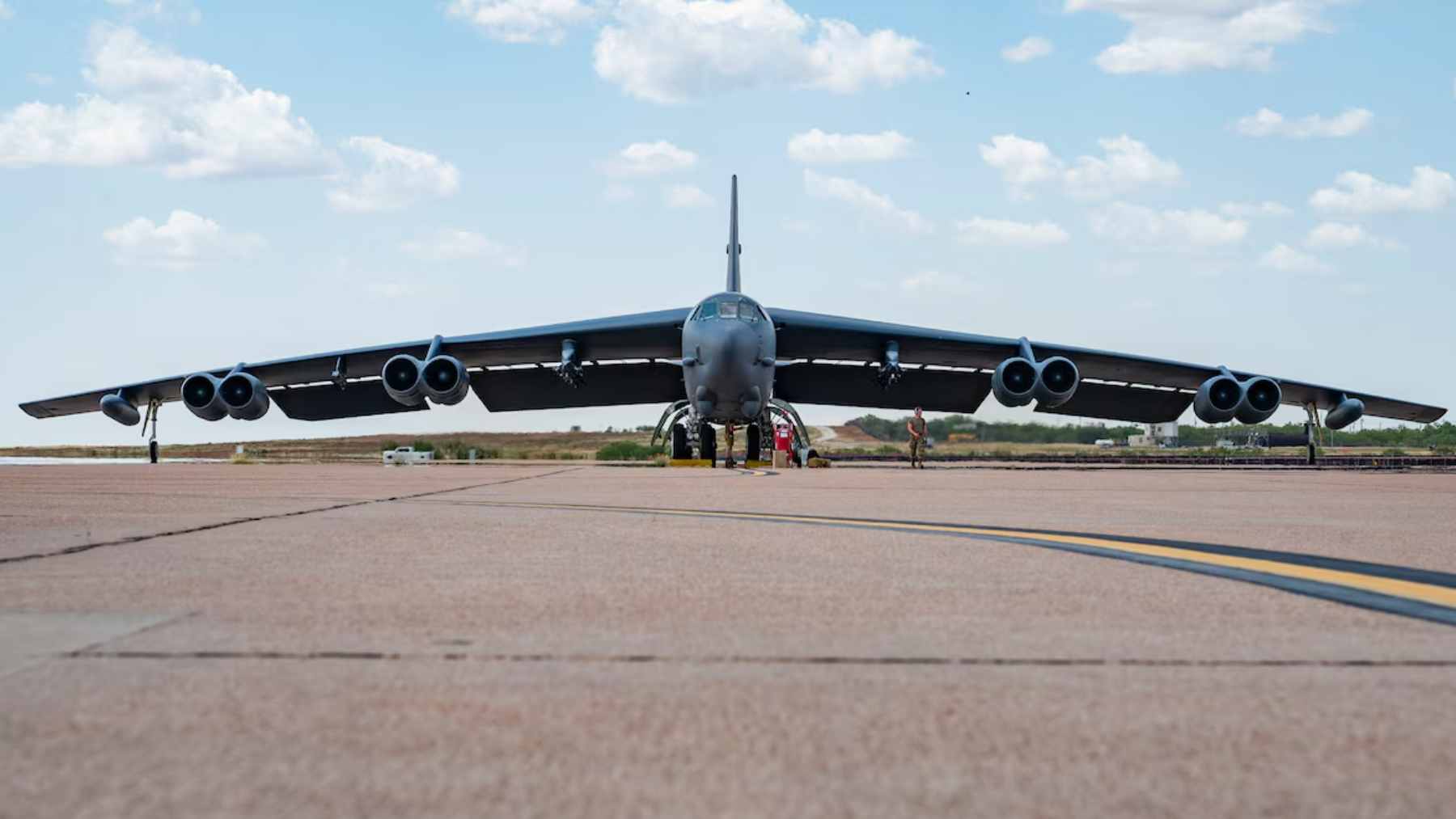
The U.S. military says its B-52 Stratofortress bombers have started flying overland missions in Iran as American forces expand air superiority. In a March 31 press briefing, Joint Chiefs Chairman Air Force Gen. Dan Caine said U.S. forces have struck “more than 11,000 targets” in 30 days and have begun “the first overland B-52 missions.”
That shift matters for reasons most people never see on a radar screen. The Pentagon has already spelled out how heavily its own emissions are tied to fuel for operations. The result is a growing environmental tab that rises right alongside the operational tempo.
Air superiority also expands the fuel bill
Caine framed the new overland flights as a sign of increasing freedom of action over Iranian airspace, which can open new routes and timelines for long-range strikes. From a purely operational standpoint, it is a milestone in a campaign that is still evolving in public view, mostly through briefings and after-action updates.
From an environmental standpoint, the math is blunt. The Department of Defense reported that its FY 2021 Scope 1 and Scope 2 emissions totaled 56 million tons of CO2 equivalent, and it said operational sources made up 63% of that total.
It also said jet fuel combustion accounted for 80% of operational emissions and 50% of total DoD emissions.
To put jet fuel into everyday terms, the U.S. Energy Information Administration lists it at 21.5 lbs. of O2 per gallon. Air Force materials describe a B-52 fuel load of roughly 47,975 gallons, so burning a full internal load would translate to about 517 tons of CO2 from fuel combustion alone.
A 1950s bomber headed for a 2050 world
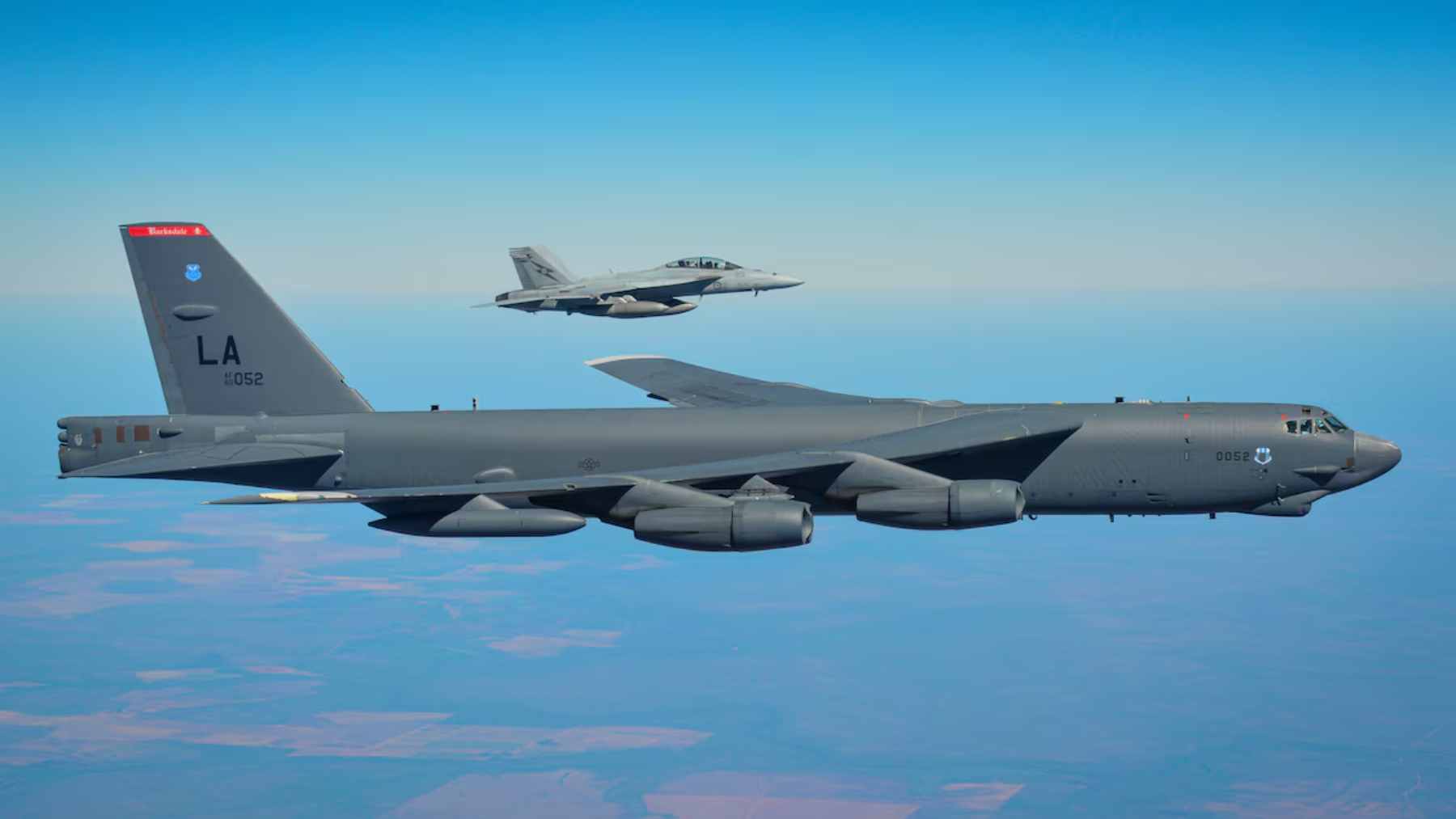
It is easy to see the B-52 as a relic, but the Air Force still plans around it as a long-term asset. The service says the B-52 joined its inventory in 1955 and “currently expects to operate B-52s through 2050.”
That timeline overlaps almost perfectly with the period when governments and corporations are under pressure to cut emissions dramatically. So the real question is not whether the B-52 can keep flying, because modernization is already in motion, but how its fuel needs to fit into a world that is trying to decarbonize.
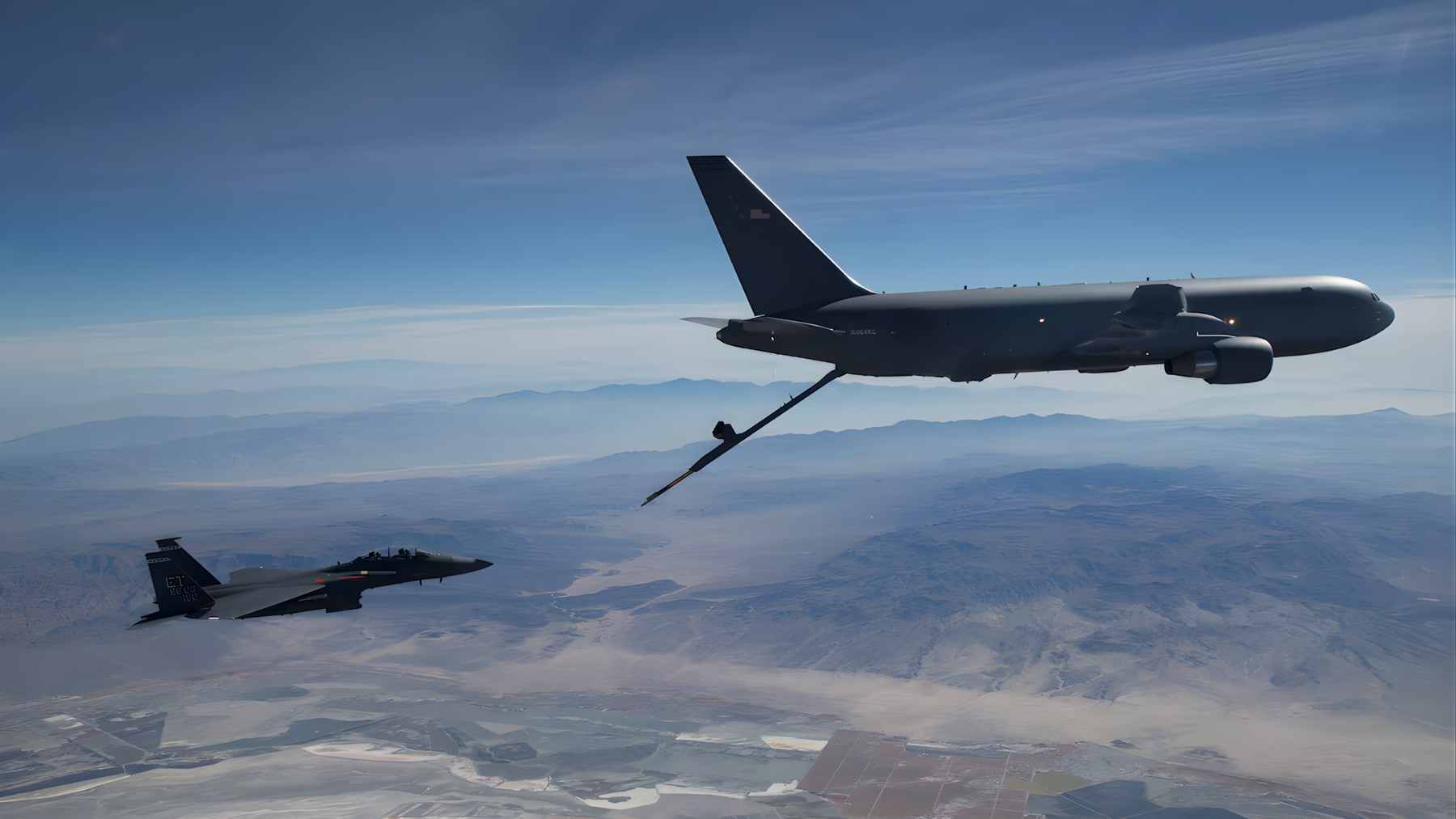
Overland missions underscore how quickly strategy can change the emissions curve. When air defenses are degraded and airspace access improves, older “workhorse” aircraft can be used in new ways, and that can mean more sorties, more tanker support, and more fuel burned even if each individual aircraft gets more efficient.
Defense modernization is big business with climate consequences
Keeping the B-52 relevant is not a small tweak. Boeing says it received a $2 billion Air Force contract to continue development of the B-52 Commercial Engine Replacement Program, installing Rolls-Royce F130 engines and other subsystem upgrades on test aircraft. Boeing also notes the Air Force is designating the upgraded version as the “B-52J.”
Industry and Air Force-focused reporting has pointed to significant efficiency gains from the re-engining effort, often described as around a 30% improvement versus the legacy TF33 engines. That could reduce fuel burn per mission and ease some logistics pressure, but it does not guarantee lower total emissions if overall flight hours rise.
The tech stack is changing, too, not just the engines. The Air Force says a B-52 completed a ferry flight after installation of a modernized AESA radar and that testing activities are planned throughout 2026 ahead of a production decision, while also reiterating the B-52’s service life “extends through 2050 and potentially beyond.”
Oil shocks hit households and boardrooms fast
The environment story is not only about emissions inventories. War in a major energy corridor can quickly spill into everyday life, like the gas price sign you pass on your commute or the shipping surcharge buried in an online checkout page.
Reuters reported that Brent crude climbed sharply in March amid the conflict, with prices rising as high as about $118, and it noted U.S. gasoline prices crossed $4 a gallon for the first time in more than three years. When fuel prices jump, it pressures household budgets and also pushes up costs for airlines, logistics firms, and manufacturers that move goods long distances.
Reuters also reported that Iran’s Revolutionary Guards threatened to target major U.S. companies, listing firms including Microsoft, Google, Apple, Intel, IBM, Tesla, and Boeing. That is not an environmental statistic, but it shows how modern conflict can pull tech and industrial supply chains into the blast radius, directly or indirectly.
Can a fighting force cut emissions at the same time?
The Pentagon’s own climate planning tries to balance emissions cuts with readiness. In its plan to reduce greenhouse gas emissions, DoD describes resilience as a primary objective and links emissions reductions with steps like on-site clean energy generation, storage, efficiency measures, and microgrids that can keep bases running during disruptions.
For aviation, alternatives have been explored for a long time, even if scale is still the hard part. The Air Force reported a 2006 B-52 test flight using a synthetic fuel blend in all eight engines, and it later reported that Fischer-Tropsch synthetic fuel blends were certified for operational use in the B-52H.
Those milestones were framed at the time as steps toward more flexible fuel sourcing.
There is also growing pressure coming from the business side of defense. DoD’s emissions plan notes a proposed Federal Acquisition Regulation rule that would require major federal contractors to publicly disclose greenhouse gas emissions, identify climate-related financial risks, and set science-based targets, which would ripple through the defense industrial base if finalized.
What to keep an eye on next
In the near term, the public will likely learn about the air campaign in fragments, through official briefings and a steady trickle of operational details. If overland bomber missions expand, the environmental impact will not only come from the aircraft themselves but also from the wider machine behind them, including tanker support, basing, and logistics.
On the modernization track, key signposts include the B-52J engine test program and the radar program’s 2026 test campaign, because those upgrades shape how long the aircraft stays relevant and how many missions it can fly efficiently.
The official transcript was published on War.gov.