What if an eight-hour ferry ride (or a long, looping drive) suddenly turned into a 40-minute trip under the sea? That is the promise behind China’s long-discussed Bohai Strait Cross-Sea Corridor, a proposed undersea link between the Liaodong Peninsula and the Shandong Peninsula that would connect the Dalian and Yantai region much more directly.
But speed is only half the story. This project is also a climate bet, and the payoff depends on details most travelers never see, like where the electricity comes from, how much cement goes into the tunnel lining, and what happens to a biodiverse chain of islands sitting right in the middle of the route.
A shortcut measured in minutes and billions
The proposed crossing is often described as roughly 76 miles long, with about 56 miles underwater, which would put it in a different league from famous undersea links like Japan’s Seikan Tunnel and the Channel Tunnel between France and the UK.
Cost estimates have varied over the years, but public figures commonly land in the hundreds of billions of yuan, with timelines stretching well into the next decade. In other words, despite some splashy headlines, this is still a planning and feasibility story, not a ribbon-cutting moment.
There is a simple reason it keeps coming back. The Bohai Strait acts like a natural moat, forcing a major detour for people and freight, and that friction shows up everywhere from delivery schedules to regional business ties.
Rail can be cleaner, but the grid decides
Transport pollution is still a massive piece of the climate puzzle, with transport sector CO2 emissions reaching close to 8 gigatons in 2022 by the International Energy Agency’s estimate. That is why any shift from car-heavy travel to electrified rail tends to get policymakers excited.
Rail is already one of the lowest-emitting ways to move people and goods at scale. The IEA notes that rail carries a meaningful share of passengers and freight while producing only a tiny slice of transport emissions, and it estimates average emissions per passenger-kilometer are about one-fifth those of air travel.
Still, “electric” is not automatically “clean.” If the trains run mostly on coal-heavy power, the pollution does not vanish, it just moves from tailpipes and ship stacks to power plants, and you still end up paying for it one way or another (sometimes literally, through the electric bill).
The concrete problem hiding inside megaprojects
Concrete is the part that can surprise people. Even if operations are relatively low-carbon, the build itself can come with a huge upfront climate cost because tunnels consume enormous volumes of concrete and steel.
Cement is the key culprit inside concrete, and MIT’s Climate Portal puts it bluntly: cement production accounts for around 8% of global CO2 emissions worldwide. That is why the climate “break-even point” for a megatunnel can hinge on construction choices just as much as ridership.
The IEA also warns that cement is “not on track” for net zero, with emissions intensity needing steep declines this decade, which puts pressure on big infrastructure buyers to demand lower-carbon mixes, clinker substitutes, and stronger standards.
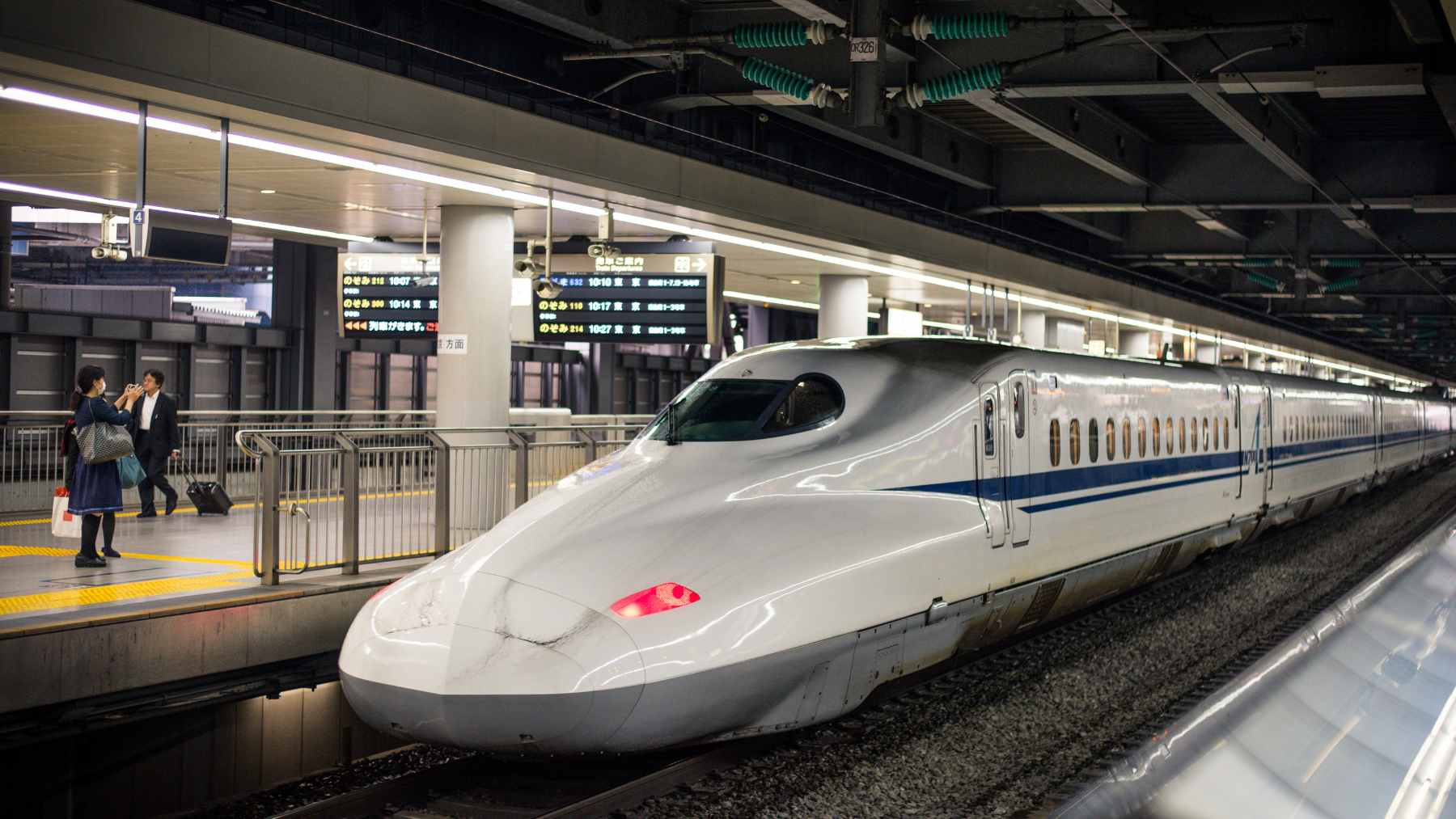
It is not as glamorous as a 250 km/h headline, but it is where a lot of the climate math lives.
Bohai Sea biodiversity is not a footnote
The Bohai Sea is not empty space to drill through. Reporting from Dialogue Earth highlights that the Changshan archipelago, a chain of islands near the proposed route, is described as habitat for migratory fish, birds, and seals, and has been floated as a candidate site for “national marine park” status.
That same reporting also points to a major red flag raised by researchers: the potential impact on migratory birds and the spotted seal has not been fully studied in publicly available work, even though experts argue those species deserve special attention in environmental impact assessments.
If you are looking for a single question that can slow a megaproject, this is the kind of question.
Wildlife is not the only issue. Large-scale construction can mean seabed disturbance, stockpiles of excavated material, noise, dust, and localized water-quality impacts, especially if work spreads across multiple islands to support shafts or bridge segments.
Smart monitoring helps, but it also raises security stakes
One reason China and other countries even consider undersea corridors at this scale is that tunnel safety technology has evolved fast. Modern concepts lean heavily on real-time monitoring and predictive maintenance, which can spot small problems before they turn into shutdowns, or worse, emergencies.
A 2024 open-access review in the Journal of Rock Mechanics and Geotechnical Engineering explains how distributed fiber-optic sensors can measure strain and temperature changes over long distances, which is a strong fit for tunnels where you need continuous health checks rather than occasional inspections. Essentially, it is like turning the tunnel into a living dashboard.
But there is a tradeoff people rarely talk about. The more you connect critical infrastructure to networks and control systems, the more you have to treat cybersecurity as a safety issue, not an IT afterthought.
ENISA, the European Union Agency for Cybersecurity, has warned that rail systems are rapidly digitizing and that railway infrastructure and systems are “key assets,” which makes security planning part of resilience planning.
What business and defense planners will watch next
Supporters of the Bohai link have long pitched it as an economic integrator, not just a faster commute. Academic research on the Bohai Strait Cross-Sea Channel argues it could improve accessibility and strengthen economic linkages across multiple coastal urban clusters, essentially tightening the web between major industrial regions.
It also has the feel of strategic infrastructure, because anything that reshapes logistics at a national scale tends to matter for supply chain security, emergency mobility, and broader national planning.
Dialogue Earth reports that the project has been treated as strategically significant in past planning discussions, even as environmental risk and feasibility questions have slowed it down for decades.
So, what should readers keep in mind? Watch the environmental review details, watch the materials plan (especially cement), and watch the power story.
The official analysis was published on the International Energy Agency website.