The U.S. has shifted a sizable number of Patriot air defense missiles from Europe toward the Middle East as Washington diverts resources into its war with Iran, the Associated Press reports, citing U.S. defense officials.
The immediate goal is protection, including reinforcing Turkey after ballistic missiles crossed its airspace.
But there is a quieter takeaway that matters for anyone tracking ecology and the environment. When high-end interceptors are burned down against cheap drones, the result is not only a security gap and a bigger defense bill, it is also more manufacturing, more fuel use, and more carbon pollution tied to a conflict that is already leaving visible scars like fires at fuel sites and power outages.
Europe’s air defense is getting thinner
AP says two Patriot systems were sent from Germany to Turkey, and missiles for the system were moved from various locations around Europe to strengthen defenses in the Middle East. NATO has also intercepted ballistic missiles fired from Iran over Turkey’s airspace, and U.S. and NATO commanders have acknowledged shifting some air defense capability east.
U.S. officials told AP that Patriot missile stocks are “absolutely” dwindling and called the situation “pretty concerning.” The White House pushed back in a statement from press secretary Karoline Leavitt, saying the U.S. has enough stockpiles to meet the goals of “Operation Epic Fury.”
This matters because the Russian threat has not gone away. AP notes Russian drone incursions affecting NATO neighbors including Poland and Romania, while Ukraine’s President Volodymyr Zelenskiy warned Kyiv could “definitely” face Patriot shortages if the U.S. keeps redirecting resources.
A $4 million answer to a $35,000 problem
The Patriot system is designed for high-end threats like aircraft, cruise missiles, and short-range ballistic missiles. Yet U.S. officials told AP that Patriots are being used in the Middle East against threats that “don’t require them,” especially low-cost Iranian Shahed drones.
That mismatch shows up fast when you look at price tags. A Reuters Breakingviews column says Patriot PAC-3 MSE missiles cost about $4 million each, while Shahed drones “start” around $35,000, and Axios has reported a Shahed cost range of roughly $20,000 to $50,000.
So the defender can end up paying far more per interception than the attacker pays per drone launched. Reuters also describes Gulf states firing hundreds of PAC-3 MSEs early in the conflict, which is exactly the kind of exchange that can drain inventories and finances at the same time.
The climate impact that rarely gets briefed
Here is the part that often gets lost in the weapons talk: a UN climate process submission on military and conflict emissions says data is poor, but estimates suggest the world’s militaries are responsible for about 5.5% of global greenhouse gas emissions, and that figure does not even include emissions from warfighting itself.
In the U.S., Brown University’s Costs of War research has argued the Department of Defense is the world’s largest institutional user of petroleum, making it a major emitter tied directly to operational energy.
At the same time, the Pentagon’s own Plan to Reduce Greenhouse Gas Emissions frames efficiency and cleaner energy on bases as a resilience advantage, including protection against grid disruptions from extreme weather, cyberattacks, or kinetic attacks.
And the current conflict already has a measurable climate footprint. A Climate and Community Institute research snapshot estimates the first 14 days of the US-Israel-Iran conflict generated about 5.56 million tons of CO2 equivalent, driven by categories that include destroyed infrastructure, burned fuel, and fuel used in combat and support operations.
Merops shows where counter-drone tech is headed
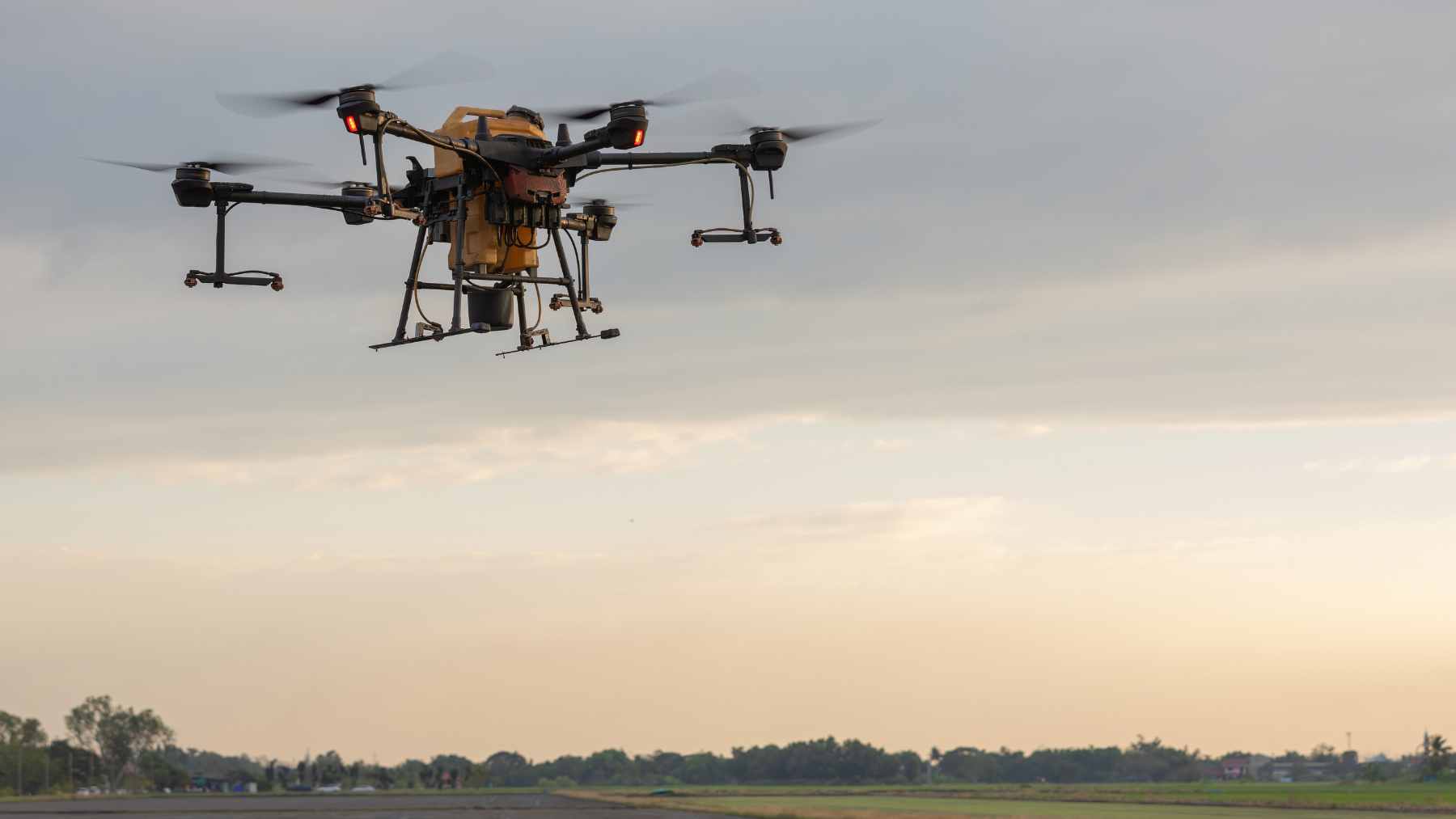
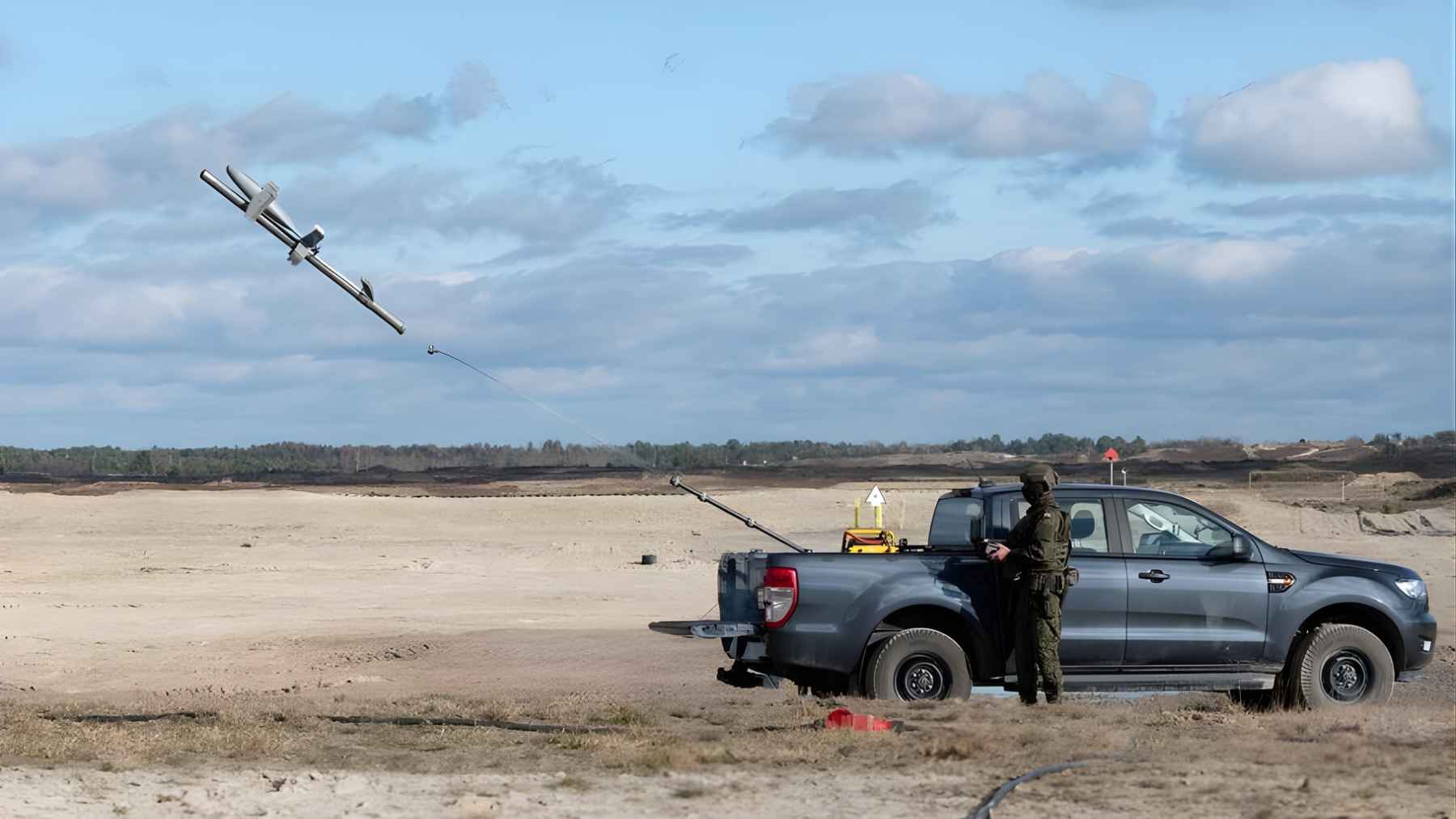
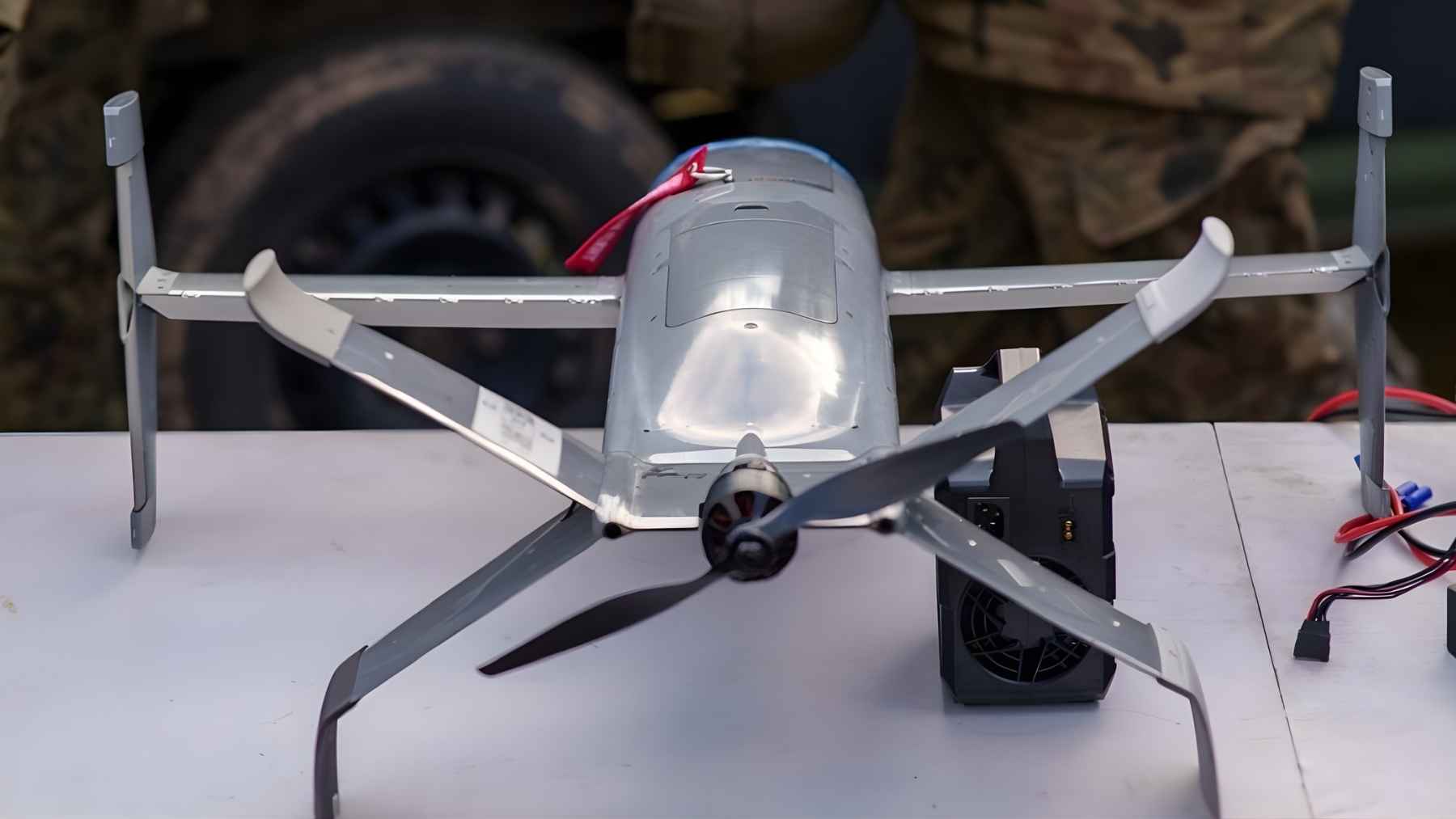
The U.S. is now trying to get out of the “million-dollar missile versus cheap drone” trap with a different approach. AP reports the Merops anti-drone system can fit in a pickup truck and takes down drones more cheaply by using drones against drones, with U.S. officials saying only a limited number were initially operational in the Middle East and more were on the way with training underway.
Axios says the U.S. has rushed 10,000 Merops interceptor drones to the Middle East and describes them as AI-enabled systems stress-tested in Ukraine. Reuters adds a key detail for the business and supply-chain side, saying Ukraine is deploying reusable Merops interceptors priced around $15,000 each.
If the concept scales, it could help reserve Patriots for ballistic missiles and other high-end threats while pushing day-to-day drone defense onto cheaper hardware and software. That would not eliminate the environmental footprint, but it could reduce the number of large interceptors that have to be built, shipped, and replaced after every massed attack.
Energy grids are now part of the battlefield
The environmental stakes get even clearer when you look at what drones do beyond the battlefield. On Saturday, Reuters reported a drone strike on an energy facility in Ukraine’s Chernihiv region that left the regional capital fully without power, part of a broader campaign against energy infrastructure.
Once electricity becomes unreliable, daily life shifts into emergency mode. Reuters reported this week that Ukraine’s petrol imports more than doubled in February amid high demand from households relying on generators during power outages caused by attacks on the energy system.
This is why air defense has become a climate story, too. Protecting power generation, substations, and fuel storage is about keeping lights on and preventing fires and releases that add pollution on top of the immediate human harm, even while countries try to decarbonize and modernize their grids.
The next fight is the reload
Even if the shooting stops tomorrow, inventories do not magically refill. The Foreign Policy Research Institute warned that U.S. and partner Patriot batteries fired 943 rounds in 96 hours, which it says amounts to about 18 months of production from a shared production line running at roughly 620 interceptors per year.
The Pentagon is also seeking an additional $200 billion in funding tied to the Iran war, according to AP, and that kind of spending pressure tends to reshape procurement priorities quickly. On the private side, Reuters argues Gulf demand could pour money into European and Ukrainian defense startups building “counter-UAV” systems, with the conflict acting as a brutal marketing campaign for what works and what scales.
What should readers keep in mind as this story evolves? Air defense decisions are now being made at the intersection of security, industrial capacity, and climate impacts, and the numbers behind “cost per intercept” are starting to matter almost as much as the weapons themselves.
The analysis was published on “Climate and Community Institute“.