Wormholes are usually pictured as a kind of sci-fi subway system through the cosmos, a tunnel that could send a spaceship from one galaxy to another in a single leap. But a new theoretical study says that famous mental picture may have been built on a misunderstanding.
According to the authors, the original “Einstein Rosen bridge” that inspired today’s wormhole stories was never meant to be a physical tunnel at all. Instead, they argue it behaves more like a quantum mirror linking two opposite directions of time.
In practical terms, that means the bridge might connect the future and the past of one universe rather than two distant points in space.
This fresh look at a nearly 90 year old idea lands right in the middle of some of modern physics’ toughest puzzles, including the black hole information paradox and the question of what really happened “before” the Big Bang.
It does not give us a shortcut for interstellar travel. But it could, to a large extent, reshape how experts think about time itself.
What Einstein and Rosen were really trying to fix
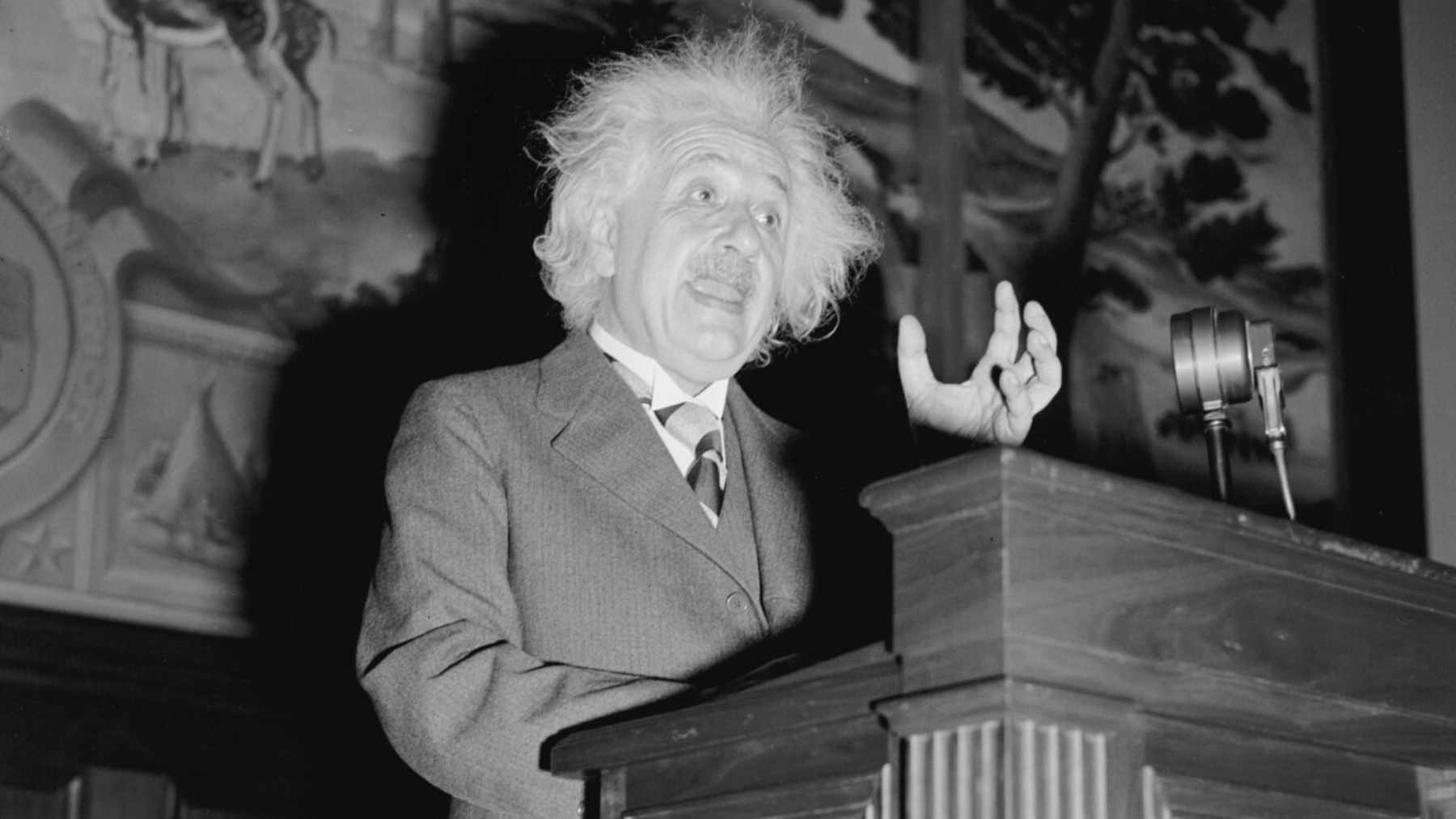
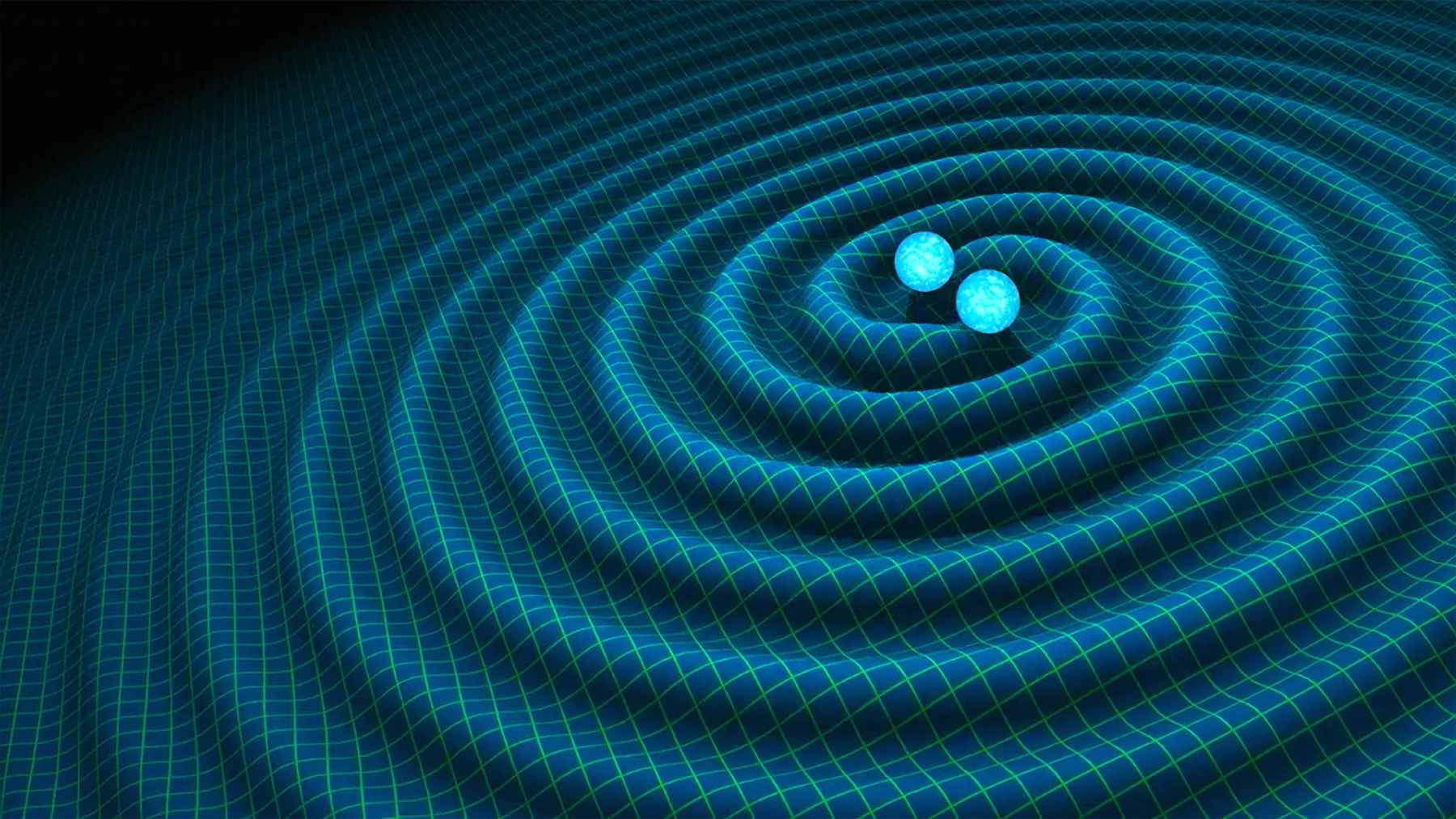
In 1935, Albert Einstein and his collaborator Nathan Rosen introduced a mathematical construction that linked two identical copies of spacetime along the throat of what we now call a black hole.
On paper, it looked like a bridge between two regions. In reality, their goal was much less cinematic. They were trying to describe particles and fields in strong gravity without breaking either general relativity or the still young rules of quantum mechanics.
Later generations of physicists took that bridge and ran with it, imagining it as a tunnel you could in principle cross. By the late 1980s, theorists had mapped out many exotic “wormhole” solutions. The catch was always the same.
Within Einstein’s original theory, the bridge pinches off so quickly that not even light can make it through. You would need bizarre “exotic matter” with negative energy to hold it open, and nothing like that has ever been detected in nature.
That is why, for the most part, wormholes have stayed in the realm of speculation and science fiction, even as they kept popping up in movies and theoretical papers.
Two arrows of time instead of one
The new work, led by astrophysicist Enrique Gaztanaga together with K. Sravan Kumar and João Marto, takes a very different tack. Instead of asking whether someone could travel through the bridge, they ask what the bridge means for the deep structure of quantum theory in curved spacetime.
In standard quantum field theory, physicists quietly pick one direction for time to flow and then define particles and their energies with respect to that choice. Einstein and Rosen pointed out long ago that gravity complicates this picture. Near horizons, such as the edge of a black hole, the math naturally produces two time directions, not one.
In the new framework, those twin arrows of time are not a bug to be ignored. They are built into the description. The authors use a “direct sum” structure, where a complete quantum state is written as the combination of two mirror components.
In one component, time flows the way we experience it. In the other, it flows in the opposite direction relative to the same underlying geometry.
Seen this way, the Einstein Rosen bridge is not a spacetime tunnel. It is the bookkeeping device that ties those two time-reversed components together into a single physical world.
A new angle on the black hole information paradox
This two-sided view of time becomes especially important when you look at black holes. Since the 1970s, work by Stephen Hawking and others has shown that black holes are not completely black. They emit radiation and can very slowly evaporate away.
At first glance, that evaporation seems to erase information about everything that fell in, which clashes with a core principle of quantum mechanics.
Most attempts to fix that “information paradox” bring in speculative new physics at the smallest scales, such as strings, quantum gravity effects at the event horizon or an ill-defined holographic screen at the edge of the universe.
In the new study, Gaztanaga and his colleagues argue you may not need any of that. If you keep both arrows of time in the quantum description, information that appears to vanish across the horizon in our time direction can be carried along the reflected one. From the full two-sided viewpoint, the evolution stays reversible and no information is truly lost.
At the end of the day, that is a very different picture from the simple story of a hole that eats everything and forgets. It suggests that when we track only one time direction, we are seeing just half of a deeper, mirror symmetric process.
Echoes before the Big Bang
The same idea spills over into cosmology. Our observable universe looks like it began 13.8 billion years ago in a hot, dense state and has been expanding ever since. In textbooks, that starting point is often treated as the absolute beginning of time.
In the mirror time framework, the Big Bang looks less like a birth and more like a bounce. One side of the quantum state describes a contracting phase. The other describes an expanding one. The “bang” is the transition between them.
In that picture, our universe could be the interior of a black hole that formed in a previous cosmic phase. Smaller black holes from that earlier era might survive the bounce as relics in today’s universe, contributing to what we currently lump together as dark matter.
Here is where observations start to matter. The authors point to subtle asymmetries in the cosmic microwave background, the faint afterglow of the Big Bang, as hints that mirror-like quantum components may already be leaving fingerprints in the sky.
What this means (and does not mean) for everyday life
If all of this sounds abstract, that is because it lives at the intersection of the very large and the very small, where no experiment can yet fully probe. For people worried about power bills or traffic jams, it will not change much tomorrow morning.
But for physicists, treating time as fundamentally two sided could be a big conceptual shift. It offers a concrete way to keep quantum theory reversible even in the presence of horizons and singularities. It also builds a bridge between long-standing puzzles in black hole physics and open questions about the first moments of the universe.
What it does not do is make science fiction wormholes any more likely. In this new view, you do not jump through an Einstein Rosen bridge to visit the other side of the galaxy. Instead, the bridge quietly does the bookkeeping behind the scenes, making sure that the hidden, time reversed part of reality stays in lockstep with the part we can see.
At the end of the day, the message is surprisingly down to earth. To a large extent, the universe may be stranger and more symmetric than our everyday sense of time suggests.
The next breakthroughs in gravity and cosmology might come not from new particles or extra dimensions, but from looking more carefully at how time itself is woven into the quantum fabric of spacetime.
The study was published in Classical and Quantum Gravity.