Europe has now put a hard clock on Russian gas, including liquefied natural gas. The EU Council says a full ban on Russian LNG imports takes effect from the beginning of 2027, with pipeline gas phased out later in 2027.
That deadline matters far beyond Brussels. New shipping research suggests Russia’s flagship Arctic project, Yamal LNG, is built around short European runs, and the pivot to Asia could mean fewer voyages, longer routes, and a bigger environmental footprint in some of the planet’s most fragile waters.
Europe’s ban is now on the clock
The EU Council has formally adopted rules to phase out imports of Russian pipeline gas and LNG into the bloc, describing it as a step toward a more resilient energy market.
The regulation also includes strict monitoring, significant penalties, and a built-in “pause button” that can temporarily suspend the ban if security of supply is seriously threatened.
The awkward detail is that Russian gas was still an estimated 13% of EU imports in 2025, worth more than €15 billion (USD $17.5 billion) annually, according to the Council’s own background note. Nobody wants to be caught in a cold snap with a spiking heating bill and not enough supply, and that’s why the transition is structured and phased.
Yamal LNG still leans heavily on Europe
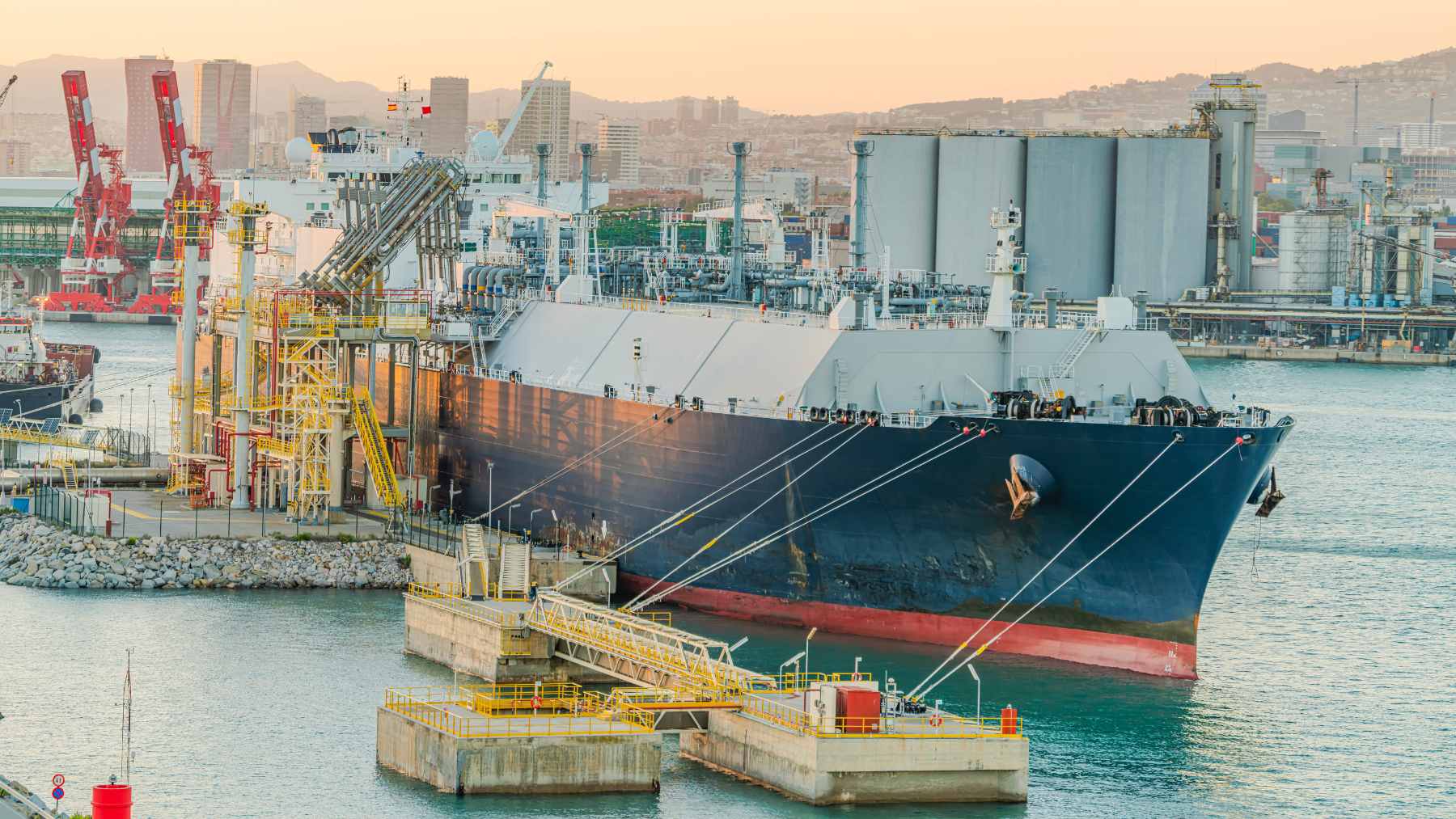
A recent analysis by Norway’s Centre for High North Logistics (CHNL) tracked 270 Yamal LNG shipments from Sabetta in 2025. France received 88 voyages, Belgium 57, and China 50, meaning Europe still absorbed the bulk of Yamal’s output even as Asia remained a major destination.
Then the trend tightened. CHNL counted 70 departures from Sabetta in the first quarter of 2026, and it says every one of them headed to Europe. That is not a subtle signal.
A fleet built for short trips hits a wall
CHNL’s big warning is about capacity. Using the operational fleet of 14 Arc7 ice-class LNG carriers, 6 Arc4 vessels, and 5 non-ice-class ships, the researchers estimate that if all Yamal flows are redirected to Asia after 2027, the fleet can complete roughly 120 to 130 voyages per year.
That is more than a 50% drop compared with the export pace seen in 2024 and 2025.
Why does the math change so fast? Because distance is destiny. CHNL puts the average sailing time from Sabetta to Europe at about 8.83 days, while a full delivery to Asia via transshipment averaged around 50 days, with a full round trip from the transshipment point taking roughly 90 days.
Even without storms, port congestion, or maintenance, longer trips mean fewer trips.
The business response could raise the climate tab
To keep volumes up, one proposed workaround is simply more ships. The Maritime Executive reported that Eikland Energy data suggests Novatek may need to charter 25 to 35 additional tankers from 2027 to redirect LNG to Asia via the Suez Canal or around the Cape of Good Hope during winter constraints.
That is a big business move, and it comes with a straightforward downside. More ship-days at sea usually means more fuel burned and more emissions.
The Arctic is also uniquely sensitive to soot. The Arctic Council notes that black carbon falling on snow and ice accelerates melting by darkening reflective surfaces. If more voyages involve Arctic-adjacent routes or more heavy marine fuel use elsewhere to compensate, the climate impact can stack up in ways that are hard to see on a balance sheet.
Tech and defense are part of the same map
As the routes stretch, monitoring becomes just as important as moving cargo. Investigative and policy communities increasingly rely on ship tracking and satellite observations to understand where fuel is flowing and where emissions are coming from, including methane.
The European Commission’s energy pages highlight methane’s high warming power, at roughly 82.5 times CO2 on a 20-year timescale, which is why leak detection and repair matter so much in gas supply chains.
And the route itself is political. An EU Institute for Security Studies analysis notes that Russia’s Northern Sea Route infrastructure and permitting regime is operated by Rosatom, alongside a navigation framework Russia claims as internal waters, a stance that affects access and oversight.
Add rising traffic and you also raise the stakes for emergency response, including spill preparedness in remote waters, something the Arctic Council has highlighted when discussing fuels and accident risks.
What readers should keep in mind
For the EU, the headline is about energy independence and enforcement. For Russia and global LNG traders, it is about whether Arctic export logistics can be rebuilt fast enough, and at what cost, once the short European routes are no longer available.
For everyone else, the environmental angle is harder to ignore. If the same gas has to travel farther, on more ships, through riskier seas, the “hidden” emissions and accident risks can rise even when the policy goal is to cut dependence and stabilize markets.
The study was published on Centre for High North Logistics.