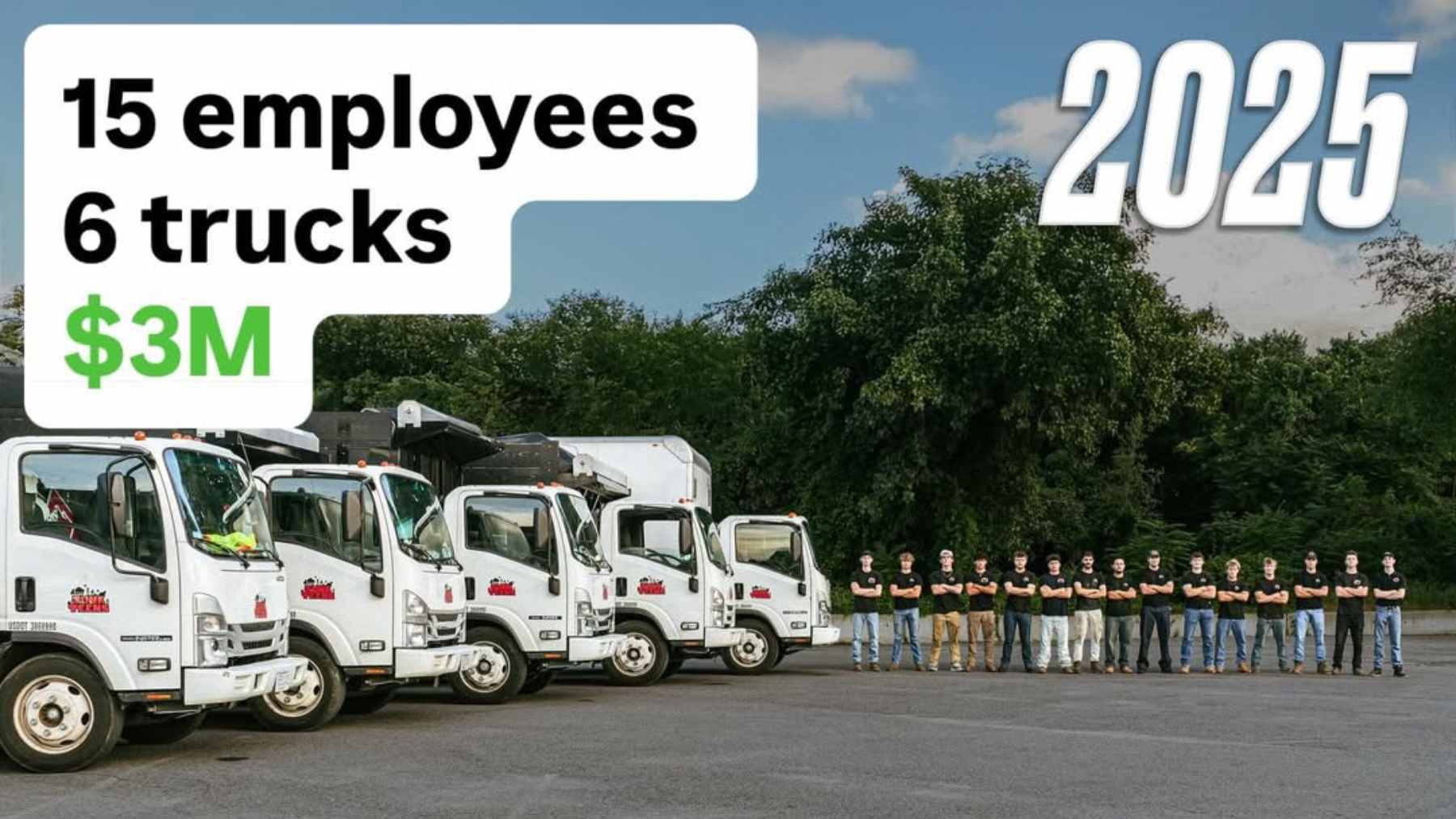
It started the way a lot of modern businesses do, with a random find and a lot of hustle. Kirk and Jacob McKinney, two Gen Z brothers in Massachusetts, turned a used $4,000 pickup truck into Junk Teens, a junk removal and resale company that brought in $3.04 million in revenue in 2025, including more than $686,000 in net profit, according to documents reviewed by CNBC Make It.
The bigger story is not just the money, it is what their growth says about a messy, overlooked climate problem we all contribute to every week when we take out the trash. What if the next big environmental gain is not a futuristic gadget, but simply keeping usable stuff out of landfills and in circulation?
From dump finds to a real circular business
Kirk McKinney says he got “hooked” after a bike ride to the local dump led him to a pair of “really nice speakers” that still worked. He started flipping items on Facebook Marketplace, then realized people would pay local teens to haul unwanted items out of basements, garages, and offices.
Junk Teens scaled that simple idea into a high-volume operation, completing more than 5,500 jobs in 2025 and charging roughly $300 to $600 per job on average.
The company now runs multiple trucks and employs a mix of full-time staff and part-time students, which is part of how they keep labor flexible while demand stays steady.
Landfills are not just “out of sight”
In the United States, trash piles up fast. EPA data shows that in 2018 Americans generated about 292.4 million tons of municipal solid waste, and about 32.1% was recycled or composted. That leaves a lot of material heading to disposal, even when some of it still has real value.
The climate angle is the methane. EPA says municipal solid waste landfills are the third-largest source of human-related methane emissions in the U.S., and it estimates landfill methane in 2022 was roughly equivalent to the annual greenhouse gas emissions of more than 24 million gasoline-powered passenger vehicles.
Tech is quietly doing the heavy lifting
A junk-hauling company is not “tech” in the Silicon Valley sense, but it still runs on modern digital plumbing. Platforms like Facebook Marketplace make it easier to price items, match buyers, and move inventory quickly, which is what turns “someone’s junk” into sellable stock in the first place.
There is also a second-order benefit that is easy to miss. When reuse and recycling work, they cut demand for new production upstream, which is where a lot of energy use lives. For example, using recycled aluminum cans to make new aluminum cans uses 95% less energy than using bauxite ore.
Reuse is good, but not everything is safe to resell
The circular economy can turn risky when the “junk” includes electronics, batteries, or damaged appliances. The World Health Organization says an estimated 68 million tons of e-waste were produced globally in 2022, and only 22.3% was documented as formally collected and recycled.
That gap matters because informal handling can release toxins into the environment, and it also wastes valuable materials that supply chains are scrambling to secure. The Global E-waste Monitor 2024 warns the documented collection and recycling rate is projected to fall further by 2030 if systems do not scale with the growth in discarded devices.
Defense is treating “scrap” like a strategic resource
The military has its own reasons to care about waste, and not only for good PR. U.S. law directs the Department of Defense to run recycling programs at military installations and manage the sale of recyclable materials, which effectively treats waste streams as something worth controlling and monetizing.
The national security link gets even more concrete when you look at specialty materials. A Defense Logistics Agency effort described in a 2022 report was expected to yield about 4,840 to 6,600 lbs. of recycled germanium a year for night vision and thermal-sensing uses, which is a reminder that “recycling” is sometimes about readiness, not just bins and bottles.
The next test is proof, not hype
Junk Teens is aiming higher, projecting $5 million in annual revenue by the end of 2026 and expanding trucks and locations as it competes with national junk removal brands. Growth like that can help push more reuse into the mainstream, especially when customers like hearing their items are being reused instead of dumped.
But credibility will increasingly hinge on numbers that go beyond revenue.
In practical terms, that means tracking what gets resold, donated, recycled, or landfilled, and then measuring what those choices mean for emissions, which is exactly the kind of logic built into EPA’s materials management modeling work on reuse and waste reduction.
The official statement was published on the U.S. Environmental Protection Agency website.