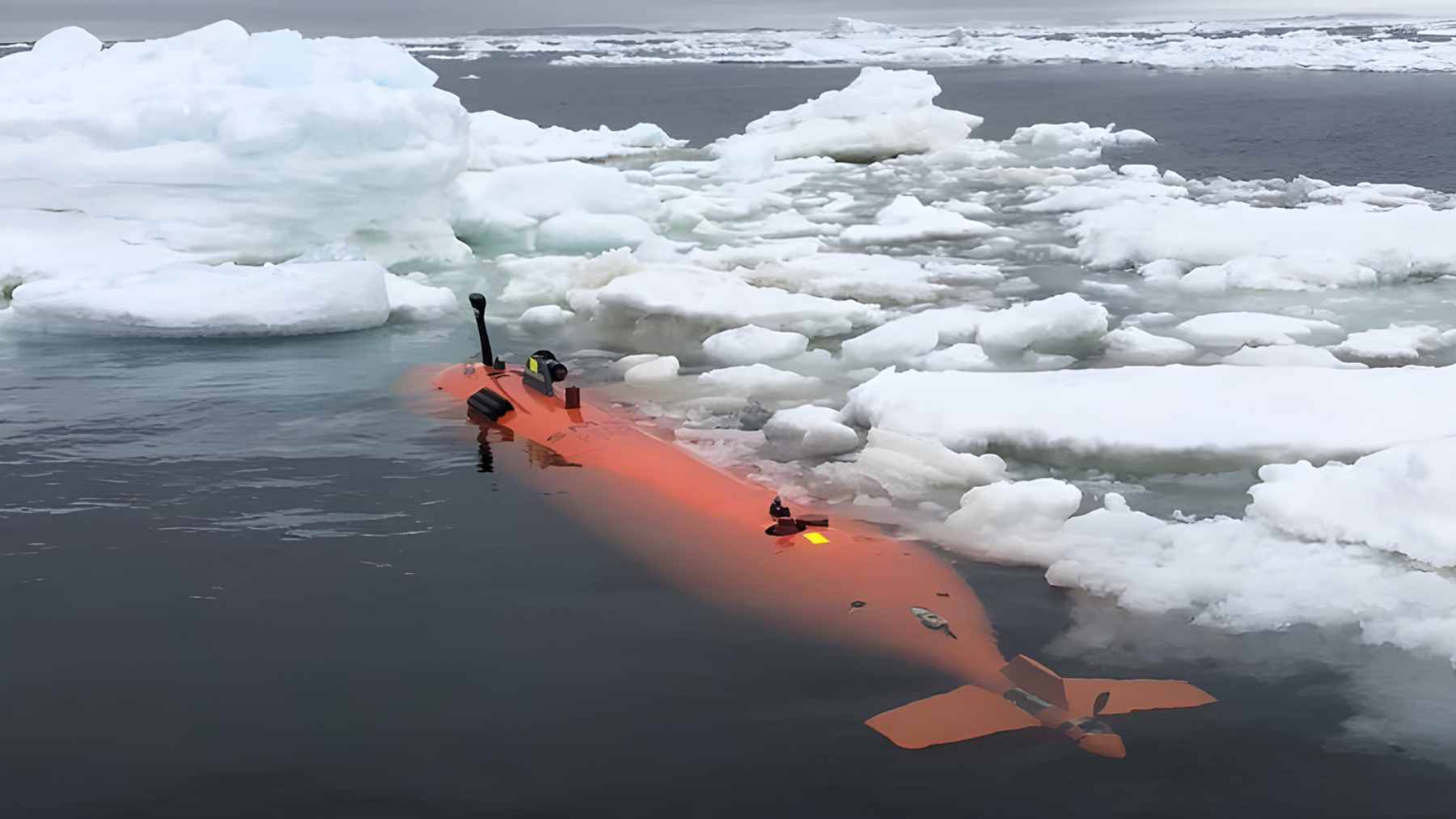
Antarctica just gave scientists one of those discoveries that is both exciting and unsettling. An autonomous submarine called Ran mapped the underside of West Antarctica’s Dotson Ice Shelf and found terraces, fractures, and teardrop-shaped hollows that simple melt models do not fully explain.
Then, on a later mission in 2024, the vehicle disappeared beneath the ice. The bigger story is what it managed to send back first. Those maps suggest one ice shelf can be melted by several different processes at the same time, which could help improve future sea level forecasts.
What Ran found beneath Dotson
What did the robot actually see? Over 27 days, Ran traveled more than 1,000 kilometers under the shelf and mapped about 140 square kilometers of the ice base, reaching as far as 17 kilometers into the cavity. That is roughly 54 square miles of hidden terrain.
The survey showed that Dotson’s underside is not a smooth frozen ceiling at all. Researchers found stacked terraces in quieter zones, smoother eroded areas where currents move faster, and previously unknown teardrop-shaped indentations between 20 and 300 meters long.
As lead author Anna Wåhlin put it, getting those views was “like seeing the back of the moon.”
Why the hidden shapes matter
So why should people far from Antarctica care? Because floating ice shelves work like braces for the glaciers behind them. When they thin, inland ice can move faster toward the ocean. The Dotson study found a sharp east to west contrast. In the thicker eastern and central sections, basal melt rates are about 1 meter per year.
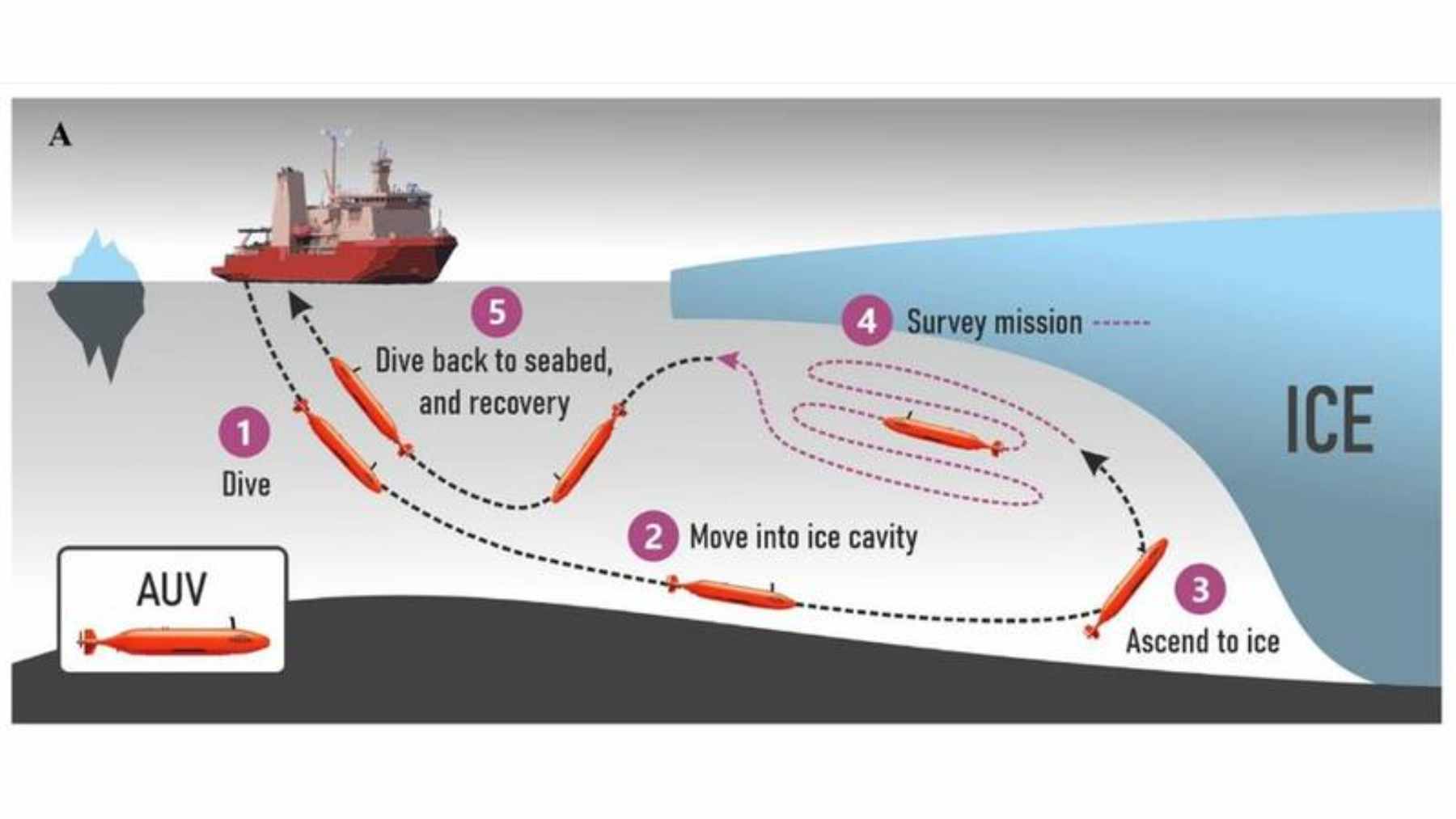
In the west, where ocean circulation pushes warmer water and faster flow beneath thinner ice, average melt rates climb to about 15 meters per year. In practical terms, that means the same shelf can melt in very different ways depending on how water moves below it.
The team also found full-thickness fractures that appear to be widened from below by melting. Some of the oldest cracks in the central survey region became visible in the 1990s, while younger ones are only a few years old. That matters.
For the most part, large-scale models smooth over details like fractures and under-ice channels.
But these hidden features may act like express lanes for ocean heat, concentrating damage where the ice is already vulnerable. And that is where this study really lands, not just in polar science, but in coastal planning, ports, insurance costs, and the flood maps many communities already know too well.
Ran never resurfaced after its later mission, despite search efforts and failed acoustic contact attempts. But the robot’s loss does not erase the value of the data. If anything, it shows how difficult and urgent this work has become as scientists race to understand how Antarctica’s hidden melt machinery is changing.
The study was published on Science Advances.