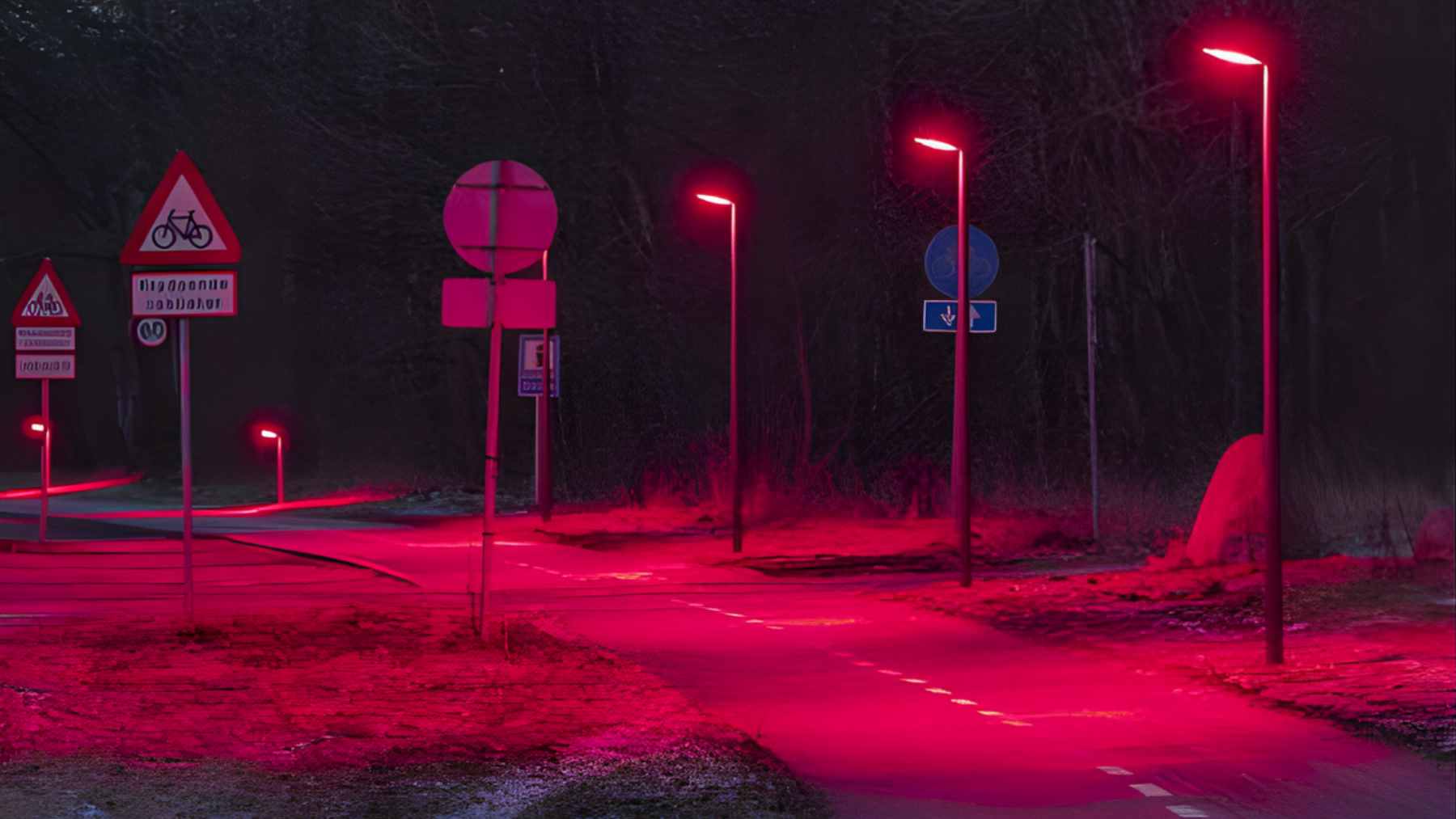
Denmark’s red streetlights are making headlines in 2026, but the project drawing global attention is not brand new.
In Gladsaxe, a municipality near Copenhagen, officials and lighting designers rolled out a bat-friendly lighting system along Frederiksborgvej years earlier as part of a broader effort to cut light pollution without making roads less safe.
That matters, because modern cities all face the same late-night problem. We want streets people can use, but we also flood nearby ecosystems with artificial light.
The idea is simple. Use narrow-spectrum red light in a place where bats feed and move at night. Gladsaxe’s own biodiversity page says the area near Skovbrynet hosts a bat colony, and the municipality notes that research points to stronger behavioral effects from short-wavelength light such as white, blue, and green than from longer-wavelength red light.
That is why the road section was fitted with red lighting instead of standard white illumination.
Bat-friendly lighting and smart urban infrastructure
And this is where the story gets more interesting. This is not only an ecology story. It is also an infrastructure and technology story.
According to the project details published by Light Bureau, the installation covers a 700-meter stretch of road and cycle route, using 30 one-meter bollards spaced 30 meters apart.
The design intentionally leaves darker gaps so light-shy bats can cross without being fully exposed, while still giving cyclists and drivers enough guidance. In practical terms, that means a city is treating lighting less like decoration and more like precision equipment.
Why red lighting may help protect biodiversity
The science behind that choice is not guesswork. A 2017 study in Proceedings of the Royal Society B found that some light-shy bat species avoided white and green light, but were “equally abundant in red light and in darkness.”
That does not mean red light is a magic fix for every road or every species.
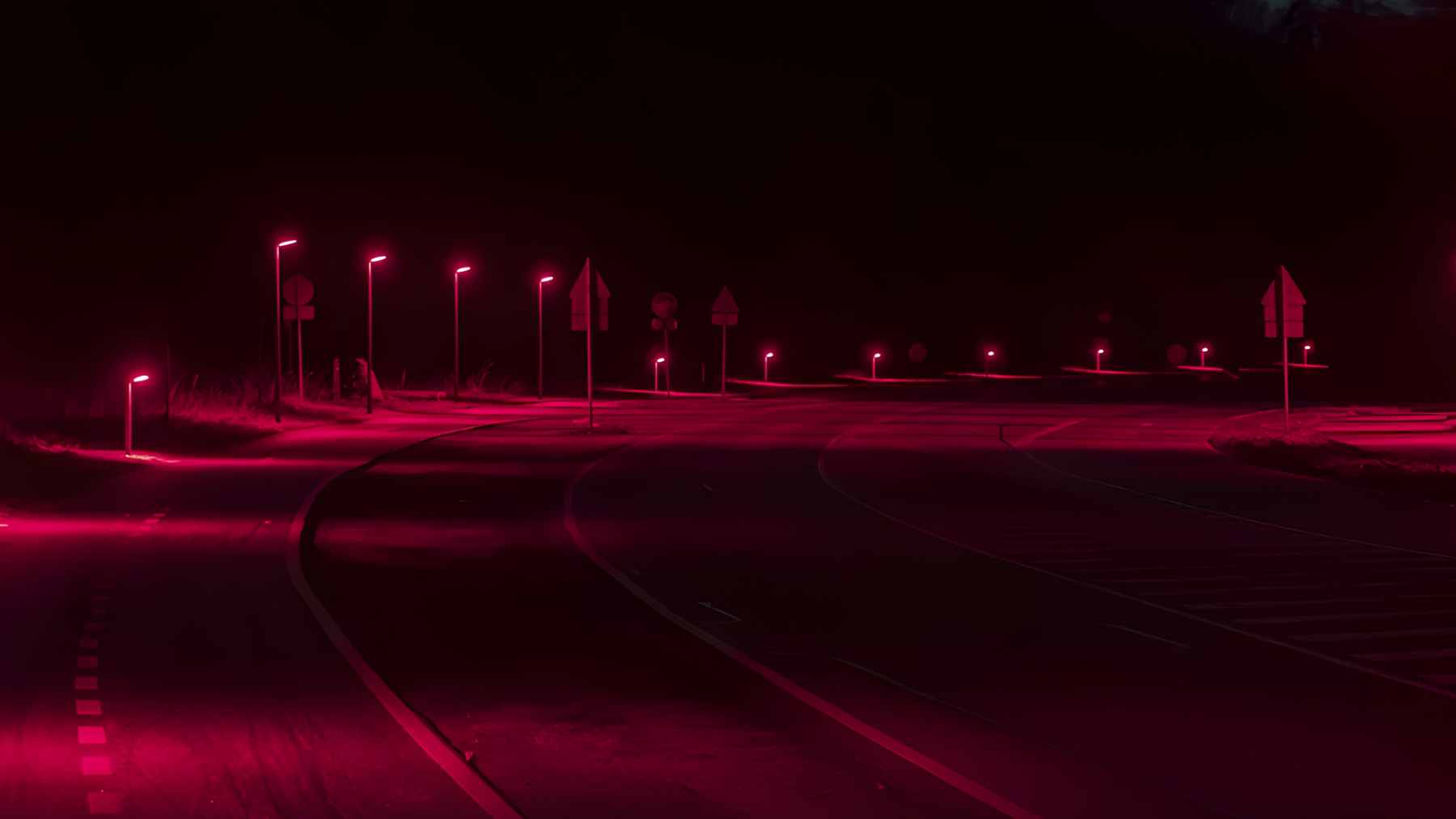
But for the most part, it suggests cities have more options than the usual harsh white glow many of us know from late-night commutes, empty bike lanes, and those washed-out streets that never really feel dark.
That idea connects with broader debates around sustainable urban infrastructure and how technology can reduce environmental pressure instead of adding to it.
Sustainable city design and cleaner public lighting
At the end of the day, Gladsaxe’s red lighting stands out because it turns a familiar urban tool into something more careful. Not brighter. Smarter. As other cities look for ways to cut emissions, protect biodiversity, and modernize public infrastructure, this Danish case may end up being less about the color red and more about learning when less disruptive technology is the better choice.
It also fits into a wider conversation about cleaner energy systems and smarter public design.
The official statement was published on Gladsaxe Municipality.