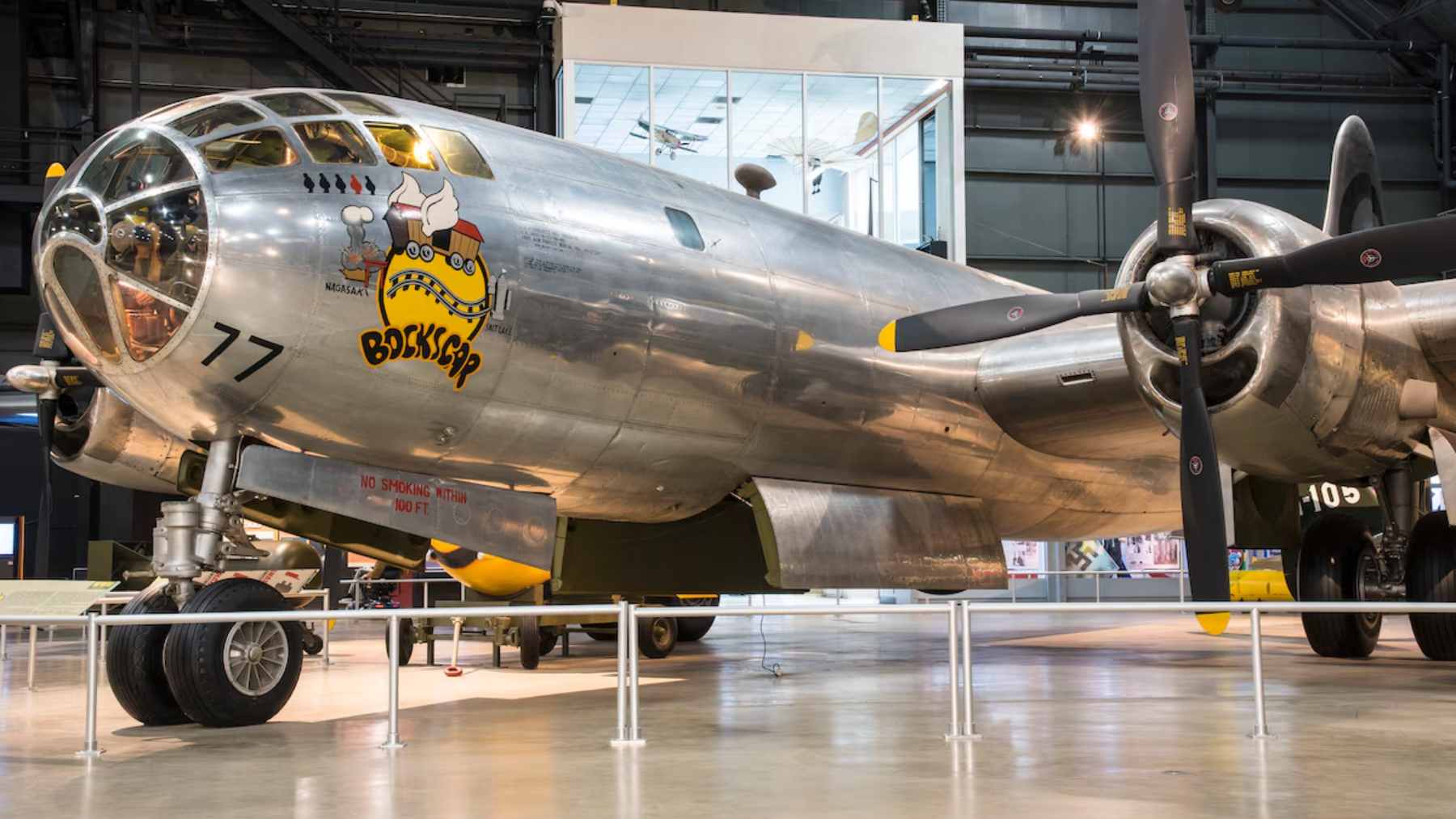
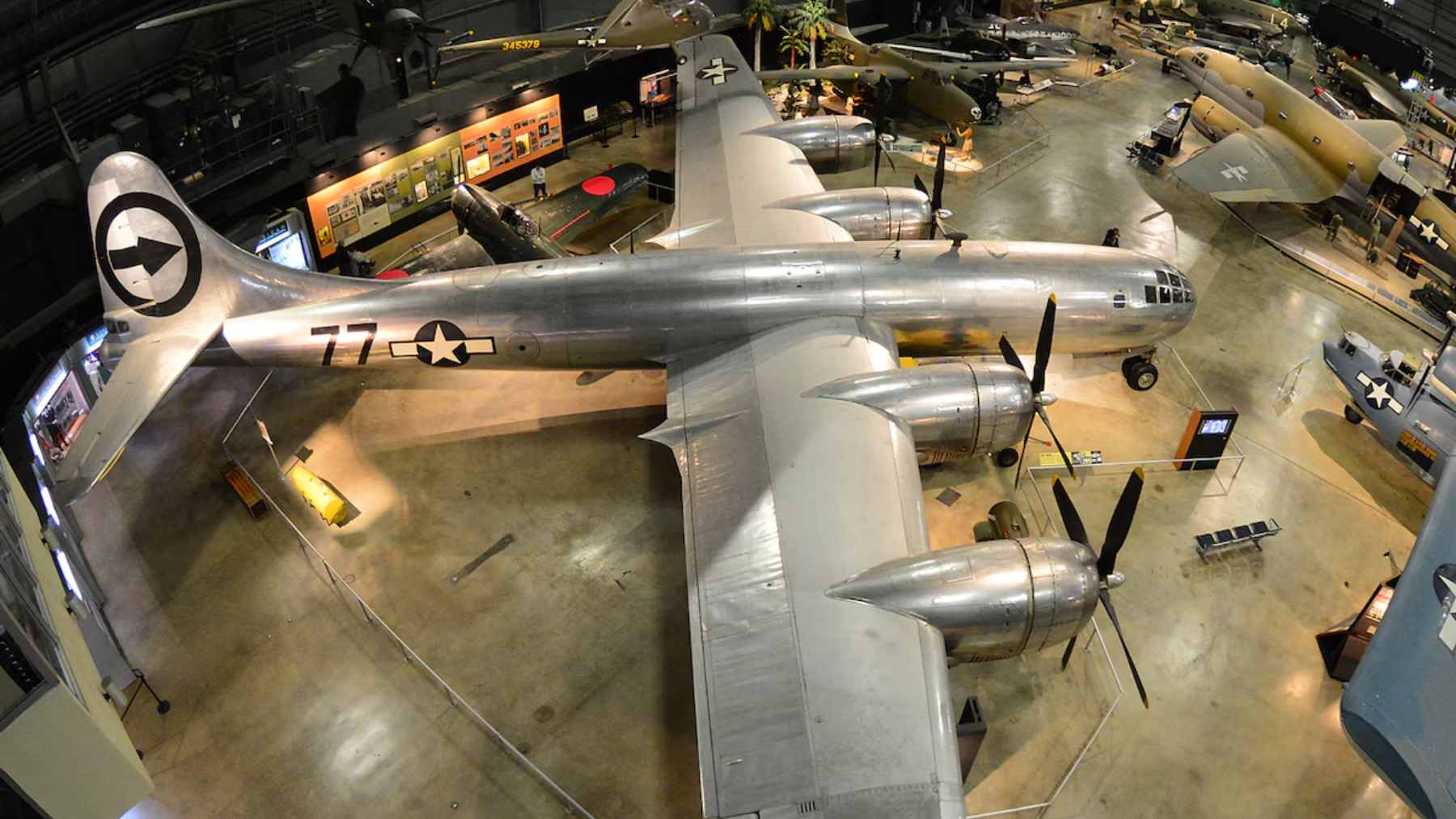
In early June 2026, the rumble of a World War II-era Boeing B-29 Superfortress will return to Spirit of St. Louis Airport in Chesterfield, Missouri. The aircraft, nicknamed “Doc,” is one of only two B-29s still in flying condition and is set to appear at the Spirit of St. Louis Air Show & STEM Expo, a weekend that will also feature the U.S. Navy Blue Angels.
But there’s another reason this visit lands differently in 2026. Aviation is in the middle of a high-stakes transition, trying to keep people and goods moving while cutting climate pollution, and the contrast between a historic bomber and today’s cleaner-fuel push is hard to ignore.
You can admire the engineering and still ask the practical question, “How does flight get greener from here?”
A tight schedule built around a living museum piece
DOC is scheduled to arrive on June 2, with ride flights planned for June 3 and 4 and walk-through tours offered before the air show on June 6 and 7. “The B-29 Superfortress helped shape the course of aviation history,” said John Bales, executive director of the Spirit of St. Louis Air Show & STEM Expo, calling the visit a reminder of “innovation and courage.”
Mark Novak, a B-29 DOC aircraft commander, said “Having B-29 DOC at an air show is about more than just the airplane” and added that “it’s about the story of aviation.”
DOC has been to the St. Louis event before, in 2018 and 2022, and the 2026 stop will be its third appearance. The air show is a 501(c)(3) that says it is financially self-sufficient and relies on ticket sales, corporate sales, donations, and community support, and it also says it has a positive impact on the city and state.
B-29 DOC executive director Josh Wells said “Every time DOC flies into a community, it’s an opportunity to connect people with the history and legacy of the Greatest Generation.”
Radar roots that still shape modern tech
The DOC team has also been highlighting the aircraft’s radar calibration era with a repaint that aims to match its early 1950s look. An Air Force story notes the plane was built in Wichita in 1944 and later assigned to radar calibration duty in July 1951, while aviation historians say it later flew with the 1st Radar Calibration Squadron at Griffiss Air Force Base.
That radar lineage sounds old-school, but the idea is very current. The same basic problem, making sensors trustworthy, shows up today in weather radar, satellite observations, and the environmental monitoring systems that track smoke, storms, and warming oceans.
At a STEM-focused air show, that throughline can be a powerful hook for students who are thinking about what to build next.
The environmental elephant on the flight line
Aviation is not the biggest climate polluter, but it is a stubborn one. The International Energy Agency estimates aviation produced almost 1,045 million tons of CO2 in 2023 and accounted for about 2.5% of global energy-related CO2 emissions, with demand largely recovered from the pandemic era.
And CO2 is not the whole picture. IATA notes that non-CO2 effects, including contrails and nitrogen oxides, can add to aviation’s warming impact, and it also emphasizes the uncertainties that make these effects hard to track flight by flight.
It can feel abstract until you are standing by a runway on a hot day, listening to engines, and suffering in that brutal summer heat we all know.
Where business and defense are placing their bets
For most airlines and aircraft makers, the near-term lever is fuel, not a sudden switch to all-new planes. IATA says sustainable aviation fuel, or SAF, can cut lifecycle CO2 emissions by up to 80% compared with conventional jet fuel, depending on the feedstock and production pathway, and it could contribute a major share of the reductions needed for aviation’s net-zero pathway.
In the United States, the Department of Energy’s SAF Grand Challenge sets goals of 3 billion gallons per year by 2030 and 35 billion gallons per year by 2050, with at least a 50% lifecycle greenhouse gas reduction compared to conventional jet fuel.
Boeing has said it aims to deliver commercial airplanes capable and certified to fly on 100% SAF by 2030, while noting that today’s fuel specifications typically cap blends at 50/50. The defense side has experimented as well, including a 2011 Navy demonstration where the Blue Angels flew on a 50/50 blend of JP-5 and camelina-based biofuel at an air show.
What spectators should watch for next
Air shows are about spectacle, sure, but they also reveal what a community is willing to fund and celebrate.
When modern demonstration jets and an 80-year-old bomber share the same ramp, it is a real-world snapshot of how defense, business, and public expectations collide, from noise concerns to local air quality to the cost of new fuels.
If you go, listen for the “why” behind the airplanes, not only the horsepower. Ask exhibitors how sensors are being used to measure emissions and contrail risk, and how airports are electrifying ground equipment to cut local fumes, because small questions can have big ripple effects.
The press release was published on B-29 Doc.