What looked like another routine intercept over Alaska turned into a sharper reminder of how busy the Arctic sky has become.
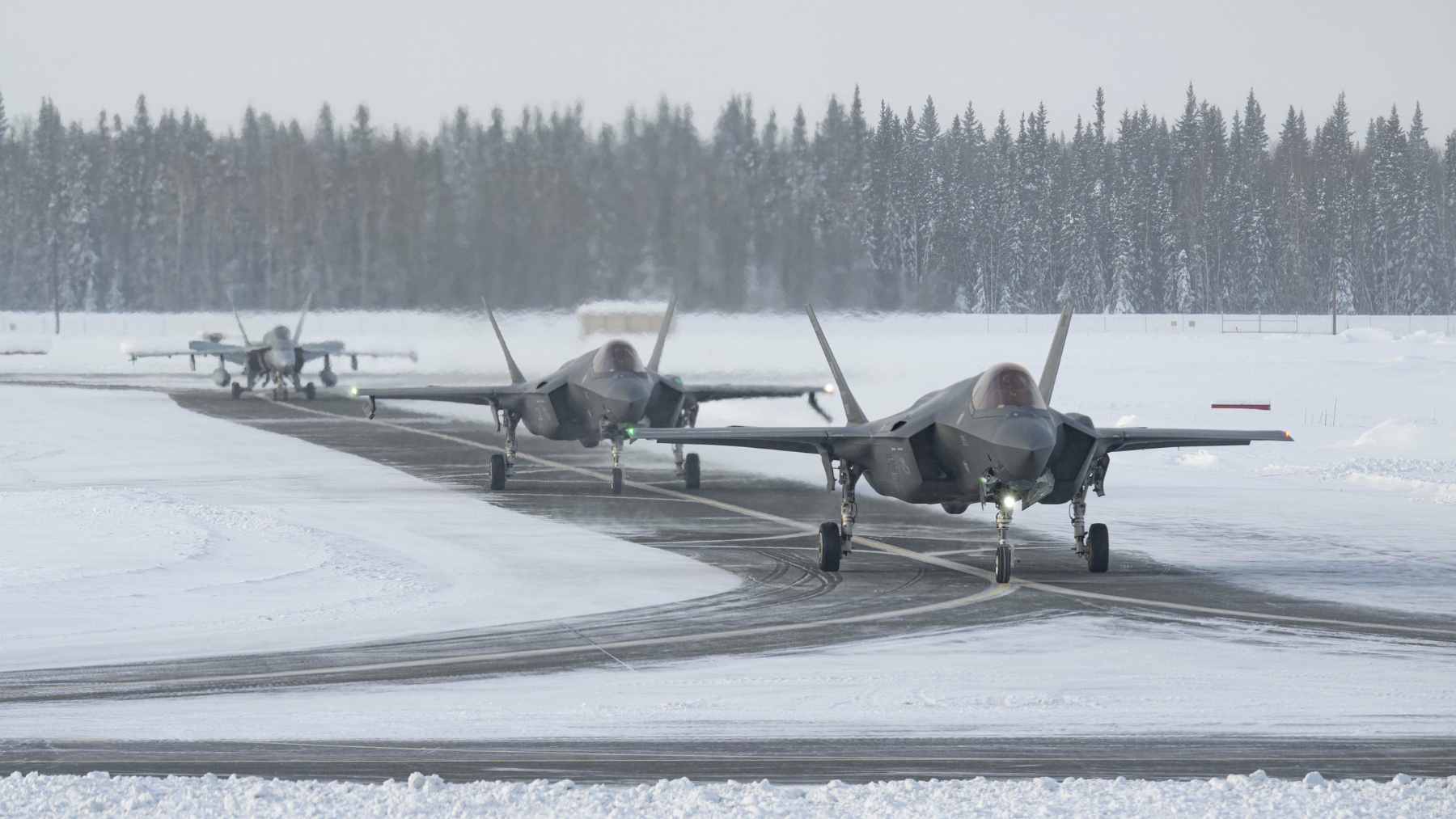
On March 4, 2026, NORAD detected two Russian Tu-142 aircraft in the Alaskan and Canadian Air Defense Identification Zones and sent up two F-35s, two F-22s, four KC-135 tankers, one E-3 AWACS, two Canadian CF-18s, and one CC-150 tanker.
The planes stayed in international airspace, never entered U.S. or Canadian sovereign airspace, and NORAD said the activity was “not seen as a threat.” An ADIZ is the stretch of international airspace just beyond sovereign airspace where aircraft are identified for national security.
For most people on the ground, nothing dramatic happened. No breach. No clash. But that does not make the moment unimportant. NORAD says this kind of Russian activity happens regularly, and on February 19 it tracked another Russian formation near Alaska that included two Tu-95s, two Su-35s, and an A-50.
Put simply, the far north is no longer a quiet edge of the map.
The Arctic is becoming a defense test bed
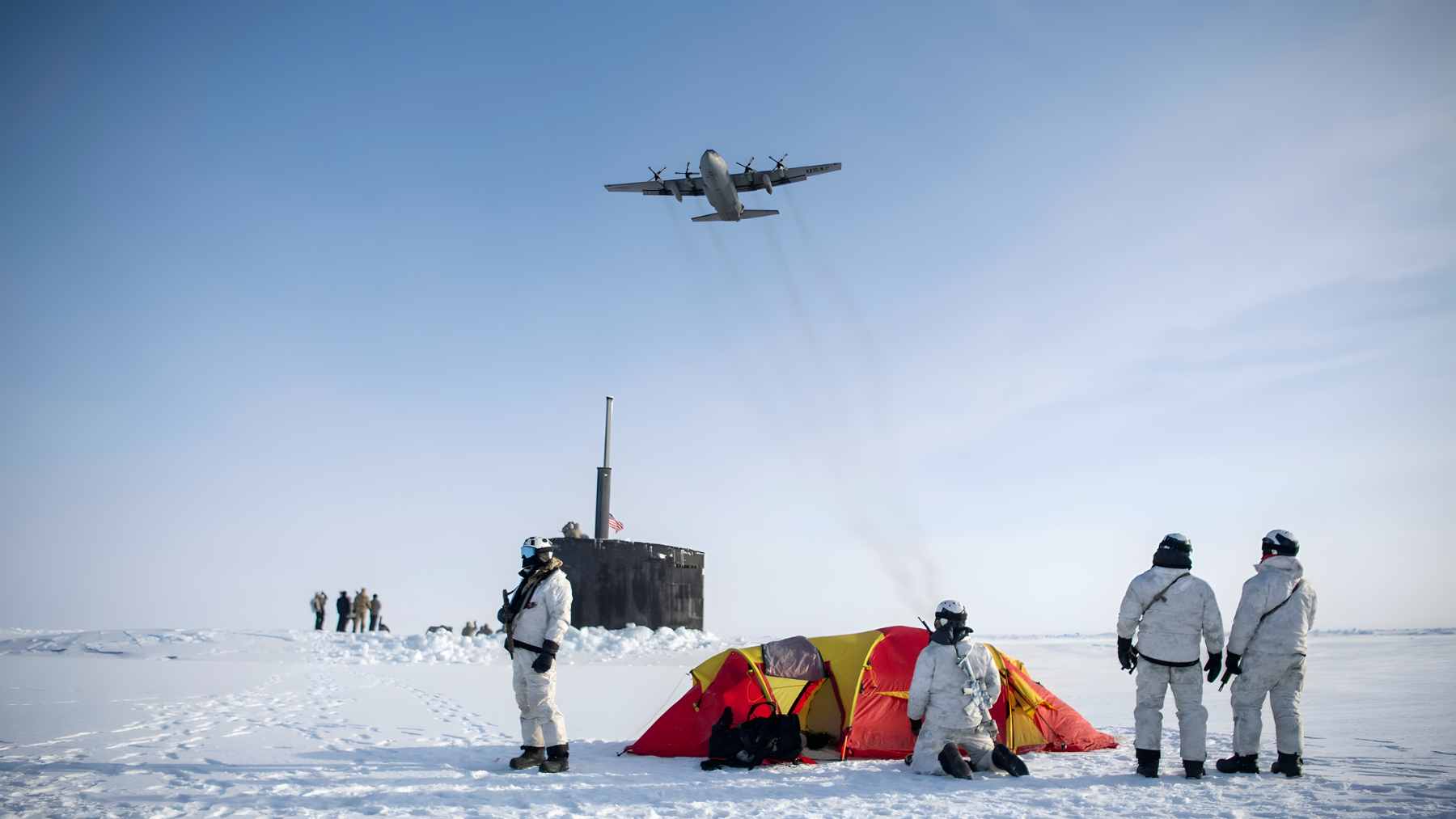
The timing matters. This latest intercept came in the middle of Arctic Edge 2026, a major exercise running from February 23 to March 13 across Alaska and Greenland.
The drill includes cruise missile defense, counter-drone work, Arctic survival and mobility training, and technology demonstrations, with support from partners that include Canada, Denmark, NOAA, the Coast Guard, the FAA, and Alaska Native communities.
In practical terms, that means the Arctic is now a real-world lab for homeland defense.
The same region is under environmental strain
That is the bigger angle here. The same Arctic drawing more military attention is also changing fast. NOAA’s 2025 Arctic Report Card says the region is warming far faster than the rest of the planet.
It also says the Greenland Ice Sheet lost an estimated 129 billion tons of ice in 2025, Alaskan glaciers have lost an average of 125 vertical feet since the mid-20th century, and more than 200 Arctic Alaska watersheds have seen orange “rusting” rivers linked to thawing permafrost.
Sea ice tells a similar story. According to the National Snow and Ice Data Center, Arctic sea ice reached a record low winter maximum in 2025 at 14.33 million square kilometers, well below the 1981 to 2010 average.
Why does that matter? Because a more open Arctic can mean busier skies, more strategic competition, and more pressure on ecosystems and communities already dealing with rapid change.
In the end, this week’s intercept was not just another military headline. It was a snapshot of an Arctic where defense technology, geopolitics, and environmental stress are increasingly sharing the same airspace.
The official statement was published on NORAD.