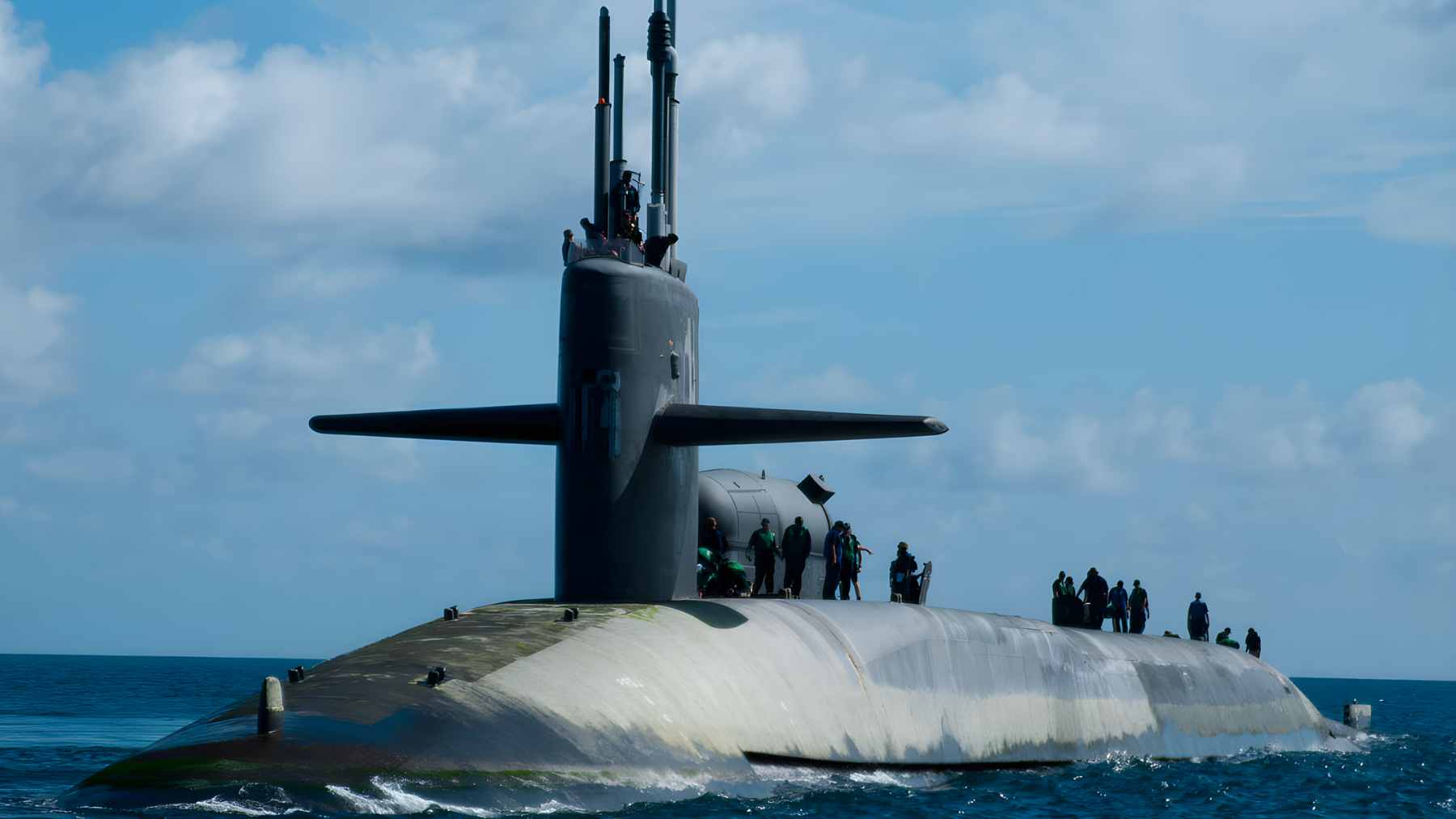
The U.S. Navy has a submarine problem, but the deeper issue looks a lot like a shipyard problem. If the service retires its four Ohio-class guided-missile submarines before replacements arrive in real numbers, it will not just lose old hulls.
It will lose some of its most concentrated conventional firepower.
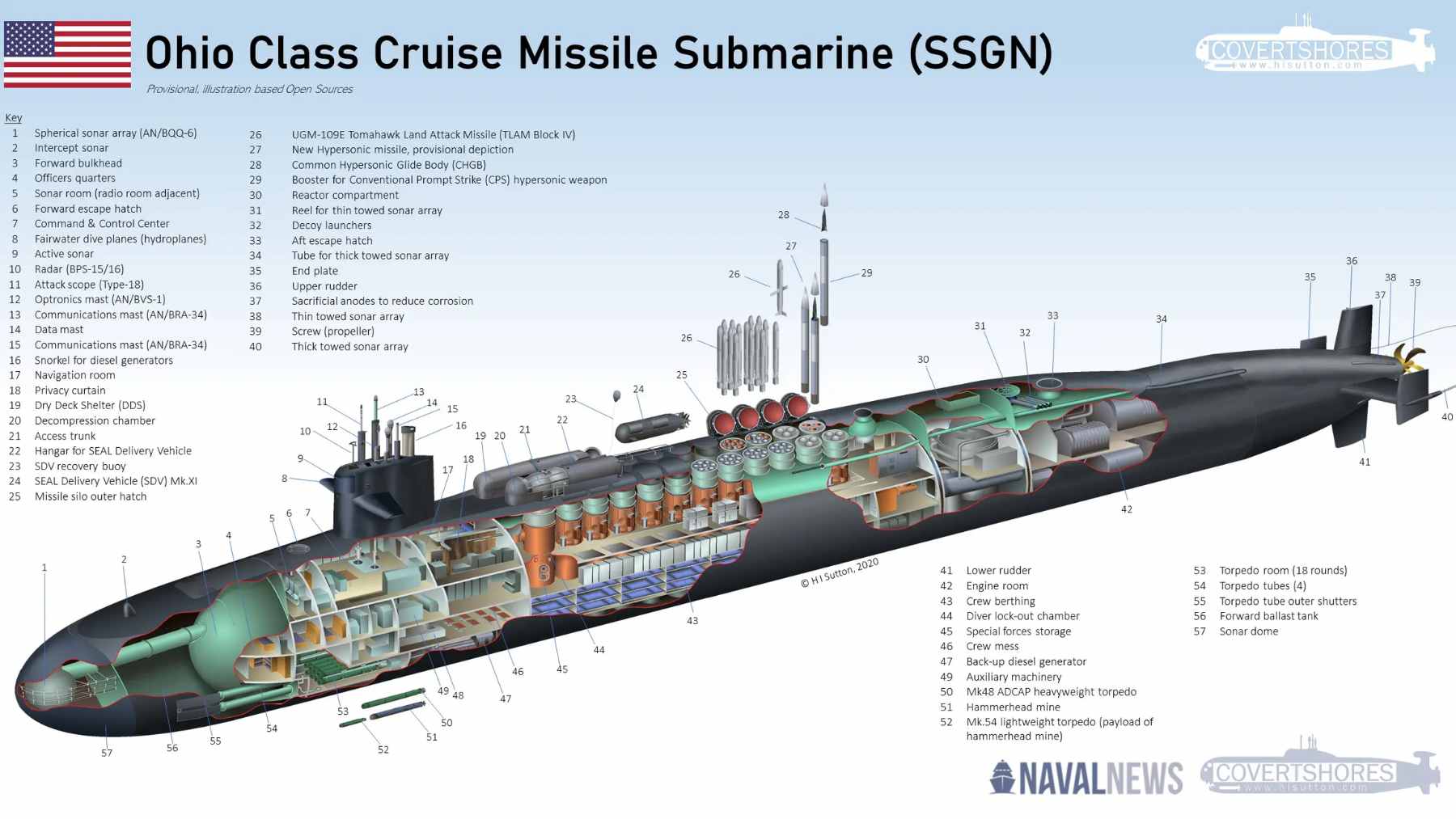
Each of those boats can carry up to 154 Tomahawk missiles, and the Navy says the four SSGNs together account for more than half of the Submarine Force’s vertical launch payload capacity.
That is why this debate matters far beyond Pentagon spreadsheets. The Block V Virginia-class boats are supposed to help fill the gap, and their Virginia Payload Module raises Tomahawk capacity from 12 to 40 per submarine.
But there is a catch. GAO said in 2025 that Virginia production was running at about 60 percent of the planned pace of two boats a year. In other words, the replacement is real, but it is not arriving fast enough.
Why Ohio still matters
Why should anyone outside defense circles care about launch-cell math? Because volume matters when a crisis breaks fast. The Ohio-class SSGNs are not only missile carriers.
They can also host up to 66 Special Operations Forces personnel, and the Navy says their converted missile tubes and lock-out chambers support covert insertion and retrieval missions.
In practical terms, that makes them part strike platform, part stealth transport, and part insurance policy.
The bigger warning comes from the yard
And that is where the story gets bigger. The Columbia-class is the Navy’s essential replacement for the aging ballistic missile boats, with a minimum 12-ship fleet planned and the first alert patrol scheduled for fiscal year 2031.
But GAO found the lead boat faced an estimated 12 to 16 month delivery delay and potentially hundreds of millions of dollars in additional cost. The wider industrial base is under pressure too.
GAO says the Pentagon spent more than $5.8 billion on the shipbuilding industrial base from fiscal years 2014 through 2023 and plans another $12.6 billion through fiscal year 2028.
Even so, the same watchdog says the Navy still lacks a full strategy for managing that base. As Navy Secretary John Phelan put it in 2025, “our manufacturing base is one-third the size it was three decades ago.”
That sounds blunt, but it explains a lot. When the yard is short on welders and waiting on parts, the line backs up fast.
At the end of the day, this is not really about sentiment for an old class of submarine. It is about timing. Until Columbia stabilizes and Block V Virginia boats show up in enough numbers, retiring the Ohio SSGNs too quickly would shrink U.S. deterrence and conventional strike capacity at the same time.
That is a risky trade, and the Navy can hardly afford it right now.
The official statement was published on Navy.mil.