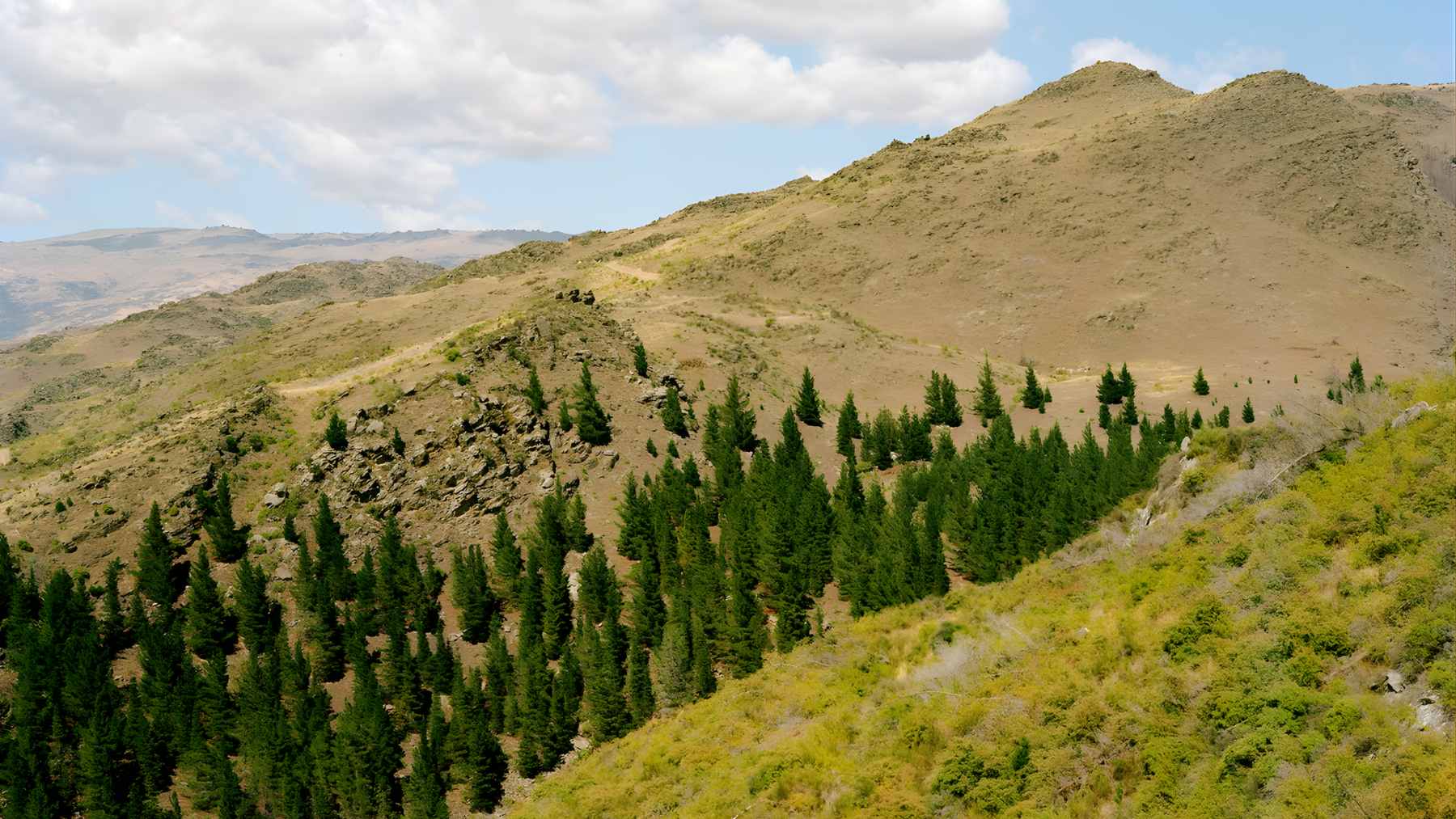
What looked at first like practical tree planting has turned into a long and expensive environmental problem in New Zealand.
Across the country, self-seeding “wilding conifers” are spreading beyond managed forests, taking over open land, and by the government’s own assessment, cutting into water supplies in sensitive catchments.
That is why this is no longer just a forestry story. It is a water story, an energy story, and a public spending story, too.
Wilding conifers in New Zealand are spreading fast
The numbers help explain the urgency. New Zealand’s Ministry for Primary Industries says wilding conifers now affect more than 2 million hectares.
Before the national control program was created, they were spreading across about 90,000 hectares a year, and the ministry estimates that as much as a quarter of the country could be covered within 30 years if the spread is left unchecked.
That is a huge shift for landscapes that were never meant to become pine thickets.
How wilding pines reduce water in river catchments
And what happens when those trees move into the wrong place? Less water, for the most part. A 2022 cost-benefit analysis tied to the national control effort says wilding conifers reduce surface flows and aquifer recharge in water sensitive catchments.

It cites catchment studies showing annual surface water yields falling by 30% to 81% when pasture is replaced by radiata pine forest, and notes one study that found a 40% drop in mean annual flow when two-thirds of an experimental catchment was planted within pines.
In practical terms, that can mean less water reaching rivers, reservoirs, irrigation systems, and hydro plants.
Why hydroelectric power is part of the problem
That last point matters more than it may seem. The Parliamentary Commissioner for the Environment has warned that wildings spreading into hydro lake catchments can reduce water yields, and in turn, dam generating capacity.
So yes, this reaches beyond remote hillsides and into the power system people depend on every month when the electric bill lands.
New Zealand’s wilding conifer control program now costs millions
New Zealand has responded with a large, long-term control effort. MPI says that from July 2020 to June 2021, the program and its partners spent almost NZ$40 million (USD $23.45 million) on control work across 817,000 hectares.
In its latest official update, the government said it has invested more than NZ$150 million (USD $88 million) in the National Wilding Conifer Control Programme since 2016, with more than NZ$33 million (USD $19.35 million) added by partners and communities.
Ministers have described the trees as a threat to farmland, water catchments, native biodiversity, and wildfire resilience. That is the real takeaway here. What was once sold as useful planting now comes with a national cleanup bill.
The official statement was published on Beehive.