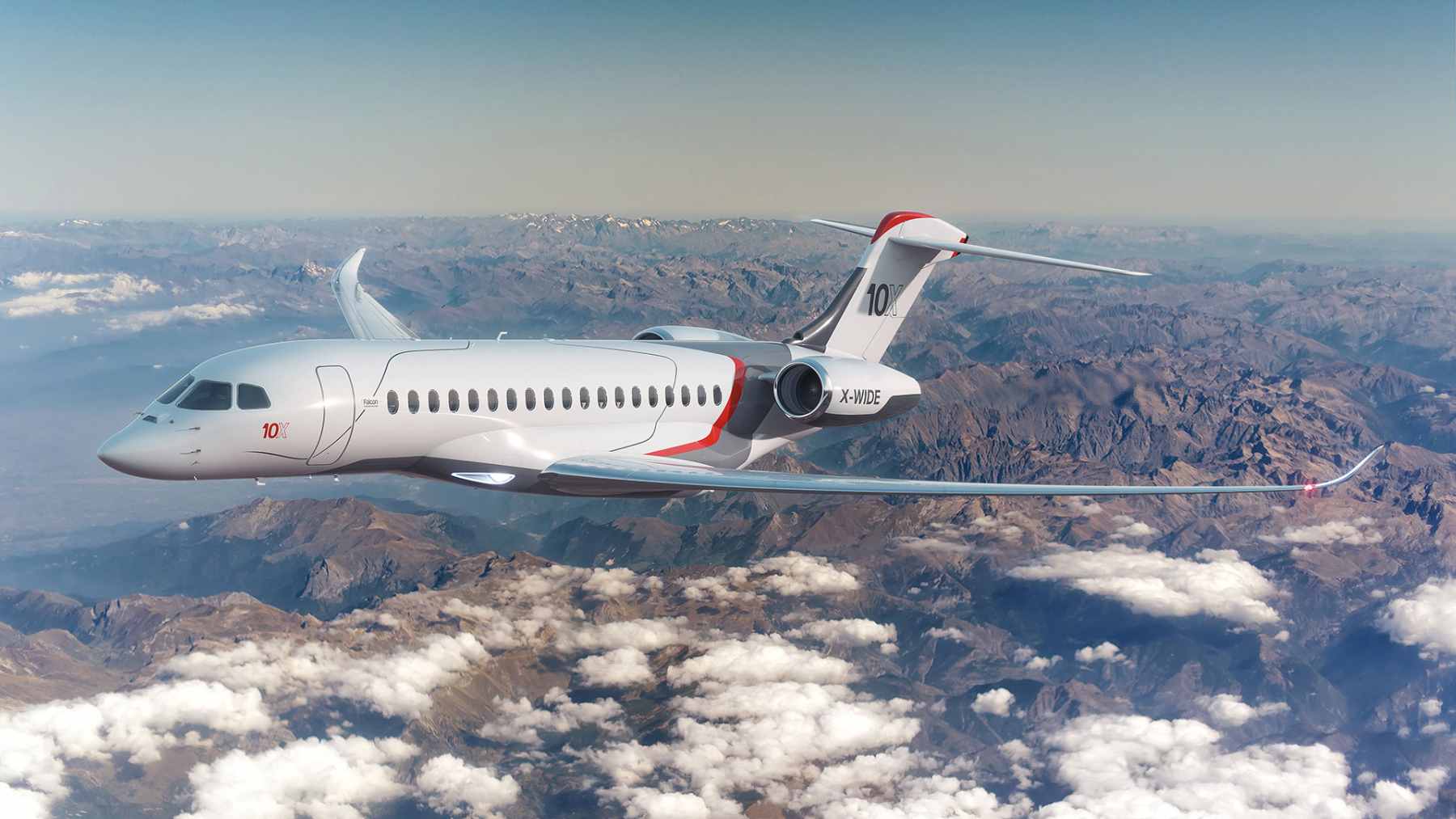
What does a new private jet tell us about greener flying? More than you might think. Dassault Aviation has rolled out the Falcon 10X in Bordeaux-Mérignac, calling it “its most ambitious business jet ever.”
The numbers are big, with a 7,500 nautical mile range, a top speed of Mach 0.925, and first deliveries already slated for the end of 2027. This is not just a cabin story, it is a story about where high-end aviation says it wants to go next.
Falcon 10X cabin size, range, and performance
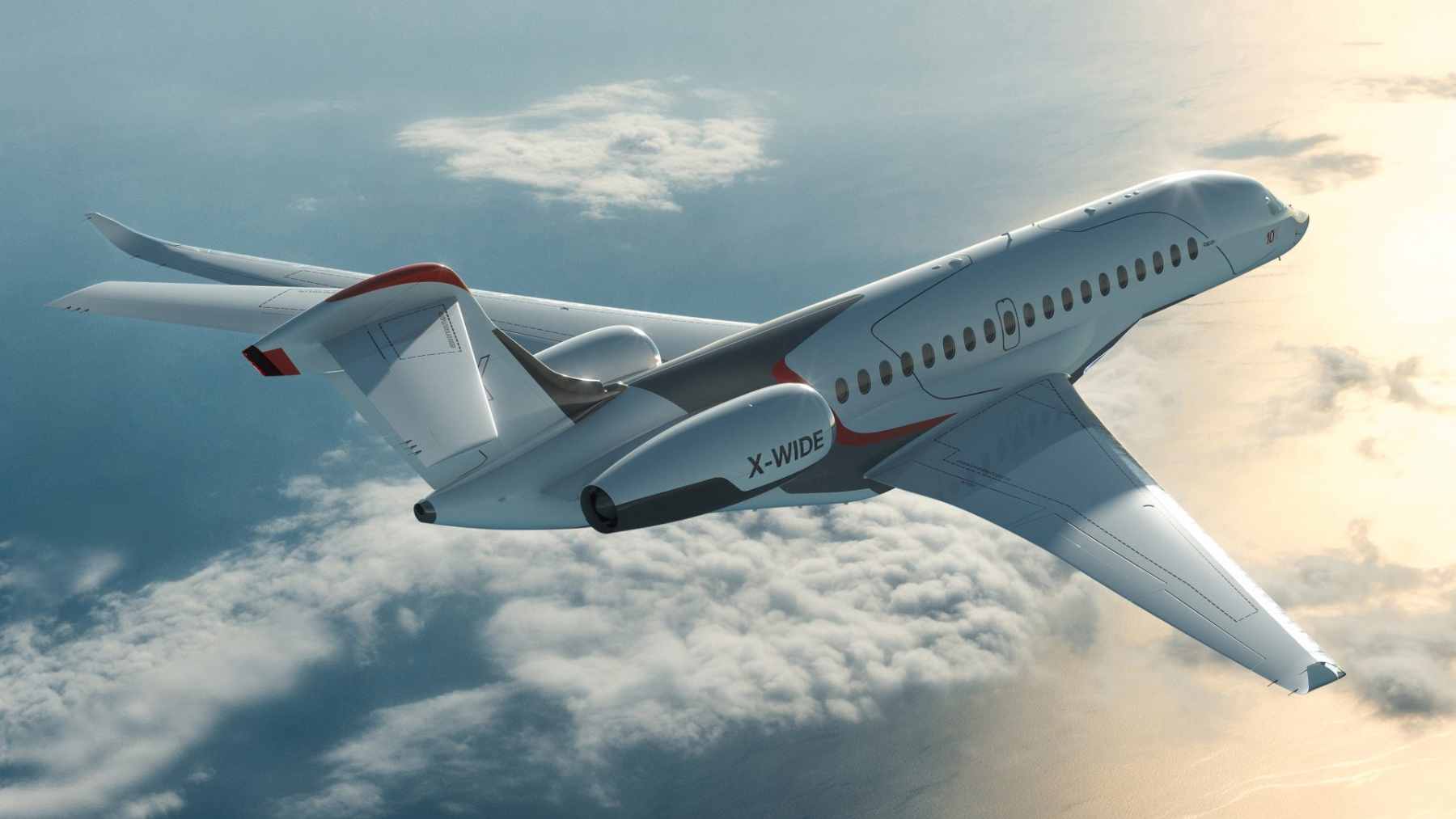
On paper, the jet is built to impress. The cabin is 9 feet wide and 6 ⅔ feet tall, and Dassault says cabin pressure will stay at 3,000 feet while the aircraft cruises at 41,000 feet. Two Rolls-Royce Pearl 10X engines deliver more than 18,000 pounds of thrust, while takeoff and landing distances stay under 6,000 feet and 2,500 feet, respectively.
In practical terms, that means access to places like London City, not just giant hubs and long commercial corridors. For passengers who know the drag of stale air and long-haul fatigue, that matters.
But the real hook is the mix of defense technology and environmental pressure. Dassault says the 10X draws directly on fighter-aircraft know-how, with Rafale-linked digital flight controls, Smart Throttle, automatic recovery tools, and FalconEye for low-visibility operations.
The company also says the Pearl 10X has already been run on 100% sustainable aviation fuel in testing, and that the Falcon 10X will be certified for 100% SAF operation. That is a serious message in a market that now has to sell both performance and restraint.
Private aviation emissions and the climate debate
That still does not end the climate debate. By Dassault’s own figures, business aviation accounts for 2% of global aviation CO2 emissions and 0.04% of global CO2 emissions overall.
The company also says it operated 752 flights in 2024 using 30 to 35% SAF blends, saving more than 1,800 metric tons of CO2. Will that satisfy critics of private flying? Probably not fully. But it does show where the industry knows it has to move, especially as airport noise, fuel burn, and everyday pollution questions become harder to dodge.
Then there is the political backdrop. Reuters reports that FCAS, known in France as SCAF, remains stuck in disputes between Dassault and Airbus over leadership and workshare, even as Paris and Berlin try to keep the fighter project alive. That is why the Falcon 10X rollout feels bigger than a luxury launch.
It shows Dassault reminding Europe that it can still move a full aircraft program forward on its own, from structures to cockpit systems to final assembly. Small line, big message.
The press release was published on Dassault Aviation.