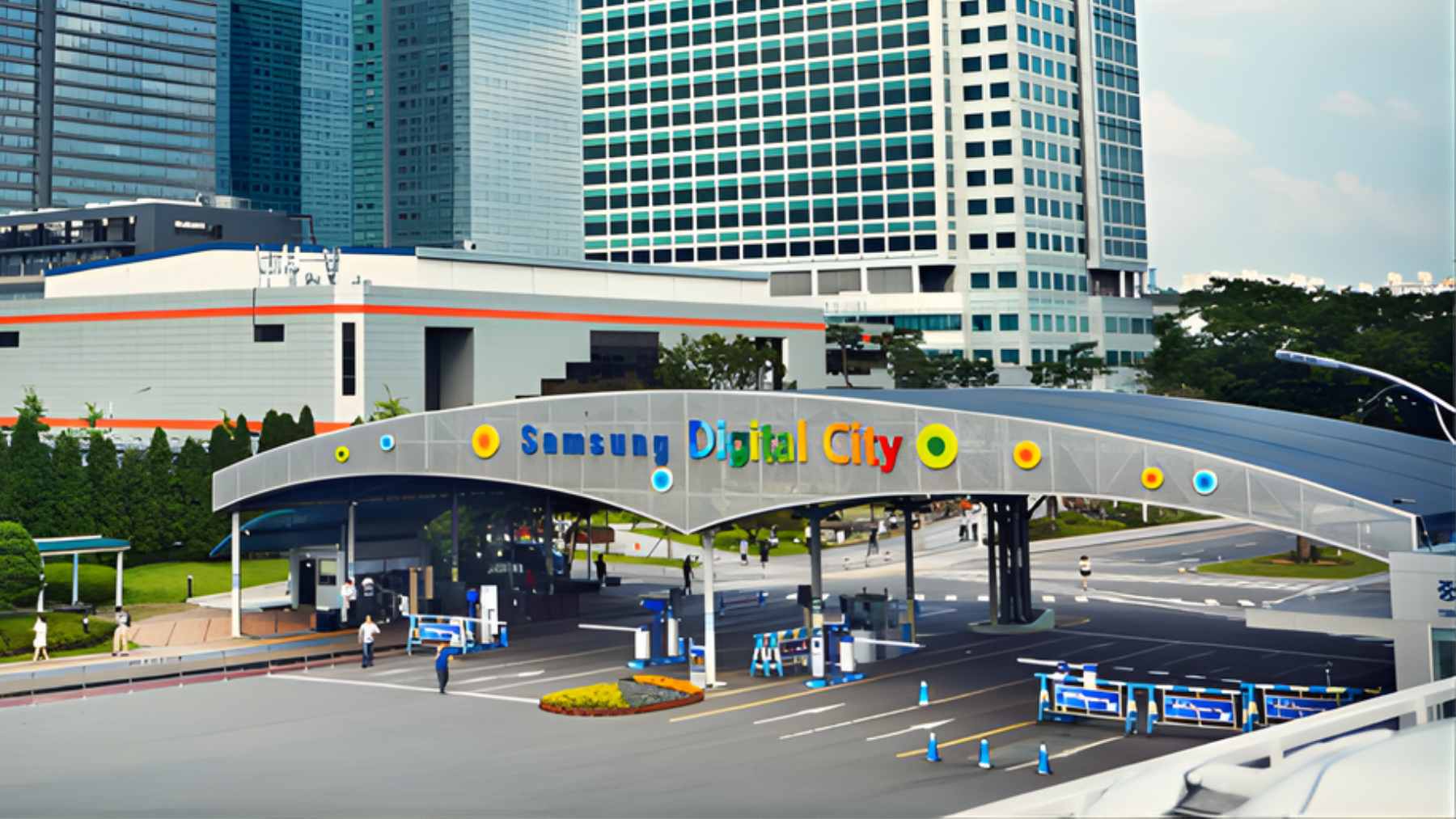
Do you think about rivers and power lines when a company announces a $73 billion chip push? If you don’t, you probably should. When Samsung Electronics says it will invest more than KRW 110 trillion (about $73.2 billion) in 2026 to stay on top of AI semiconductors, it is also making a bet on electricity and water.
If AI is the new “oil,” then data centers and chip fabs are the refineries. The International Energy Agency says global investment in data centers has nearly doubled since 2022 and reached about half a trillion dollars in 2024.
It also says data centers used about 415 terawatt-hours of electricity in 2024, around 1.5% of global consumption, and it expects demand to more than double to roughly 945 TWh by 2030.
A record investment with a familiar goal
Samsung’s own disclosure frames the plan as a push to “secure leadership in the AI semiconductor era,” backed by spending on facilities and research and development in 2026. It also points to potential mergers and acquisitions in advanced robotics, MedTech, automotive electronics, and HVAC.
Reuters reported that Samsung invested KRW 90.4 trillion ($60 billion) in 2025, split between capital expenditure and R&D, and that it plans KRW 9.8 trillion ($6.5 billion) in regular dividends for 2026. In practical terms, Samsung is telling investors it wants to scale up while keeping cash returns on the table.
The chip race is pushing grid limits
The IEA warns that data center electricity demand is growing far faster than overall electricity use, and that the biggest pain points are often local.
A single AI-focused cluster can draw power on the scale of heavy industry, which is why communities feel it first in grid congestion, permitting fights, and yes, the electric bill.
In the United States, Reuters has also reported that AI-driven demand is pushing up the price of long-term clean energy contracts, with one market tracker putting solar PPAs around $61.7 per MWh and wind around $73.7 per MWh in late 2025.
AI servers are only part of the load. The IEA notes that cooling and other infrastructure account for a meaningful share of demand growth, which helps explain why Samsung’s M&A list includes HVAC, not just chips.
On sticky summer days, cooling is the hidden line item that suddenly becomes the main character.
Water is the quiet dependency nobody can code around
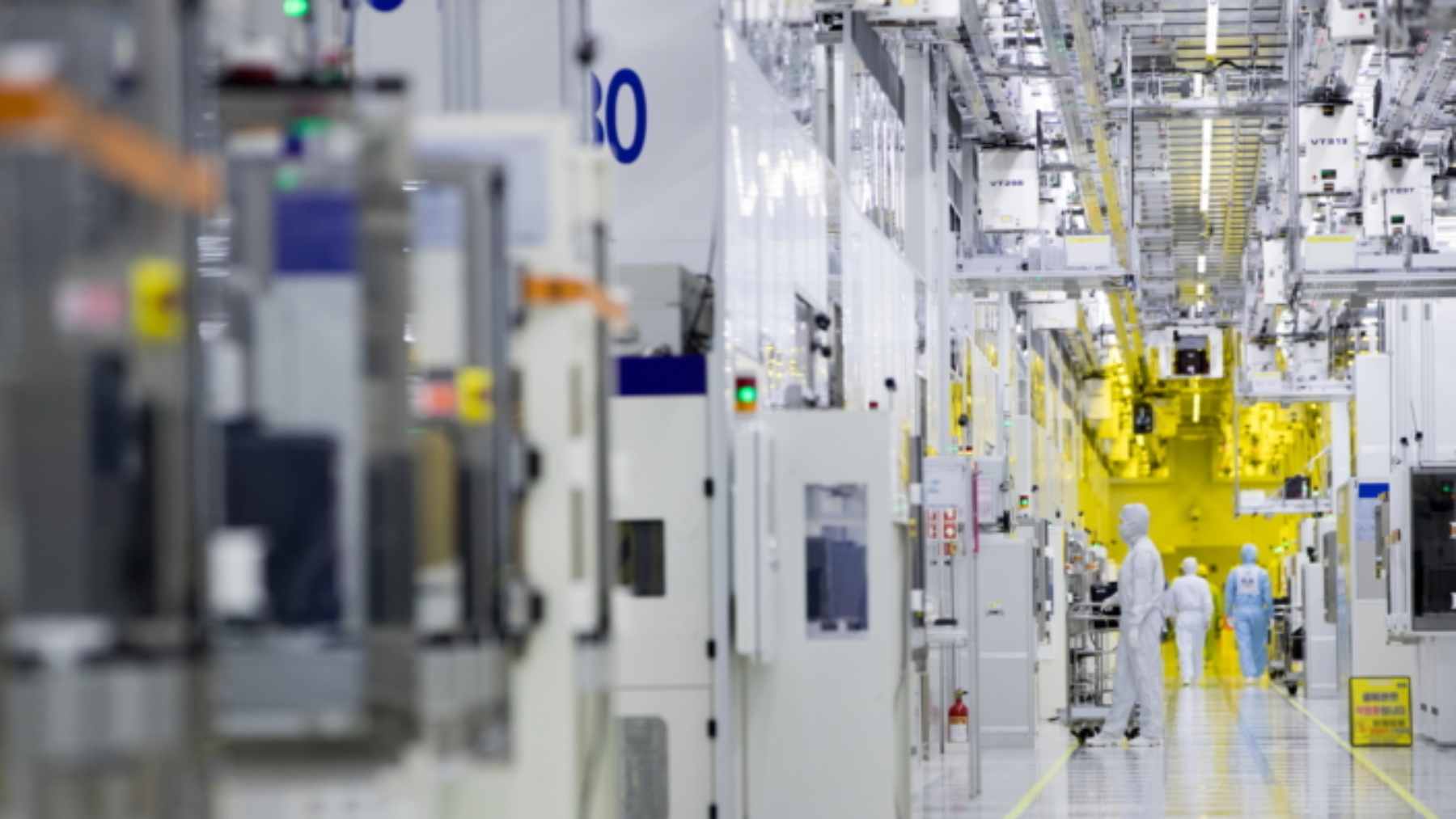
Chipmaking is water intensive in a way that surprises even seasoned tech watchers. A February 2026 case study from the Taskforce on Nature-related Financial Disclosures says a single fab can use around 3.7 billion gallons of ultrapure water per year, and producing that ultrapure water requires even more municipal water upstream.
That same process can generate wastewater that researchers describe as hazardous and persistent if it is not managed carefully.
Data centers add their own “thirst” through cooling and humidification. The TNFD case study says a typical data center can use 6.6 million to 203 million gallons of water per year depending on size, and that hyperscale facilities may exceed 528 million gallons annually. Many operators do recycle and reuse water in some form, but rates vary widely across the tech value chain.
Defense and dual use make the stakes higher
There is also a security layer to this story because advanced AI chips are “dual use” by design. NATO’s revised AI strategy flags the implications of compute-intensive AI, including energy consumption, and the governance challenges that appear when civilian technology is adapted for military contexts.
In February, Reuters reported that a global summit on responsible military AI ended with only 35 of 85 countries signing a nonbinding declaration, while the United States and China opted out.
That split matters for the environment too, because faster defense adoption adds demand for energy-hungry computation at the edge and in the cloud.
The environmental upside is real but it needs guardrails
It would be a mistake to treat AI hardware as only a climate problem. The IEA points to real benefits, such as better forecasting and integration of variable renewables and faster fault detection on power grids, which can reduce outage time by 30% to 50% in some cases.
Still, “more computation” is not automatically “more climate progress.” The IEA also notes that meeting surging data center demand will involve a mix of generation sources, so emissions outcomes hinge on procurement, grid upgrades, and efficiency gains in hardware and software.
What to watch as Samsung spends
For Samsung, the key question is not only whether it can ship the right memory and logic for the AI boom. It is whether new and expanded facilities can lock in reliable low-carbon electricity and sustainable water supplies while meeting local permitting and community expectations.
For everyone else, a simple test helps cut through the hype. When a company announces a giant AI investment, look for the same three details every time: ask where the power comes from, how water is sourced and recycled, and what kind of computation you get per watt. Big numbers make headlines, but the plumbing decides what happens next.
The official statement was published on Samsung Electronics Investor Relations.