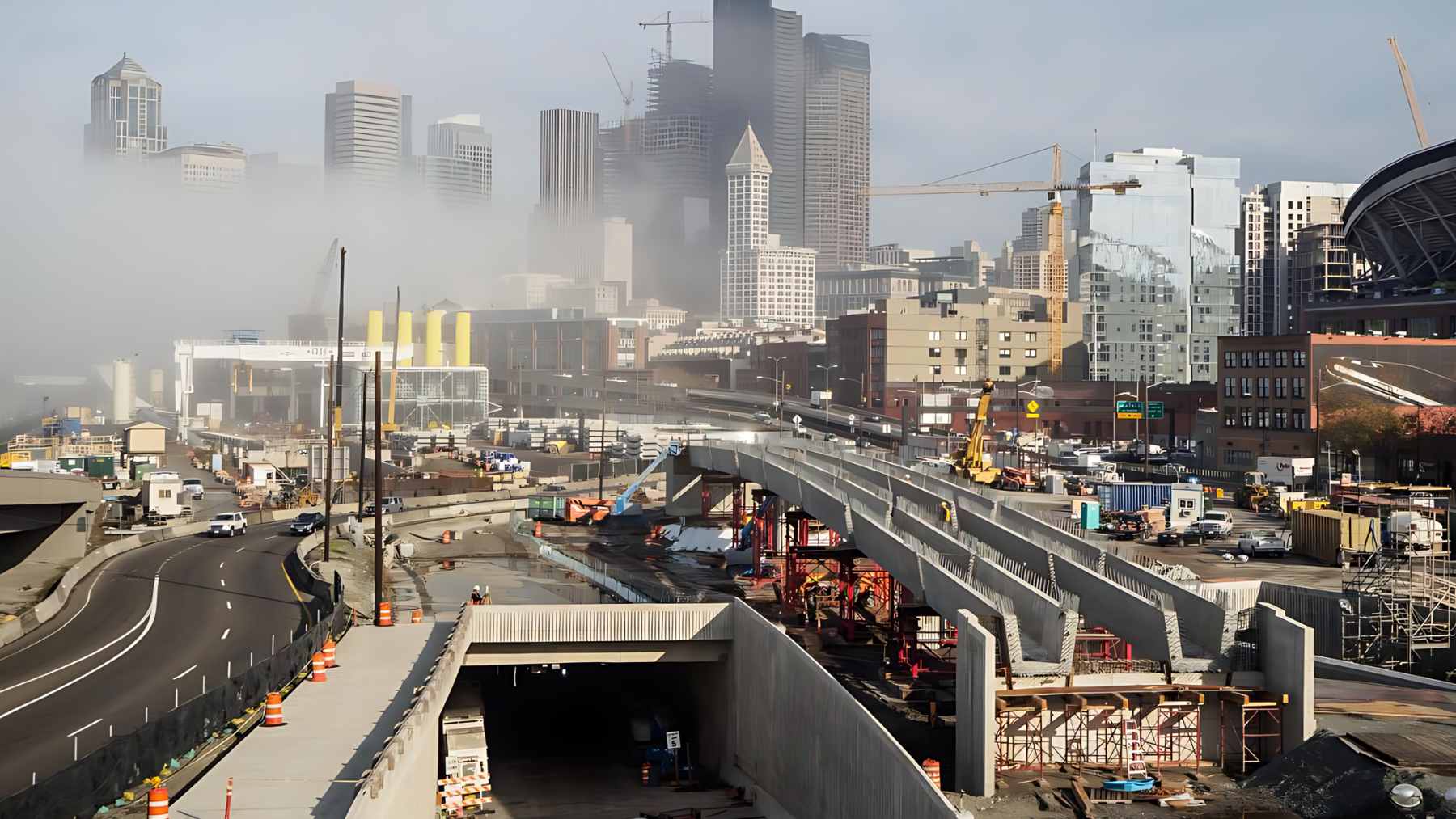
What good is a bridge that survives an earthquake if ambulances, supply trucks, and everyday drivers still cannot use it? For years, the basic target in seismic design was “collapse prevention,” not a fast return to normal.
Seattle’s SR 99 South Access northbound off-ramp was built to push that idea further, using shape memory alloy bars and engineered cementitious composite so critical columns can bend under extreme shaking and then move back much closer to where they started.
Why this bridge stands out
This is not a futuristic concept sitting in a lab. Research tied to the project described it as the first full-scale highway bridge to use superelastic shape memory alloy (SMA) bars with ECC in its seismic hinge zones. WSDOT’s own design material shows why that matters.
The advanced materials were placed in the most stressed parts of the columns, near the plastic hinge regions, while conventional steel was kept elsewhere to limit cost. In practical terms, that means engineers targeted the spots where the shaking does the most damage instead of rebuilding the whole playbook.
There is also an unusual tech backstory here. NASA notes that nickel titanium memory alloys trace back to Naval Ordnance Laboratory work on materials for high-heat military applications.
Decades later, that same family of materials is being used in civilian infrastructure. When stress is removed, the alloy can recover its shape, while the ECC around it is designed to limit the cracking and spalling that ordinary concrete can suffer in a major quake.
A defense-era material is now helping solve a public safety problem.
The business and environmental case
The obvious drawback is cost. Research summarized for the Transportation Research Board found that using SMA and ECC can raise initial bridge costs by about 5 to 10 percent. But the same analysis found that, once repair bills and closure-related user costs are counted, the overall cost can swing the other way, with savings of more than 10 percent.
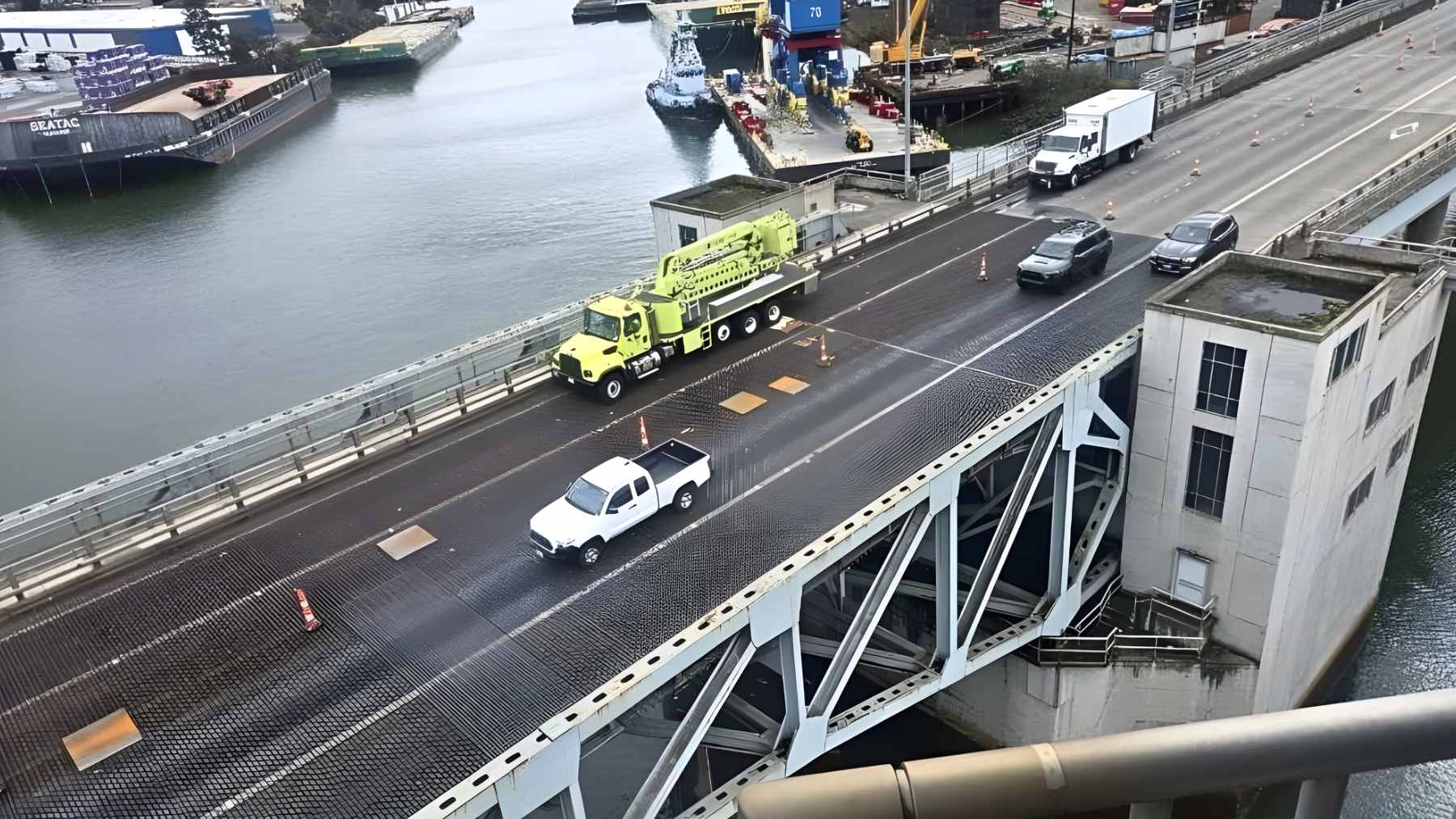
That matters because after a big earthquake, the real headache is not only structural damage. It is the road closure, the detours, the lost time, and the traffic mess that follows.
There is a quieter environmental angle too. The IEA says material efficiency and longer infrastructure lifetimes are critical to reducing cement demand and lowering emissions from one of industry’s toughest sectors.
So a bridge that avoids major post-quake rebuilding could, at least to some extent, cut waste along with downtime.
And the story is still moving. WSDOT’s current research program says it is now studying copper-based and iron-based shape memory alloys to compare cost and performance, which could make this kind of self-centering bridge easier to scale.
The official research program was published on WSDOT.