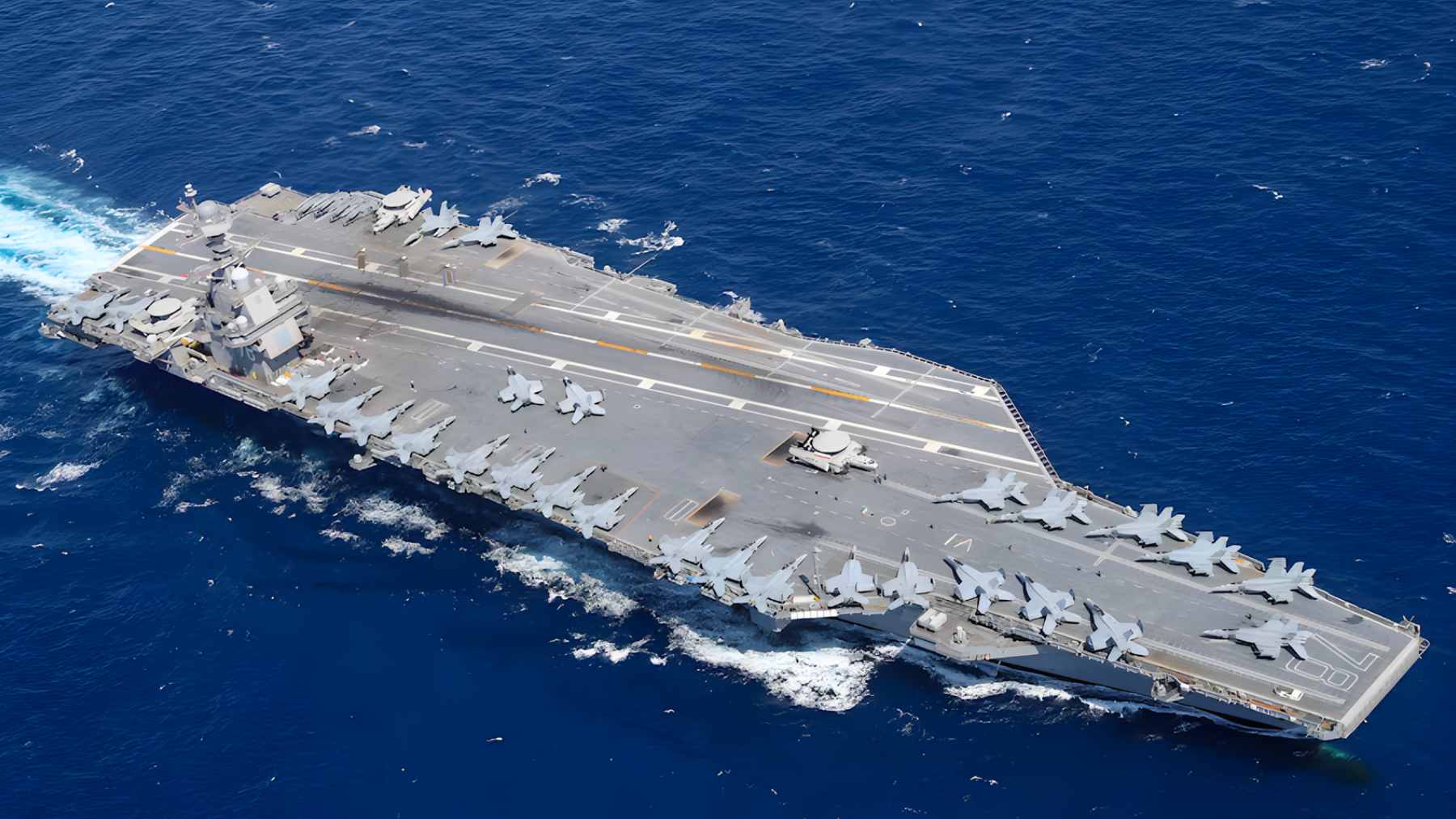
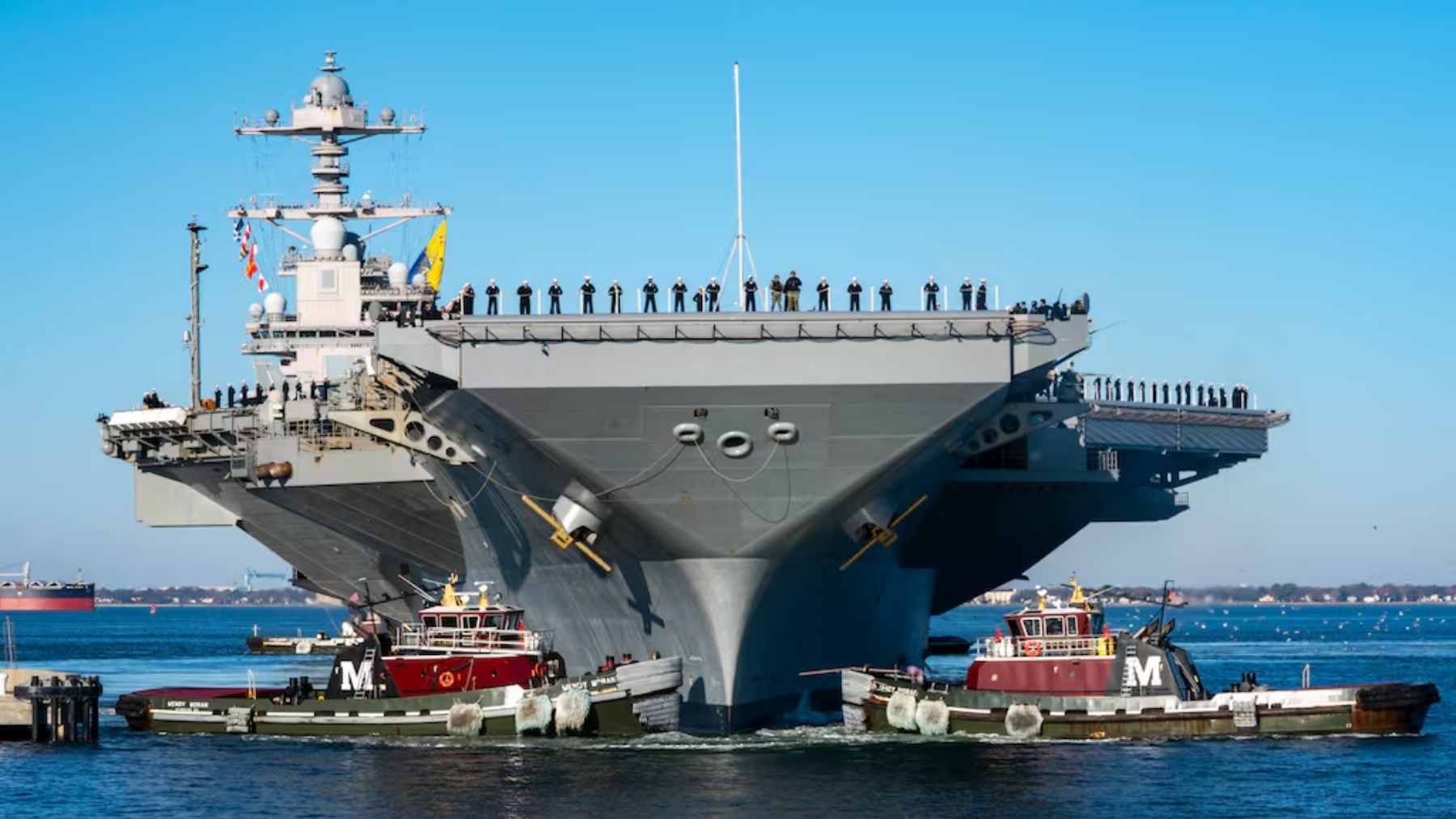
The USS Gerald R. Ford and its escorts are crossing the Atlantic toward the Strait of Gibraltar on their way to U.S. Central Command, according to USNI News, as Washington increases naval pressure around Iran.
The deployment is already unusually long. Ford left Norfolk in June, and if it stays out until mid-April it would pass the 294-day post-Vietnam carrier deployment record set in 2020. Why does that matter beyond defense circles? Because a 100,000-ton carrier is moving through a marine bottleneck that is already crowded, noisy, and ecologically sensitive.
Ford is no ordinary carrier. The Navy says the ship runs on two nuclear reactors and is part of a class built with all-electric utilities. It also says the design is expected to save more than $5 billion in total ownership costs over 50 years compared with the Nimitz class, while boosting sortie generation by 25 percent.
In practical terms, that makes Ford a military story, a tech story, and a business story all at once. But efficiency on paper does not make the environmental question go away.
And that is where Gibraltar comes in. Gibraltar’s environmental authorities say whales and dolphins are protected in its waters because several cetacean species use the bay as “feeding and calving grounds”.
The Gibraltar Marine Reserve management plan also warns that the bay is becoming a more prominent shipping hub, which raises the risk of accidental spills and other hits to coastal water quality. That is not abstract. These are the same waters tied to beaches, ferries, port activity, and the kind of maritime traffic jam most people never see up close.
A 2025 study in Frontiers in Marine Science adds another layer. Researchers measuring underwater sound in the Strait of Gibraltar recorded “continuous vessel noise” at all 14 stations they sampled, with the highest sound pressure levels in the narrowest part of the strait.
Dolphins were detected at five stations, and the authors said shipping noise was the most persistent sound in much of the area. Small detail? Not really.
To a large extent, it means every big transit through Gibraltar enters a corridor where commercial shipping, marine wildlife, and military traffic are already sharing the same limited space.
At the end of the day, the Ford’s voyage is first and foremost a strategic signal. Still, it also shows how defense logistics now overlap with marine conservation in one of Europe’s most important sea lanes. Security planners see a chokepoint. Scientists see habitat. Both are right.
The study was published on Frontiers in Marine Science.