What happened to the quick, low-stress grocery run? Self-checkout was supposed to make shopping faster, and for many customers it still does. But after a reported theft case at a Walmart in Leesburg, Florida, fresh attention is landing on how closely those stations can be watched when a scan is missed.
What looks like a simple bagging slip can now turn into a stopped transaction, a staff intervention, and in some cases, a police call.
Self-checkout is no longer just self-checkout
The bigger takeaway goes beyond one Florida case. Walmart’s current customer privacy notice says the company uses cameras and automated technologies in stores, and that those tools may capture images during checkout “to help deter theft.”
Walmart also says cashiers remain available for customers who do not want self-checkout, while its Hosted Checkouts place associates near the registers to guide shoppers through the process and answer questions. In practical terms, that means the self-checkout area is no longer just a bank of screens. It is increasingly a live monitoring zone.
The pressure on retailers is real
Retailers say they are tightening controls because the theft problem has not gone away. In a December 2024 study, the National Retail Federation said retailers reported a 93 percent increase in the average number of shoplifting incidents in 2023 compared with 2019.
Dollar losses tied to shoplifting rose 90 percent over the same stretch, and surveyed retailers said they averaged 177 shoplifting incidents a day. That helps explain the rise of locked cabinets, receipt checks, and more staff attention at self-checkout.
Anyone who has tried to make a fast grocery stop after work has probably noticed the change.
There is a quieter environmental angle too
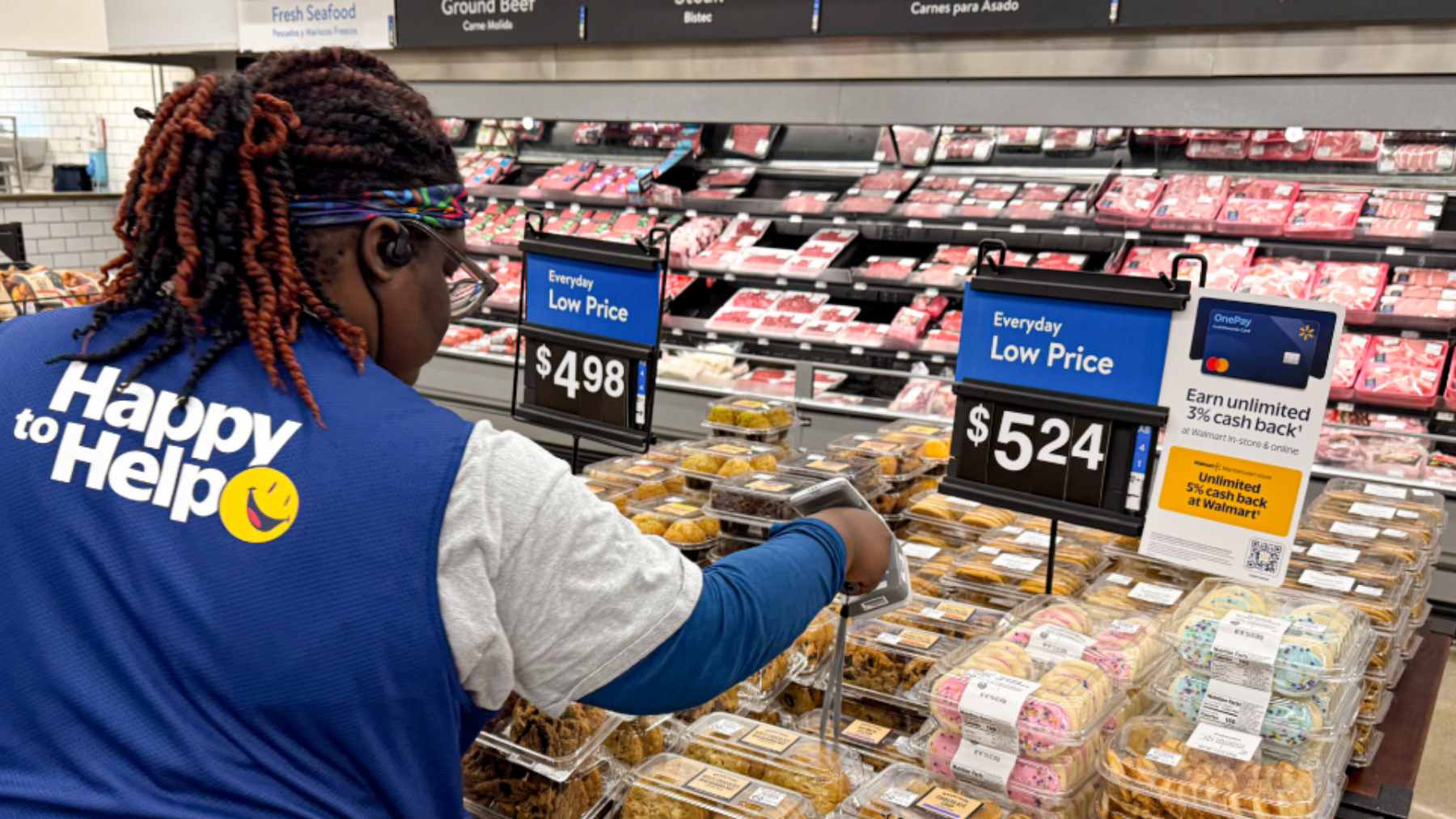
At first glance, theft prevention and ecology do not seem to belong in the same story. But they increasingly do. In October 2025, Walmart and Avery Dennison announced RFID technology for fresh departments like meat, bakery, and deli, saying it would improve inventory accuracy and reduce food waste.
Walmart linked that project to its goal of cutting global operational food loss and waste intensity in half by 2030. In practical terms, that suggests the same retail push toward closer product tracking can serve more than one purpose. It can help prevent skipped scans, and it can also help keep more food out of the trash.
For shoppers, the message is pretty simple. Self-checkout is still about convenience, but not only convenience. It is also about tighter monitoring, stronger loss prevention, and a more data-heavy way of running a store. That is where business, tech, and the environment suddenly meet.
The official statement on in-store monitoring was published on Walmart’s corporate site.