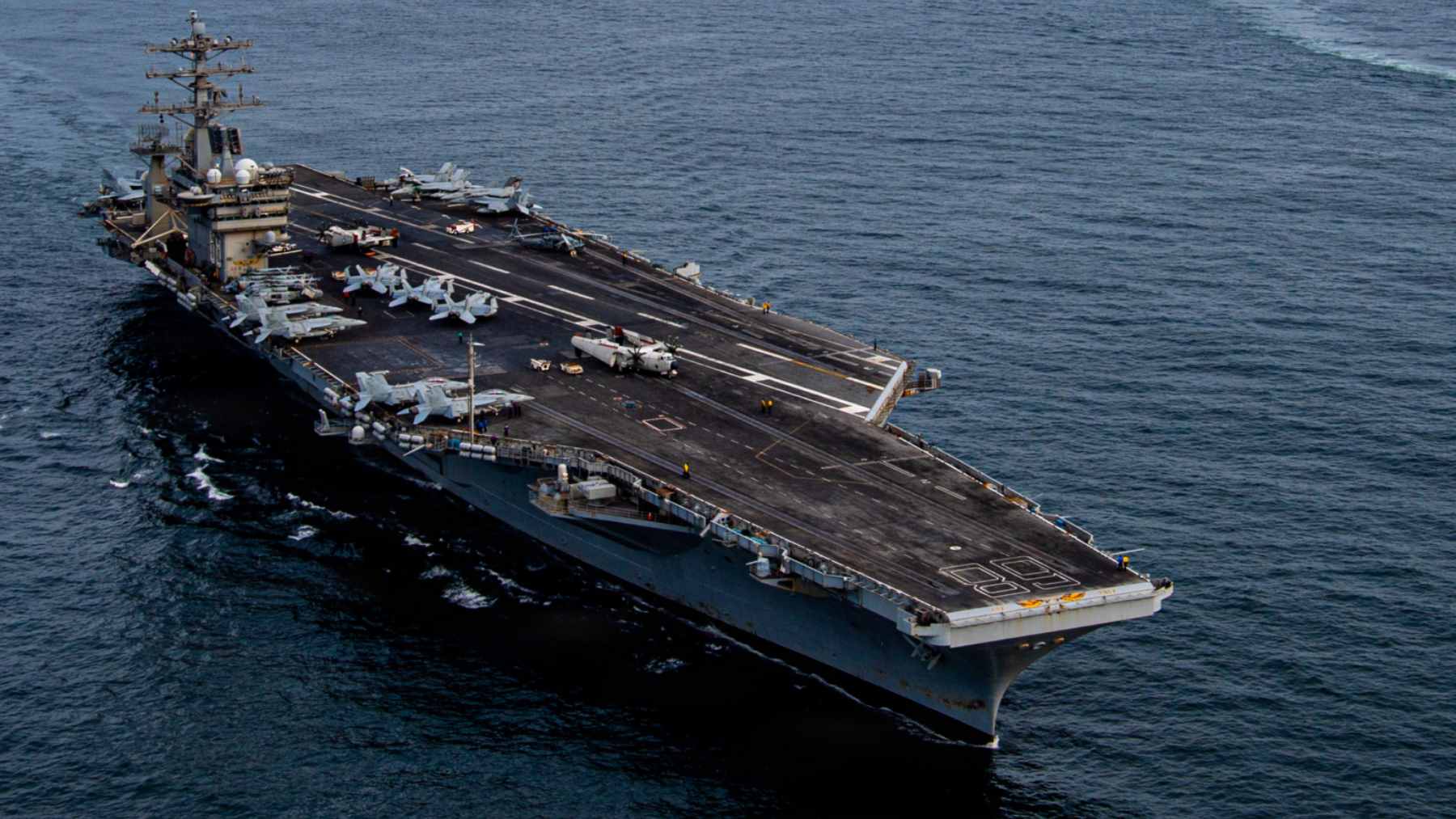
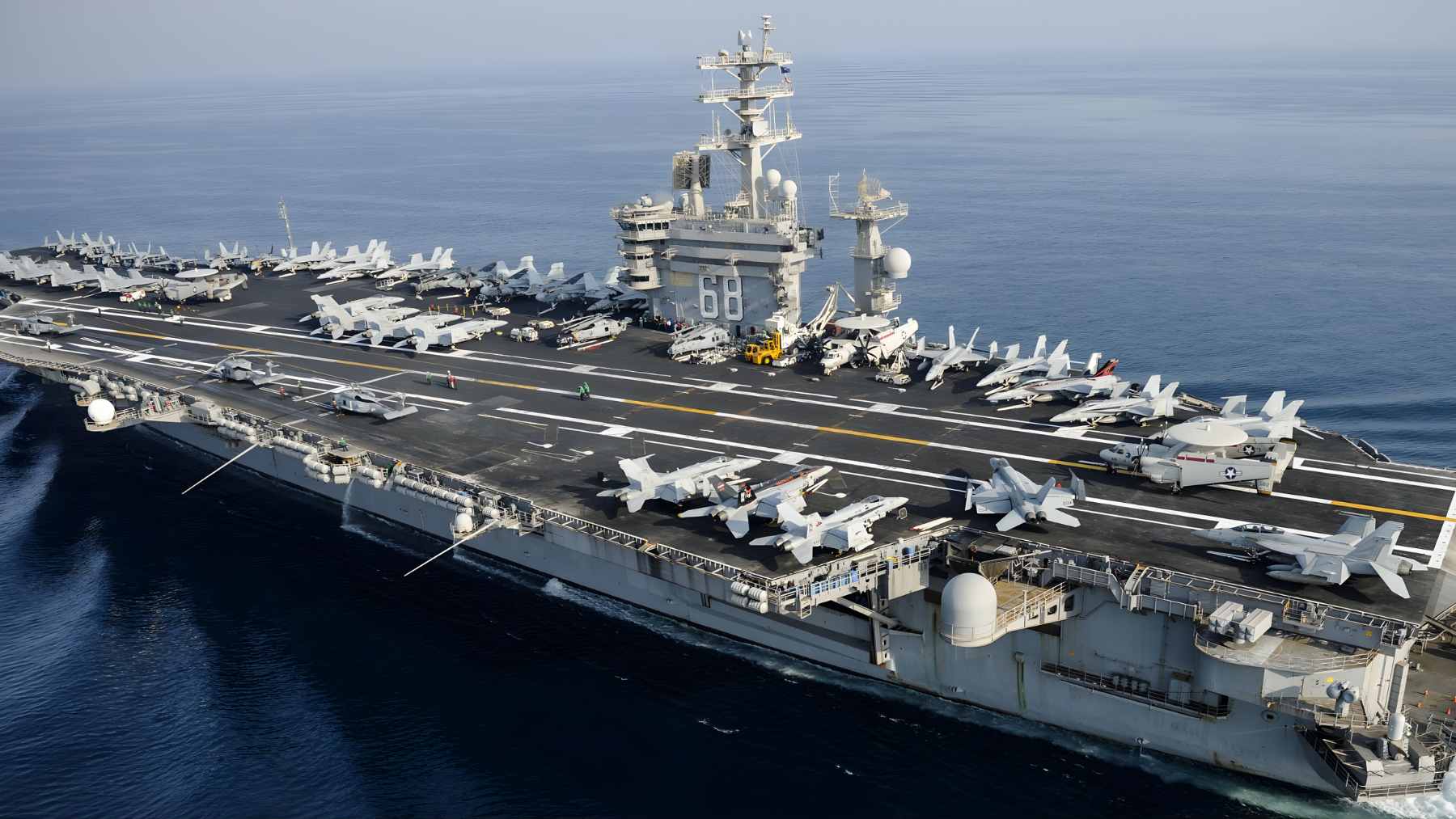
The U.S. Navy has sent the nuclear-powered aircraft carrier USS Nimitz on Southern Seas 2026, an unusual circumnavigation of South America that doubles as one last major run for the service’s oldest active carrier.
It is a big military headline, but it is also an environmental one, because a carrier strike group is basically a floating airport with a supply chain that never sleeps.
Here’s the takeaway: nuclear propulsion, to a large extent, keeps the ship itself from burning oil at sea, yet the aircraft overhead and the ships around it still rely on huge volumes of jet fuel and diesel, and the Pentagon’s own data shows fuel is the main driver of its operational emissions. So what does a warship have to do with climate targets?
A long route with real-world constraints
Southern Seas 2026 pairs Nimitz with the destroyer USS Gridley for passing exercises, operations at sea, and partner engagements as the ships circle the continent, with port visits planned in Brazil, Chile, Panama, and Jamaica.
The Navy says this is the 11th iteration of Southern Seas since 2007, and Nimitz sails with Carrier Air Wing 17, including F/A-18E/F Super Hornets and EA-18G Growlers. Rear Adm. Carlos Sardiello called it a “unique opportunity to enhance interoperability,” and the program includes visits that let partners watch carrier flight operations up close.
The geography matters. Stars and Stripes reported that Nimitz is too large to transit the Panama Canal, which means the strike group has to swing around the tip of South America on its way toward the Atlantic.
The canal’s published limits for the Neopanamax locks cap maximum beam at 51.25 meters, while Navy data lists a Nimitz-class flight deck width of 252 feet (about 76.8 meters).
Nuclear power is not the same as “no footprint”
A carrier like Nimitz can steam for long periods without refueling its reactors, but that is only one slice of the energy picture. The embarked air wing flies fuel-hungry sorties, and the Navy’s own reporting on carrier operations points to JP-5 jet fuel as a constant requirement that is stored aboard the carrier and resupplied at sea.
You can see the scale in logistics snapshots. In one three-week pre-deployment period, Military Sealift Command ships delivered nearly 3 million gallons of JP-5 and nearly 4 million gallons of diesel ship fuel to support a carrier strike group, along with hundreds of pallets of food and parts. That is where emissions and spill risks sit, especially when fuel moves by sea.
The Pentagon’s emissions math points straight to fuel
The Department of Defense has started putting unusually direct numbers on paper. In its 2023 plan to reduce greenhouse gas emissions, DoD reported 56 million tons of carbon dioxide equivalent in Scope 1 and Scope 2 emissions for FY2021, with operational sources making up most of the total.
The report also says that total is equivalent to about 1% of total U.S. emissions in 2020.
The most striking detail is what drives those emissions. DoD said jet fuel combustion accounted for 80% of operational emissions and 50% of its total Scope 1 and Scope 2 emissions in FY2021.
The same report said DoD spent $3.3 billion in FY2021 to power, heat, and cool its buildings, a number that will feel familiar to anyone staring at a rising electric bill.
Decommissioning a nuclear carrier is an environmental and business test
Nimitz’s trip is happening right as the Navy wrestles with timing and shipbuilding delays.
Stars and Stripes reported that the carrier’s retirement was delayed and that Nimitz is expected to remain active through March 2027 so the Navy can maintain a congressionally mandated minimum of 11 active aircraft carriers while the next Ford-class ship, USS John F. Kennedy, moves toward commissioning.
What comes next is not just paperwork. A Government Accountability Office review of dismantlement planning for the first retired nuclear carrier, ex-USS Enterprise, warned that the effort may cost more than $1 billion and involves specialized handling of nuclear material, including preparing reactor packages for transport and disposal at the federal site in Hanford, Washington.
New carrier tech aims to be more efficient, but the fuel reality remains
The Navy’s future carrier fleet is built around the Gerald R. Ford class, which swaps steam catapults for the Electromagnetic Aircraft Launch System (EMALS) and leans on a redesigned power plant intended to produce significantly more electricity while reducing manning.
Pentagon testing documents also describe an ambitious sortie-generation target, even while warning that EMALS and advanced arresting gear have had reliability growing pains. The Navy has also argued that the new design cuts crew workload and helps lower lifetime operating costs.
On the environmental side, the Department of the Navy’s Climate Action 2030 strategy commits to net-zero greenhouse gas emissions by 2050 and describes a goal to draw down an additional 5.5 million tons of CO2 equivalent pollution per year by 2027, alongside more resilient power systems like cyber-secure microgrids.
Microgrids sound abstract until a base loses power during a heat wave when critical systems need to stay online.
The official statement was published on Navy.mil.