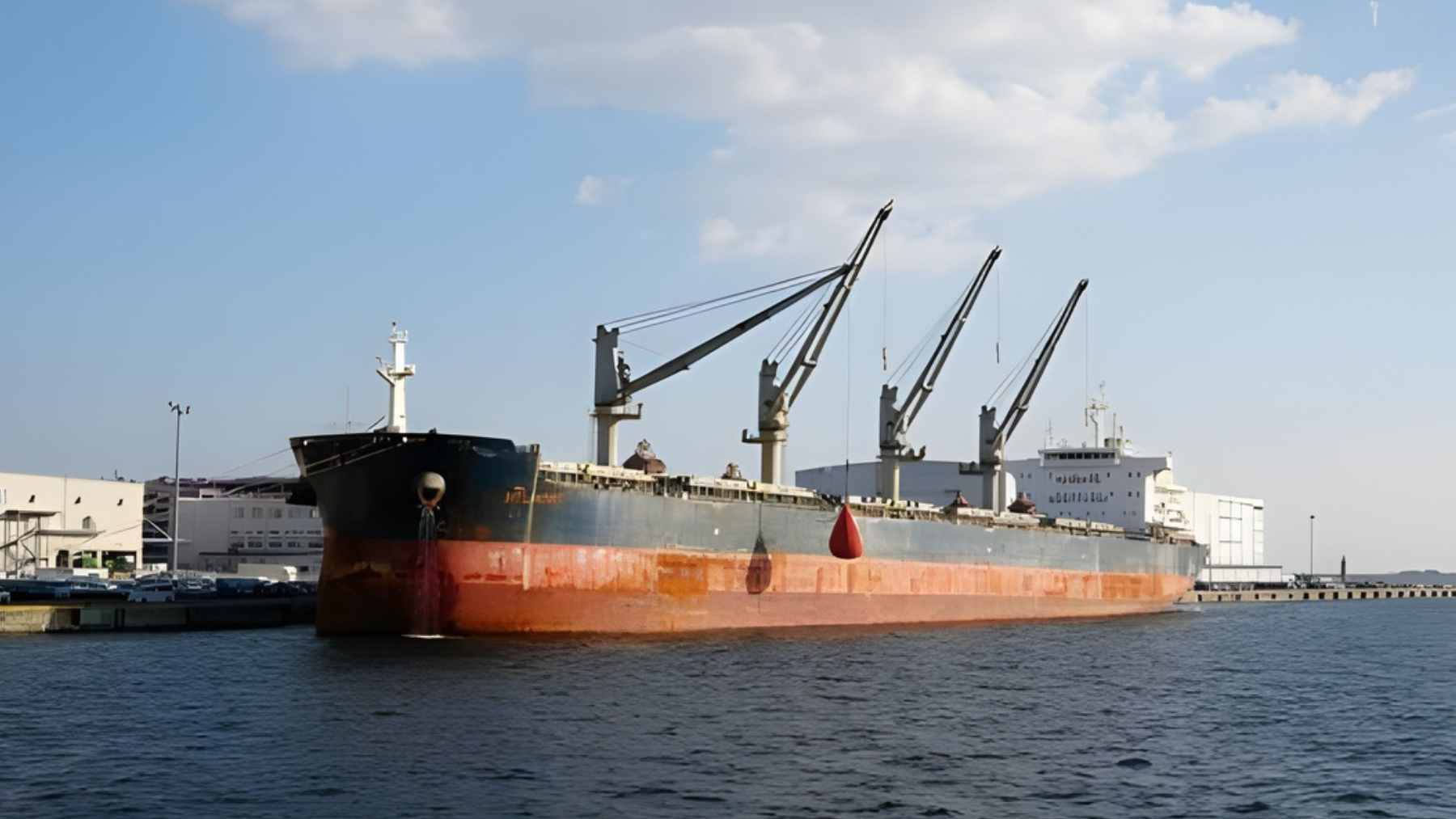
What if a commercial tanker could run for years without taking on a single gallon of diesel, not because it found a miracle fuel, but because it brought its own power plant aboard?
That is the pitch behind a new collaboration between Scorpio Tankers and U.S. nuclear startup AMPERA, built around compact “micronuclear” reactors designed for ports, offshore sites, and eventually oceangoing ships.
The climate angle is hard to ignore. Shipping is under growing pressure to cut emissions while still moving nearly everything we buy, from everyday essentials to industrial equipment.
The big question now is whether nuclear microreactors can move from ambitious press releases to hardware that regulators, port authorities, insurers, and coastal communities are willing to live with.
Why the industry is looking beyond diesel
International shipping’s emissions have not been a rounding error. The International Maritime Organization says total shipping greenhouse gas emissions rose from 1.075 billion tons in 2012 to 1.183 billion tons in 2018, and shipping’s share of global anthropogenic emissions increased from 2.76% to 2.89% over the same period.
At the same time, the IMO’s 2023 strategy raises the bar. It calls for net-zero greenhouse gas emissions from international shipping “by or around” 2050, with checkpoints that aim to cut total annual emissions by at least 20% by 2030, striving for 30%, and at least 70% by 2040, striving for 80%, compared to 2008.
What the new reactor pitch looks like
Scorpio Tankers says it has entered a strategic collaboration with AMPERA to develop and commercialize advanced micronuclear power solutions for marine and shipping markets.
The company frames it as a response to demand for “reliable, zero-carbon power” in maritime, offshore, and port infrastructure, starting with floating nuclear power barges in the near term and nuclear-powered vessels over the longer term.
The business commitment is not small, even by big-shipping standards. Scorpio Tankers says its $10 million investment in AMPERA reflects its conviction that nuclear microreactors could change how ships and offshore infrastructure are powered, and the collaboration also mentions commercial models like power-as-a-service, leasing, and long-term service agreements.
On the technology side, the companies describe AMPERA’s system as compact and fully containerized, using thorium fuel in a subcritical, solid-state design that is “never refueled,” with proprietary 3D-printing manufacturing.
AMPERA’s own materials describe factory-built systems designed to deliver roughly 15 to 30 MWe, which is a scale that could matter for ports and certain offshore loads, even if full deep-sea propulsion is a different challenge.
Ports first, then open water
Starting at the dock is not an accident. Scorpio Tankers explicitly puts floating nuclear power barges first, alongside port and coastal power infrastructure, before moving to nuclear-powered commercial vessels over the longer term.
In practical terms, that means the earliest “marine nuclear” wins might look more like utility projects than futuristic ships. A barge supplying steady electricity can support port operations and offshore activity where power demand is high and diesel deliveries are expensive, and it can do it without the constant fuel logistics that drive up costs and emissions.
Indeed, nuclear at sea has a history. The U.S. Maritime Administration notes that the N.S. Savannah, launched in 1959, was the world’s first nuclear-powered merchant ship, built to promote the peaceful use of nuclear energy.
It proved the concept was possible, but it also showed how economics, regulation, and public acceptance can decide what “works” in the real world.
Regulators and security teams will ask hard questions
One reason this idea is resurfacing now is that regulation is shifting. The U.S. Nuclear Regulatory Commission says it has issued a new licensing pathway, known as Part 53, designed to make licensing advanced reactors faster and more predictable while maintaining safety, using technology-inclusive and risk-informed approaches with graded security requirements.
AMPERA is already positioning itself for that environment.
In a company announcement carried by PR Newswire, AMPERA said it submitted a letter to the NRC on Feb. 23, 2026 to begin the pre-application process for a factory-fabricated, containerized microreactor using advanced fuel forms and passive safety features, and it said it requested an initial pre-application meeting before the end of May.
Still, “can it be licensed” is only one slice of the problem. Deploying reactors for maritime use raises safeguards and security issues that go beyond a typical land-based installation, because nuclear material has to remain protected and accounted for throughout its life.
The IAEA notes that safeguards agreements exist to verify nuclear material is not diverted to weapons or other nuclear explosive devices, and any future maritime deployment model will have to fit that reality.
What to watch next
There is a straightforward reason shipping executives are listening. Scorpio Tankers and AMPERA argue micronuclear systems could cut fuel costs, reduce weight, improve efficiency, increase capacity, and eliminate carbon emissions for shipping companies, but the companies also flag that these plans are forward-looking and subject to risk and uncertainty.
In other words, nobody should treat “decades without refueling” as a delivery schedule.
For 2026, the near-term signals are more procedural than flashy. Watch whether AMPERA’s NRC engagement advances beyond pre-application steps, whether Scorpio and AMPERA can define realistic port-focused deployments, and how insurers and port authorities react once there is a concrete proposal on paper instead of a concept.
That is when the idea will either gain traction, or hit the wall.
The press release was published on Scorpio Tankers.