If you’ve ever stared at an electric bill and thought, “There has to be a steadier way,” a fast-flowing river might sound like the ultimate cheat code.
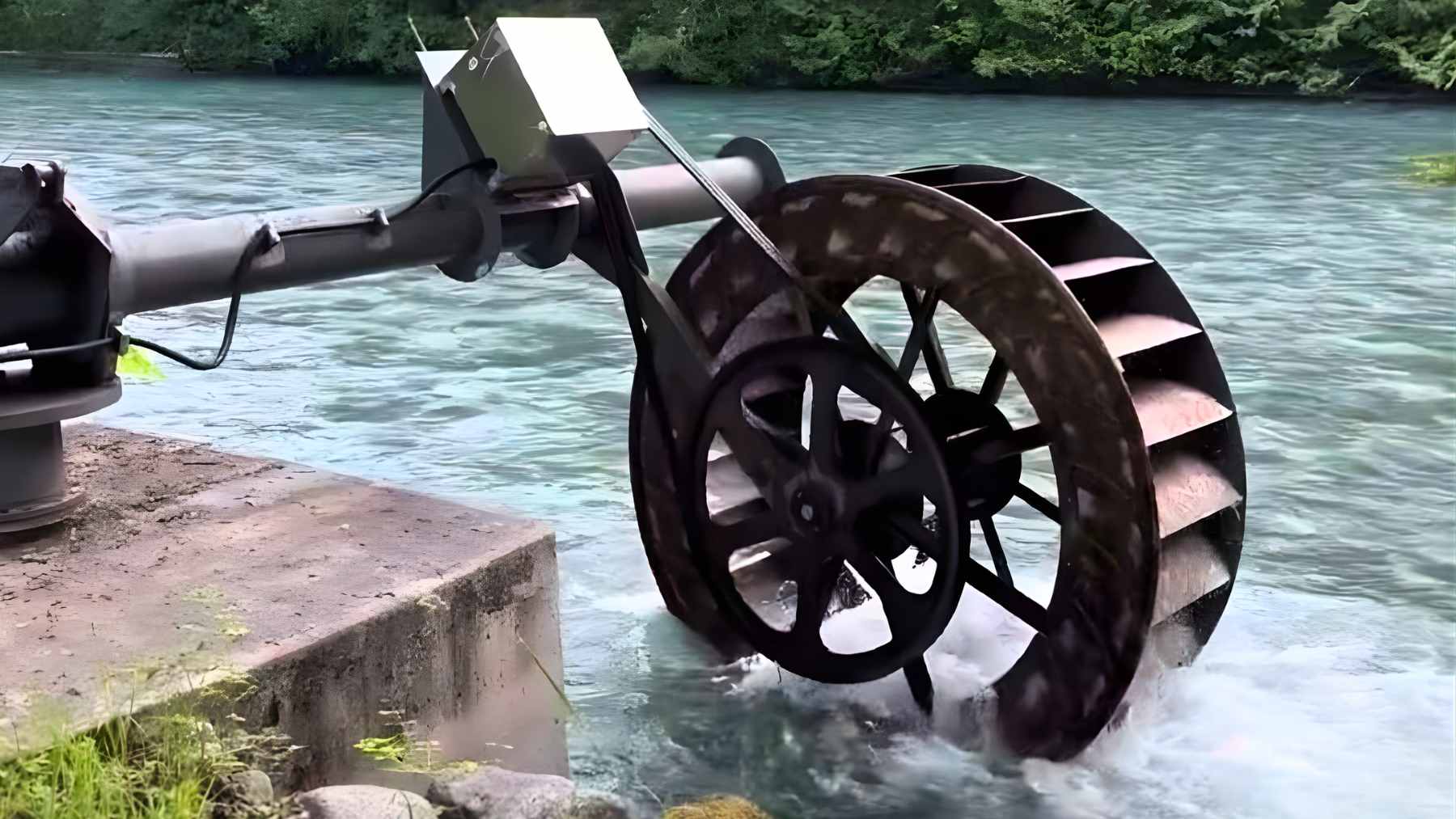
In British Columbia, retired engineer Marc Nering built a power-generating water wheel on the riverbank that recent coverage says can reach about 36 kWh of electricity per day under stable conditions, with surplus power even capable of going back to the grid.
The point is not that everyone should rush to buy a water wheel. It’s that the clean-energy conversation is still catching up to a simple reality that matters to homes, businesses, and even defense planners. Reliable power is often the point, and reliability is where “always on” renewables start to look less like a niche hobby and more like a strategy.
A river wheel instead of a dam
Nering’s approach leans on a straightforward idea: use the river’s speed to spin a wheel and drive a generator, without building a conventional dam. In an interview with Hydro Leader, he summed up the core advantage plainly, “You don’t need to dam a river to use it.”
That simplicity has limits, and Nering is clear about them. He says you need a fast-moving river, “Ten feet or 3 meters per second, at minimum,” plus a solid riverbank foundation and the right site conditions.
What 36 kWh a day can cover
The headline number that’s spreading is roughly 36 kWh per day, which lines up with a steady output of about 1.5 kilowatts if conditions hold for a full 24 hours. That kind of constant production is why micro-hydro keeps popping up in off-grid conversations, because it can run through the night when solar is idle.
For context, the U.S. Energy Information Administration estimates the average American residential customer uses about 10,791 kWh per year. That works out to roughly 30 kWh a day on average, although real life swings with seasons, heat waves, and the summer air conditioning load.
Power electronics make the old wheel modern
It’s tempting to treat a water wheel like a museum artifact, but the modern version is really about the electrical hardware wrapped around it. Nering says his early thinking involved an irrigation spiral pump, then he found permanent magnet generators that could work around “50 rotations per minute,” which made electricity generation practical at low speeds.
He also runs the system with a grid-tied converter and says, “I use it to power my house,” adding that he exports any extra power he makes to the grid.
That last part matters because it turns a DIY machine into something that can actually interact with utility rules and home energy planning, even if the paperwork can get complicated fast.
Real-world engineering gets messy fast
The most useful details in Nering’s story are the unglamorous ones. He says his biggest issue is torque and the belt slippage that comes with it, “especially when everything is wet,” and he has weighed fixes like a chain drive, a gearbox, or a direct-drive generator.
Then there’s wear and tear in the splash zone, which is where many river projects either evolve or die. Nering says water ingress chewed through roller bearings in less than a year even with high-quality bearings and seals, and he eventually switched to lignum vitae wooden bearings, saying, “It’s been great.”
The environmental question nobody can skip
“Run of the river” does not mean “no impact,” and regulators tend to treat moving-water projects cautiously for a reason.
Nering says permitting was difficult and involved municipal, provincial, and federal agencies, plus consultations with First Nations and river users like kayakers, and he was initially evaluated as if he were building a dam-based hydro plant.
Fish protection was a central concern, including worries about salmon moving downstream at night and the possibility of injury. Nering also says he had to post a bond so that if the project is abandoned, there’s money available to disassemble and remove the installation.
Why business and defense are paying attention
Even Nering downplays the idea of mass-market adoption, saying this kind of setup “is never going to be cheaper than grid power” and makes the most sense in remote areas or places relying on diesel generation.
Still, he reports signing an agreement with a company in Italy and says a company in Chile is using a water wheel as part of a project to collect plastic in rivers, which hints at a business path that looks more like licensing and local builds than factory shipping.
On the defense side, the logic is familiar: reduce dependence on vulnerable fuel supply chains and keep critical operations running during disruptions.
A U.S. Department of Energy Federal Energy Management Program white paper notes that since 2018, annual defense authorization laws have directed the Department of Defense to strengthen installation energy resilience with approaches that include onsite backup power and islandable microgrids.
At the end of the day, this is what Nering’s river wheel really illustrates–the cleanest kilowatt is the one that shows up when you actually need it.
The official interview was published on Hydro Leader Magazine.