If you have ever sat in rush-hour traffic and watched a crash turn a highway into a parking lot, you know road safety is not just a legal problem. It is a public health problem, a supply chain problem, and yes, a pollution problem, too.
A new federally-funded report lays out a path toward a portable, low-cost marijuana breath test built around a 3D-printed cartridge and a color-changing dye. The big caveat is that detecting THC is not the same as proving impairment, and the science is still catching up to what lawmakers want from a roadside tool.
A cartridge that “turns red” for THC
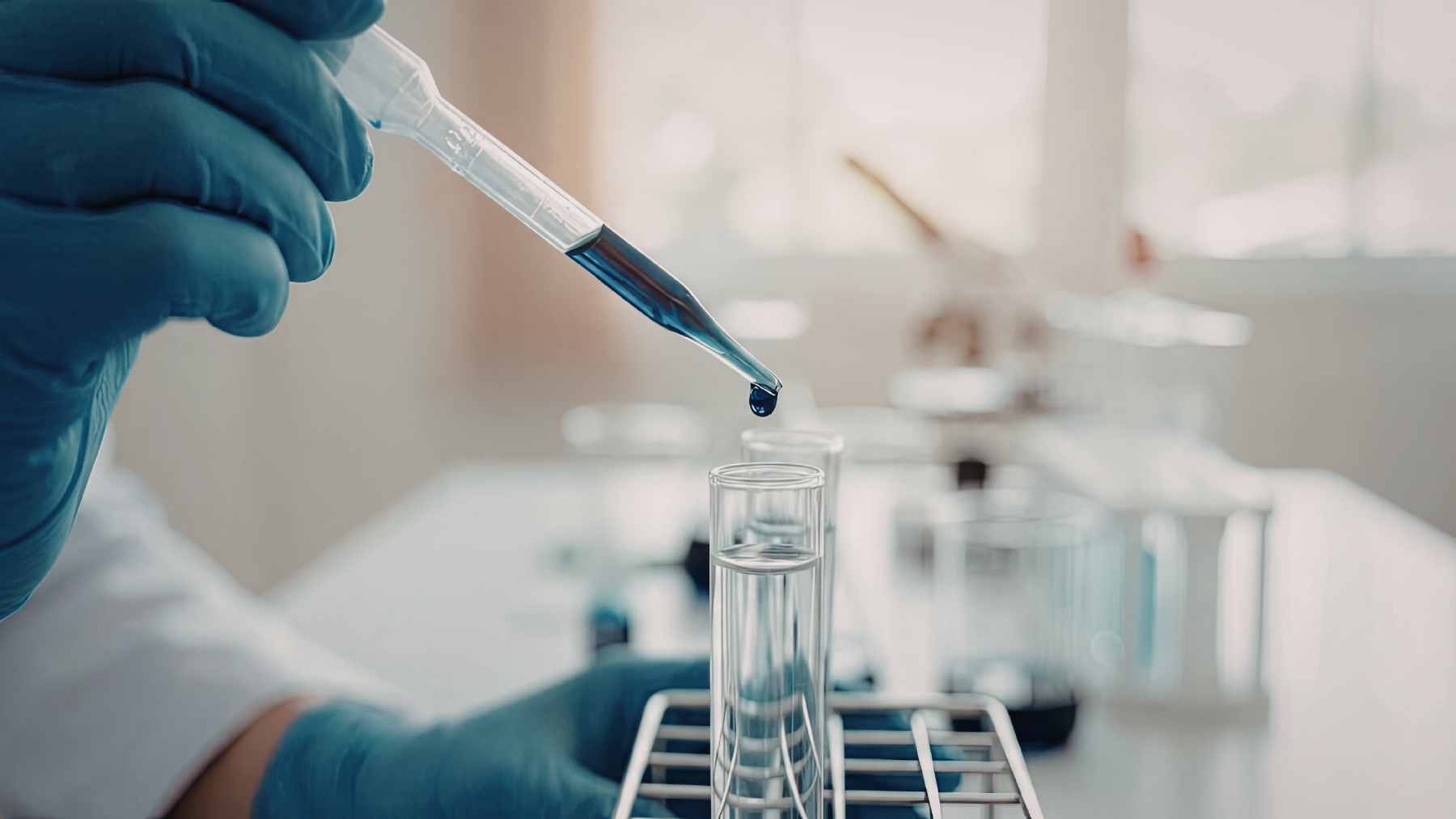
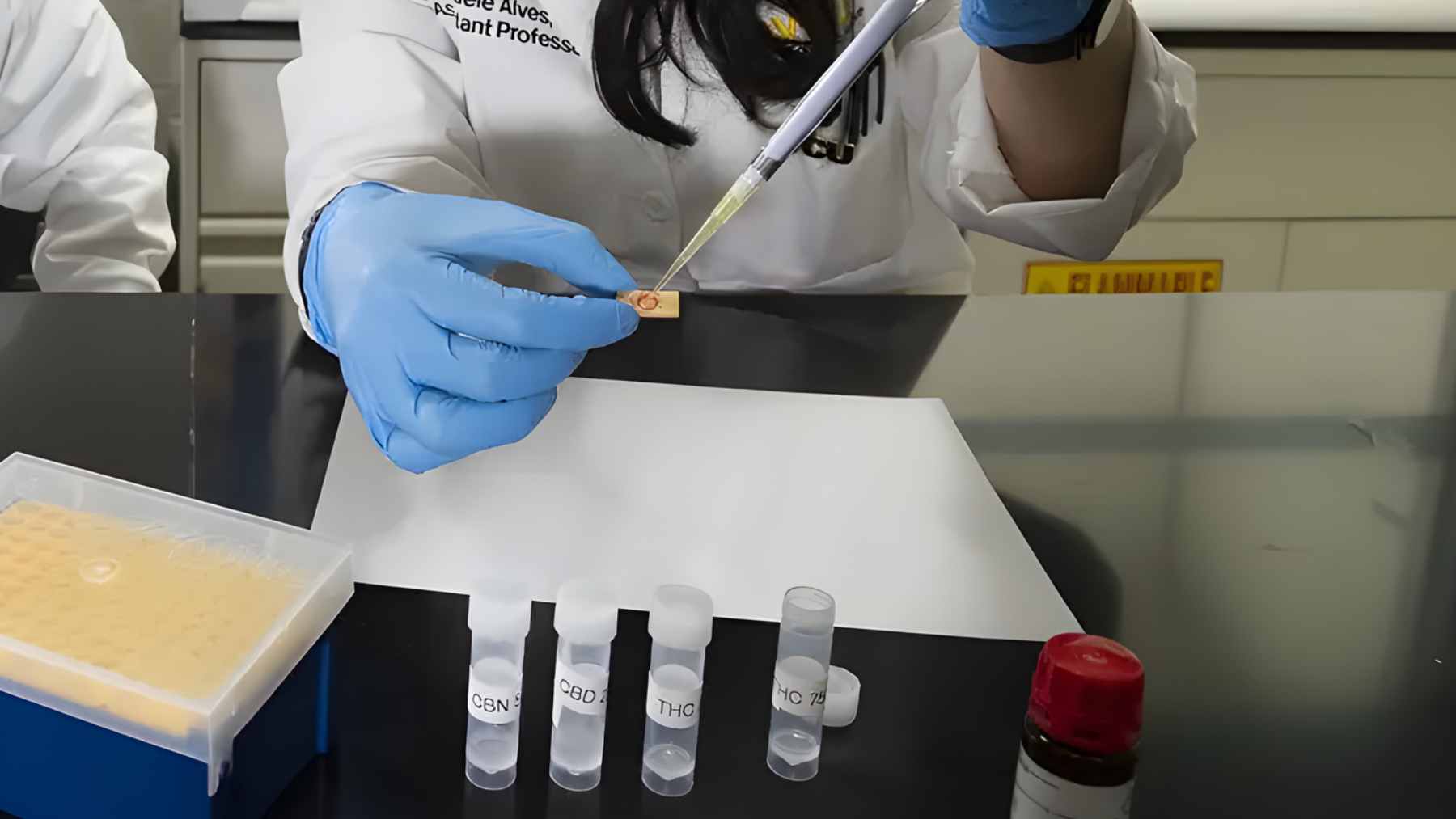
The work, led by Virginia Commonwealth University forensic scientist Emanuele Alves, evaluated Fast Blue dyes that react with cannabinoids and create distinct color signals.
The report also includes a standard disclaimer that it was prepared with federal funding and made public through the Office of Justice Programs’ NCJRS, while noting the views do not necessarily reflect official DOJ policy.
In the most promising setup, a 3D-printed cartridge is topped with a ballistic gelatin layer that carries Fast Blue BB dye, giving a stable and uniform reaction surface.
In lab testing, the Fast Blue BB and gelatin system showed strong linearity (reported as R² = 0.94) and supported detection from 10 to 100 nanograms, while Fast Blue B and gelatin showed weaker linearity (reported as R² = 0.55) over the same range.
So, what would a future device look like in practice? The prototype sketch includes a mouthpiece and spacer similar to what is used with asthma inhalers, with the cartridge fixed at the end where delta-9 THC particles “collide and react” and can produce a dark red result when positive.
Why cannabis breath testing is still a policy minefield
Here is the uncomfortable truth for the road: unlike alcohol, THC levels do not translate cleanly into impairment, and federal traffic safety sources have long emphasized how hard it is to link measured THC concentrations to performance in a reliable way.
That is why “per se” THC limits remain controversial, even where states have adopted them. NHTSA’s own materials have warned that current research does not enable officials to predict with confidence whether a driver who tests positive at a measured concentration was actually impaired at the time.
On the measurement side, NIST has been pushing the conversation toward standards and validation, not quick fixes. It has also highlighted research directions like taking two breath tests within roughly an hour of each other to better indicate recent use, which shows how unsettled the science still is.
The business race is real, but standards decide the winners
The incentives are obvious. If governments and employers want something as quick as an alcohol breathalyzer, companies that can deliver a reliable, affordable device stand to win contracts and shape a new slice of the public safety tech market.
Alves’s report says the project established the “foundational chemical profile” needed for a THC breathalyzer, and it notes that a patent application was submitted (listed as PCT/US25/19696). That is the classic bridge from taxpayer-funded proof of concept to potential commercialization.
Still, the market will likely hinge on standards as much as engineering. NIST has hosted workshops bringing together government, forensic labs, industry, and law enforcement to debate validation criteria and implementation barriers, because a tool that cannot be compared apples-to-apples will struggle to scale.
Military bases and critical transport have their own stake
This story is not only about traffic stops on civilian roads. The U.S. military operates large substance misuse prevention and testing programs, and some service guidance describes aggressive DUI and DWI prevention on installations that includes using calibrated breathalyzers for alcohol.
Security forces also train specifically to recognize and prevent intoxicated driving on bases, where an impaired driver can quickly become a safety risk to personnel and operations. If cannabis detection technology matures, it may attract interest anywhere controlled access and readiness collide, from base gates to defense-adjacent transport routes.
That does not mean a THC breath test would automatically be adopted across the force. But it does explain why the “who needs this” list goes well beyond local police departments, and why scientific defensibility will be a make-or-break requirement.
The environmental detail hiding in a forensic report
One of the most interesting lines in the report is not about color science at all. The team initially explored chitosan as a reaction support, and the report explicitly frames that approach as a route toward an “environmentally friendly cartridge,” even though they later discarded it due to stability and storage constraints.
That environmental instinct is not random. Chitin and chitosan are widely discussed as ways to turn crustacean shell waste into useful materials, which is a familiar circular economy play where an industrial byproduct becomes a feedstock.
Even the 3D printing choices nod at chemistry and waste. The researchers point out that a water-washable resin made cartridge production “less toxic” by avoiding ethanol washing, though resin safety guidance also stresses that contaminated wash water still needs responsible handling and should not be poured down the drain.
The study was published on National Institute of Justice.