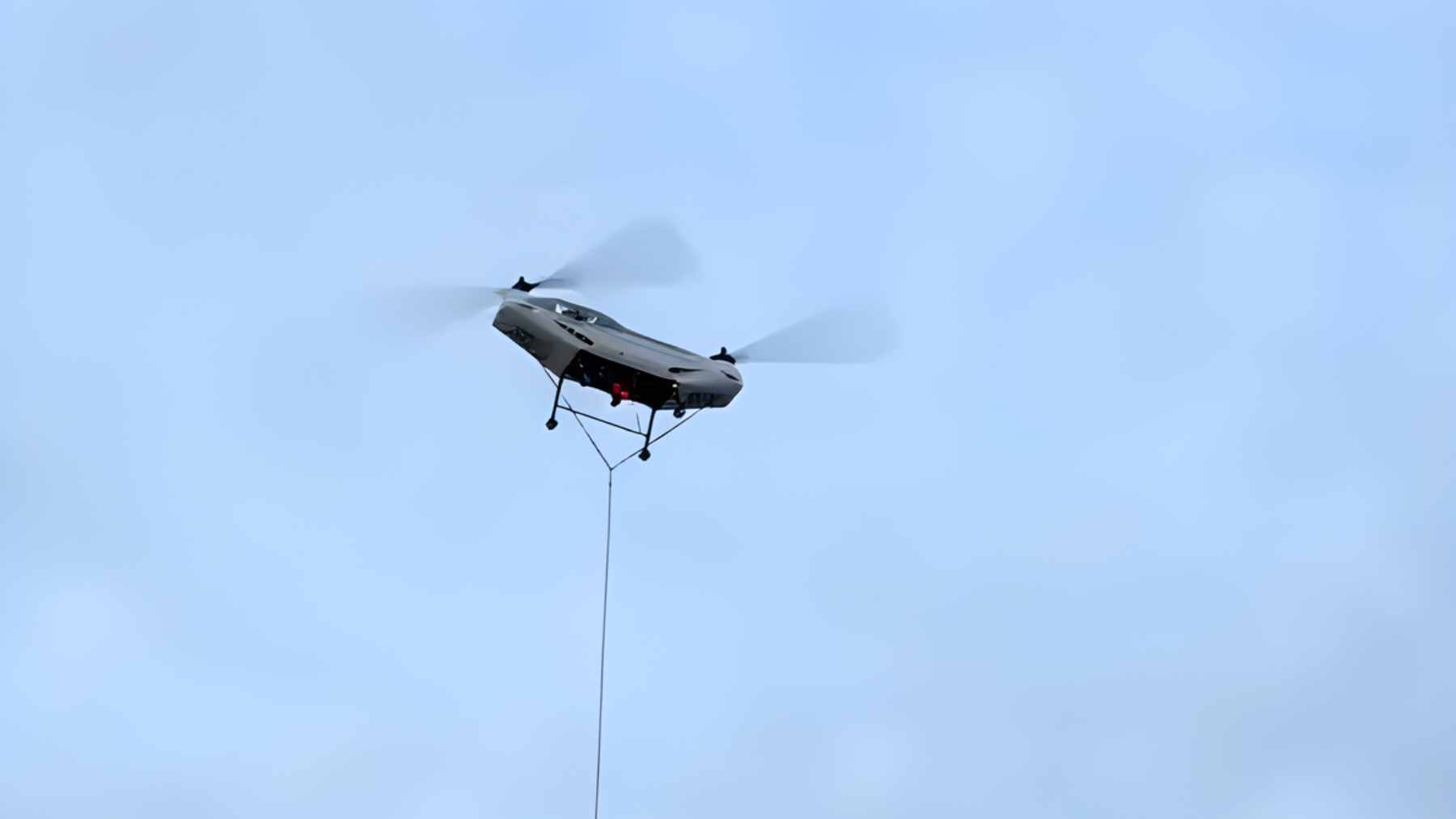
China has introduced a heavy-lift, helicopter style cargo drone that can carry up to 600 kilograms (1320 lbs.), according to a report from Teleamazonas. Built for mountains, disaster zones, and other hard-to-reach places, it is designed to move serious weight without putting a crew in harm’s way.
That sounds like a straightforward tech milestone, but it lands in a messy moment. As extreme weather disrupts roads and supply chains, drones are starting to look like a practical tool for climate resilience, yet the same capability can also serve security missions and leave its own environmental footprint.
Why 600 kilograms changes the conversation
Most people think of drones as camera platforms or small delivery bots. A 600-kg payload is in a different league, closer to a light helicopter job than a consumer gadget, and it pushes unmanned logistics into roles that used to require pilots. If a drone can lift that much, what tasks stop needing a crewed aircraft?
Teleamazonas says the aircraft is meant to operate where human access is limited or dangerous, including mountainous terrain and areas hit by natural disasters. Similar figures have been highlighted in China’s aviation circuit, including coverage by OEEE of an unmanned helicopter it described as capable of a 600-kg maximum load cargo.
Disaster response is now an environmental story
When a flood washes out a bridge or a wildfire cuts off a valley, getting supplies in quickly can be the difference between recovery and long-term damage.
The World Meteorological Organization notes that the number of weather, climate, or water related disasters increased five-fold from 1970 to 2019, and that on average, a disaster occurred every day in that timeframe.
This is where heavy-lift drones can look like climate adaptation infrastructure rather than a flashy demo. An official update from the Jiangmen municipal government promoted a coaxial unmanned helicopter for emergency firefighting and other high-risk missions, with a 600-kg maximum takeoff weight and more than 260 kg (570 lbs.) of payload.
If you can deliver equipment without carving a new road into a fragile slope, you can reduce ground disturbance even when the air is smoky and the roads are jammed.
The business case is bigger than emergency aid
China’s drone push is not only about crises. It is also tied to the country’s broader “low-altitude economy” plan, where regulators, manufacturers, and logistics firms are trying to turn airspace into a new layer of infrastructure.
Reuters has reported that Chinese authorities see the low-altitude economy becoming a 2 trillion yuan ($293 billion) industry by 2030, a four-fold expansion from 2023, with manufacturers testing cargo drones from hundreds of kilograms up to 3.2 metric tons of payload.
For everyday logistics, the bet is that unmanned aircraft can cut delivery time and reach places trucks struggle to reach, which matters when perishable goods cannot sit in traffic for hours and summer heat is already making the power bill sting.
Military and defense interests are baked in
Teleamazonas notes that strategic uses are being considered, which is not surprising for a platform built to haul loads into hard places. In a defense context, heavy-lift drones can reduce risk to crews, support remote positions, and move supplies through terrain that is dangerous for convoys.
But dual-use tech always comes with a second headline waiting nearby: the more capable these systems get, the more pressure grows for export controls, counter drone defenses, and clear rules so “humanitarian logistics” does not become a convenient label for something else.
The climate calculus is not automatic
It is tempting to assume that replacing helicopters or trucks with drones is automatically greener. Yet many heavy-lift rotorcraft are still powered by fuel engines, and Chinese officials have been promoting models built around heavy fuel systems, including the TD550 “heavy oil” version discussed by the Wuhu Investment Promotion Center.
The same official note says the TD550 was the first domestic unmanned helicopter to receive a civil aviation type certificate, with updated certification work underway for the heavy fuel variant.
There is also the question of scale. If drones make it cheaper and easier to move goods into sensitive areas, they could increase activity in places that ecosystems struggle to absorb, unless regulators set limits on routes, noise, and operations near protected habitats. Will communities accept more low flying rotor noise overhead if it keeps supplies moving?
The bottom line is simple. Heavy lift drones could become a new kind of air bridge for disaster response and environmental operations, but the real impact will depend on certification, oversight, and whether flights replace higher-impact alternatives.
The official statement was published on Wuhu Investment Promotion Center.