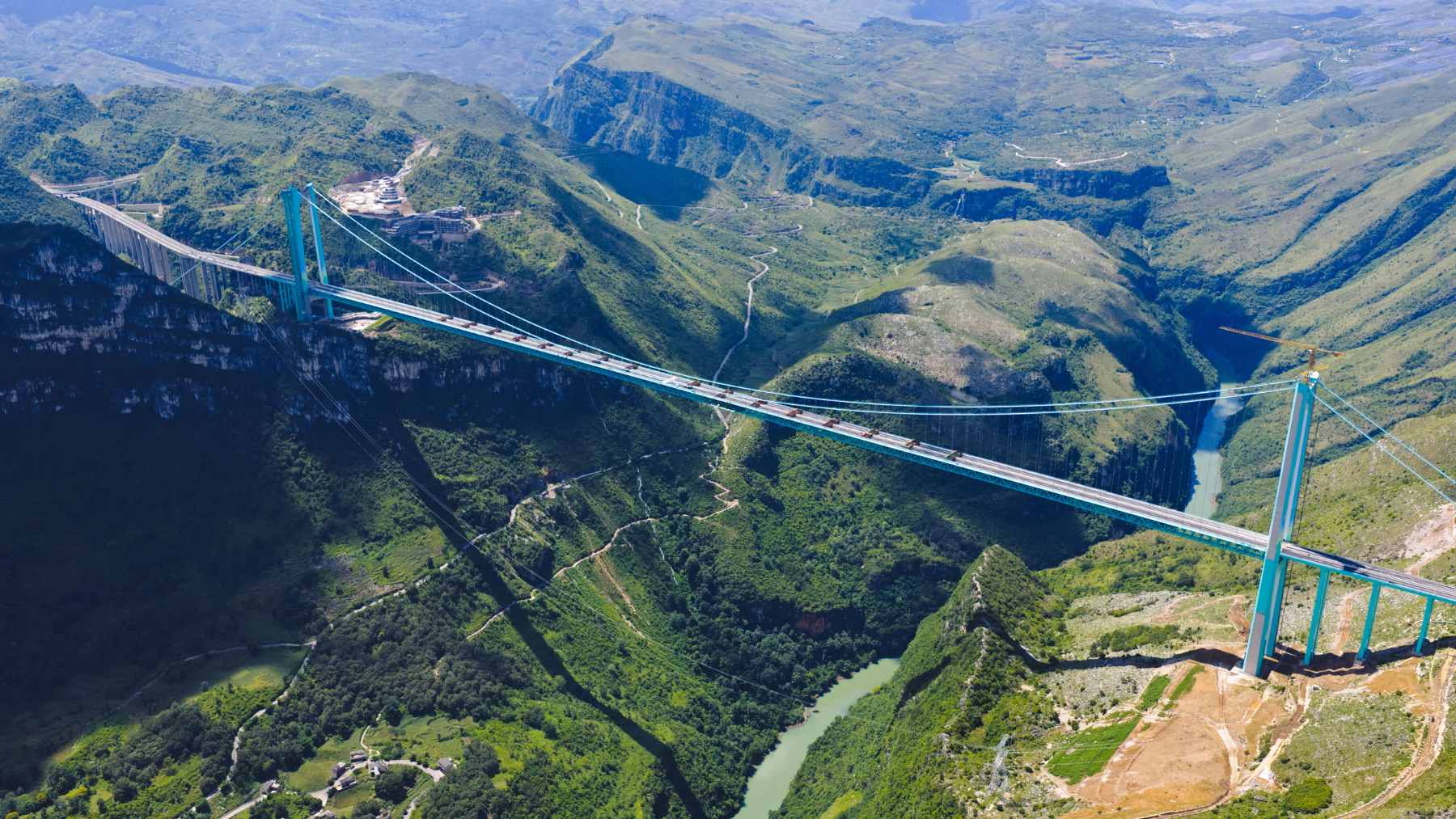
China’s Huajiang Grand Canyon Bridge in Guizhou Province is more than a new road crossing. Opened to traffic on September 28, 2025, it rises 625 meters above the Beipan River and shrinks a once punishing two-hour route across the canyon to about two minutes.
That kind of speed makes for a great headline, but the bigger story is what happens next. When a megaproject is packaged as transportation, tourism, and “smart” engineering all at once, its environmental footprint is not just about tailpipes.
It is also about steel, cement, water, and whether faster access brings cleaner mobility or simply more cars.
A bridge that rewrites travel in Guizhou
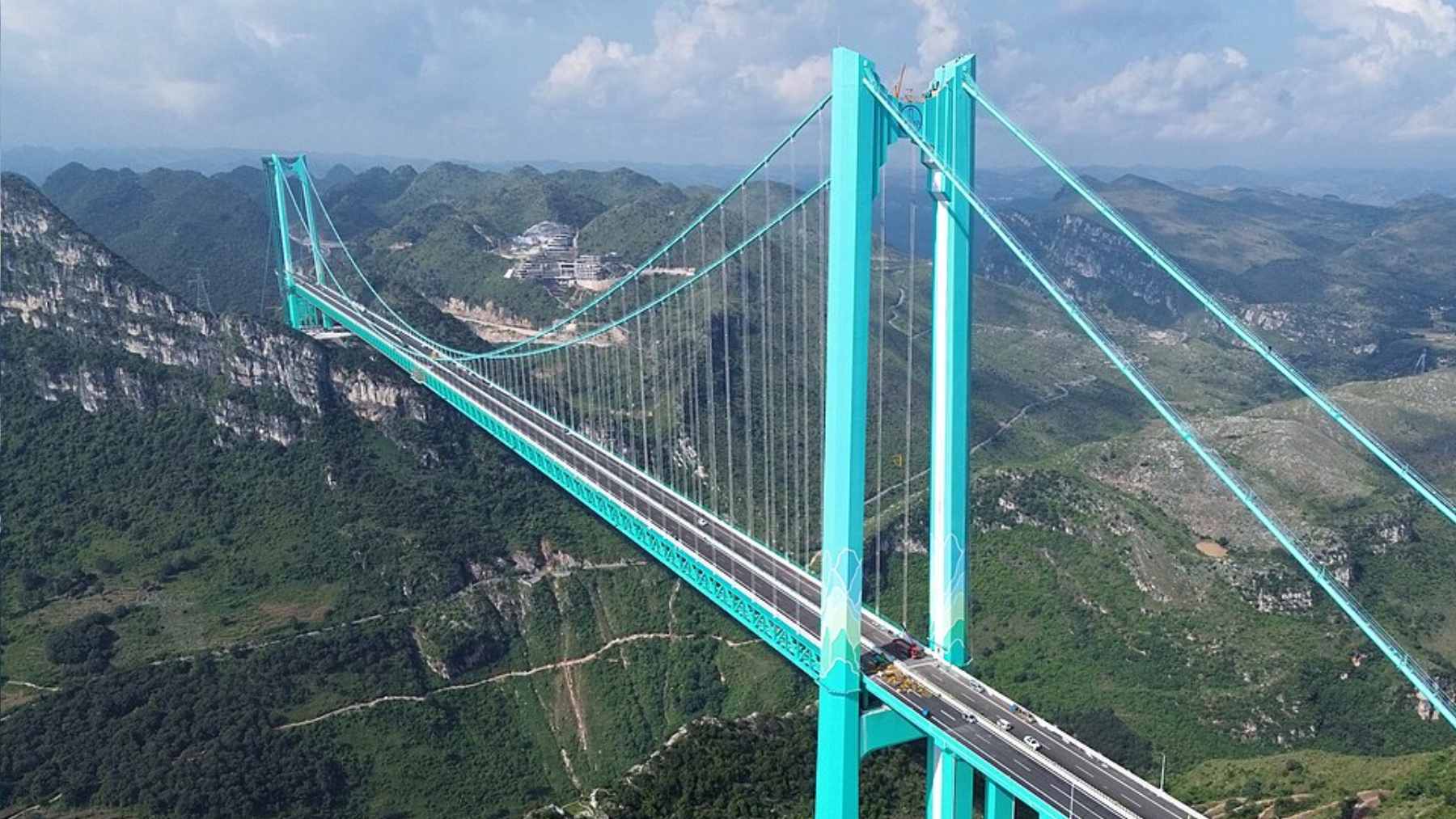
The bridge spans 2,890 meters (1.8 miles) with a 1,420-meter (0.88 miles) main span, stretching across Huajiang Grand Canyon, a landscape Xinhua says is nicknamed “the Earth’s crack.” It is now billed as the world’s tallest bridge by vertical clearance, surpassing the previous record holder on the same river system.
For locals, the impact is almost mundane in the best way. If you have ever lived with mountain switchbacks, you know how a “quick errand” can swallow half a day, plus fuel, and nerves. Xinhua also reports Guizhou has built more than 30,000 bridges, turning extreme terrain into a connected network that changes how people commute, ship goods, and reach services.
The water curtain and the tourism pitch
Officials and project promoters are not hiding the fact that this is meant to be a destination, not just a roadway. Reporting tied to the site describes glass walkways, sightseeing elevators, cafes inside the bridge towers, and bungee jumping as part of a broader “bridge tourism” development model.
One of the most attention-grabbing features is a planned light-and-water curtain show. Bernama reported it would include a 300-meter-long water curtain paired with a high-precision laser system, turning a piece of transport infrastructure into a nighttime spectacle.
Tourism momentum is already measurable, which is where ecology starts to matter fast. A Guizhou government portal article said the bridge saw about 300,000 tourist visits and more than 70,000 vehicle entries and exits during the Spring Festival holiday in February, only months after opening.
The carbon cost of building big
Here is the uncomfortable baseline: the cement industry alone is responsible for almost 7% of the world’s emissions, according to a UNECE press release, while the iron and steel sector accounts for about 7% of global energy system CO2 emissions in IEA analysis.
A record-setting bridge uses a lot of both materials, which means a big upfront climate bill before the first car even crosses.
There are hints the builders are thinking about efficiency, even if full lifecycle numbers are rarely published for the public. Bernama reported the use of stone powder as a concrete admixture along with newer construction methods like cloud-based temperature control for mass concrete, which can help reduce waste and defects.
The key question is scale, meaning how much cement was actually displaced, and what that does to total embodied emissions.
Tech that keeps a mega-bridge safe and efficient
Guizhou’s authorities and state media have leaned hard into the idea that this was built with advanced tools, not just brute force. Xinhua reported that the project obtained 21 authorized patents and used satellite navigation, drones, smart monitoring systems, and ultra-high-strength materials to achieve millimeter-level precision in high-altitude construction.
That tech story can be environmental, too, for the most part because durability is climate strategy. Better monitoring can mean fewer emergency repairs, fewer lane closures, and fewer detours where trucks idle and burn diesel in traffic jams.
Bernama also described “digital bridge” methods and automated systems for spraying and curing, which are the kinds of process upgrades that can cut rework and material waste.
Business wins and hidden costs
From a business standpoint, time is money, and the “two hours to two minutes” change is not just a slogan. The bridge links counties on opposite sides of the canyon and plugs into the S57 Liuzhi–Anlong Expressway, which improves freight reliability in a mountainous province where logistics have always been a challenge.
Tourism is being treated as a second revenue engine, and the numbers suggest local leaders see it that way. The Guizhou portal report said Anshun recorded 66 million tourist visits and 17 million overnight stays in 2025, with year-over-year growth of 13% and 24%, respectively, and it describes a new loop of scenic spots marketed as a “one-hour golden tourism circle”.
More visitors can help local incomes, but it also means more vehicles, more noise, and more pressure on sensitive karst landscapes if transport planning does not keep up.
Why defense planners track bridges, too
It is easy to think of bridges as purely civilian, until a crisis hits. In Europe, the European Commission and the EU’s High Representative have explicitly framed “military mobility” as a need to ensure transport infrastructure like roads, tunnels, and bridges can support both civil and military purposes, especially when heavy equipment must move quickly.
That does not mean Guizhou’s bridge was built for military use, and there is no need to speculate.
It does mean the same infrastructure that boosts commerce and tourism also becomes part of national resilience, whether for disaster response, emergency supply routes, or any scenario where moving people and equipment fast suddenly matters. Bridges like this are not only engineering trophies, they are strategic nodes.
The real environmental scorecard
The most honest way to judge this project is not to argue whether it is “green” or “not green,” because the answer depends on what people do with it.
The IPCC notes transport is responsible for roughly 15% of total GHG emissions and about 23% of global energy-related CO2 emissions, so any project that reshapes travel patterns can cut emissions, or increase them, depending on induced demand and mode choices.
In any case, there are two things to watch now that the bridge is open: first, whether freight and passenger traffic shift more efficiently without simply multiplying total driving; and second, whether the tourism boom is managed with cleaner shuttles, parking limits, and protection for the canyon environment.
The official update was published on eGuizhou.