A trillion dollars in red ink sounds bad enough. The bigger question is what is hiding underneath it.
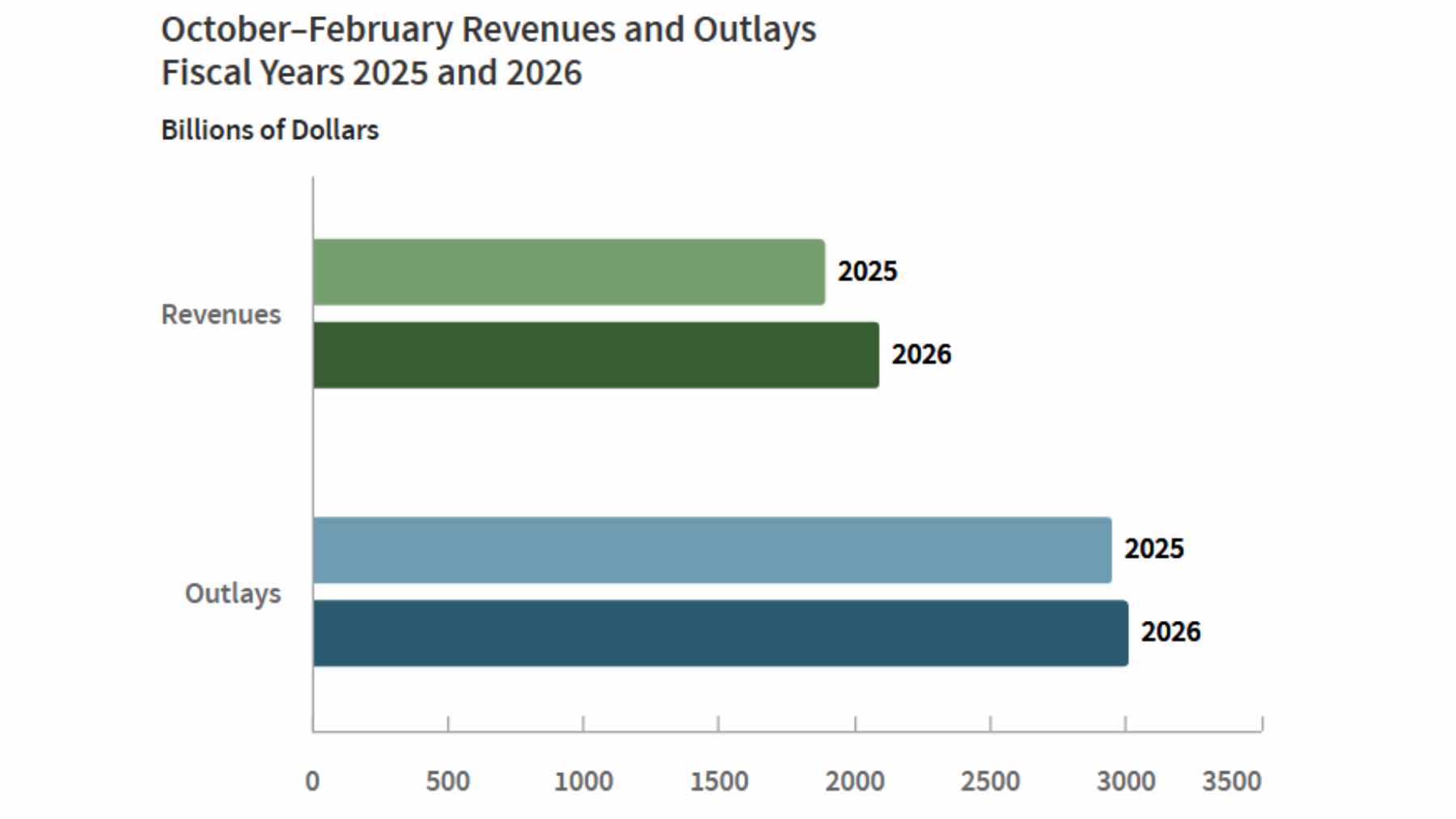
The Congressional Budget Office said the federal budget deficit reached $1.0 trillion in the first five months of fiscal year 2026, with $308 billion borrowed in February alone. That was actually $142 billion less than the deficit recorded in the same stretch a year earlier.
But that improvement did not come from Washington suddenly tightening its belt. It came mainly from stronger revenue.
Federal debt and interest costs are still climbing
That distinction matters. A smaller gap is helpful, of course, but it does not automatically mean the government’s finances are getting healthier. Treasury data showed total public debt outstanding at about $38.88 trillion on March 11, 2026.
At the same time, the CBO said net interest outlays on the public debt rose by $31 billion in the first five months from a year earlier, and its longer range outlook says net interest is on track to move above $1 trillion in fiscal year 2026.
Tariffs and tax receipts helped narrow the deficit
So what helped soften the blow? Mostly revenue. The CBO said receipts totaled $2.1 trillion in the first five months of the fiscal year, and collections of customs duties, including tariffs, were more than four times the level seen a year earlier.
In practical terms, tariff income and other tax receipts gave the government a bigger cash cushion, even as the broader spending picture stayed heavy.
Debt-to-GDP remains the key warning sign
Still, budget experts usually look past the headline debt number and focus on debt relative to the size of the economy.
Treasury says the debt to GDP ratio is a better gauge of fiscal strain because it shows the burden of borrowing against national output. And the CBO’s February outlook projects federal debt will rise to 120 percent of GDP by 2036 under current law.
That is the warning light many economists keep watching.
Budget watchdogs warn the path is not sustainable
Maya MacGuineas of the Committee for a Responsible Federal Budget put it bluntly when she said, “This cannot be sustainable.” Her group is pushing a 3% deficit to GDP target. Whether lawmakers can agree on that kind of path is another matter.
But the broader message is hard to miss. When interest costs keep rising, more public money goes to servicing old debt and less is left for everything else, simple as that.
The official report was published on CBO.