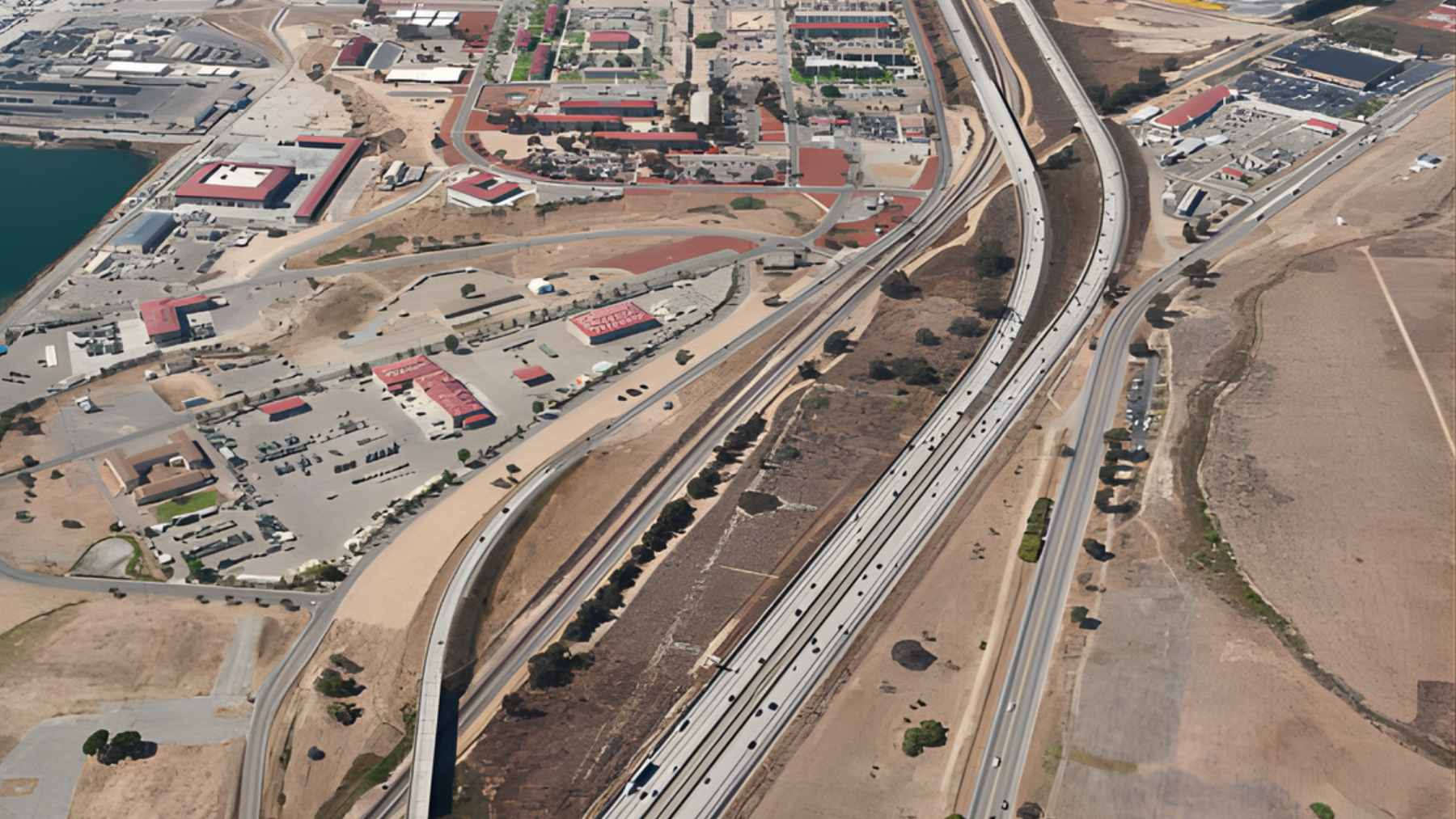
A shell that exploded over Interstate 5 was always going to be a safety story. At Camp Pendleton, it is also an environmental one. A Marine Corps investigation released on March 13 said a malfunctioning electronic fuze caused the October 18, 2025 shell to detonate over the freeway during a live-fire anniversary event.
The report described the failure as a “statistical anomaly” and a “one in a million” defect. No one was hurt, but the incident did more than leave shrapnel on police vehicles.
It exposed how military spectacle, public infrastructure, and a fragile coastal landscape can collide in one bad moment.
Interstate 5 closure and Camp Pendleton safety concerns raise bigger questions
That collision happened over one of Southern California’s most important roads. Reuters reported that a 17-mile stretch of I-5 had been shut down as a precaution before the live-fire portion began.
One shell then exploded in mid-flight and scattered metal onto California Highway Patrol vehicles assigned to Vice President JD Vance’s security detail. Traffic later reopened, but drivers suffered the kind of backup anyone in the region knows too well, the kind that can turn a routine trip into an all-day grind.
Why does the location matter so much? Because Camp Pendleton is not just a training ground. By the base’s own description, it spans more than 125,000 acres and contains the largest undeveloped stretch of coastline in Southern California.
The Marine Corps says the installation supports more than 1,000 species of plants, fish, and animals, and another official Marine Corps report says 19 federally listed species live there. One base official even called it a “biodiversity hotspot.”
Wildlife, habitat, and military training overlap at a fragile coastal site
The investigation does not say the faulty round damaged wildlife or habitat. Still, the setting matters. Camp Pendleton says units training on or near protected land are given its Integrated Natural Resource Management Plan, and officials warn that if even one acre is disturbed, the base may have to set aside double or even ten times that land elsewhere.
In summary, a safety lapse can become a land-use problem, a compliance problem, and naturally, a budget problem, too.
For the most part, this was a rare munitions failure, but rare is not the same as harmless. At the end of the day, the Camp Pendleton episode is a reminder that modern military readiness is judged by more than firepower.
It is also judged by whether commanders can protect commuters, manage risk, and operate inside a landscape the Marine Corps itself says must be preserved if training is going to remain possible for years to come.
The official investigation report was published on Headquarters Marine Corps.