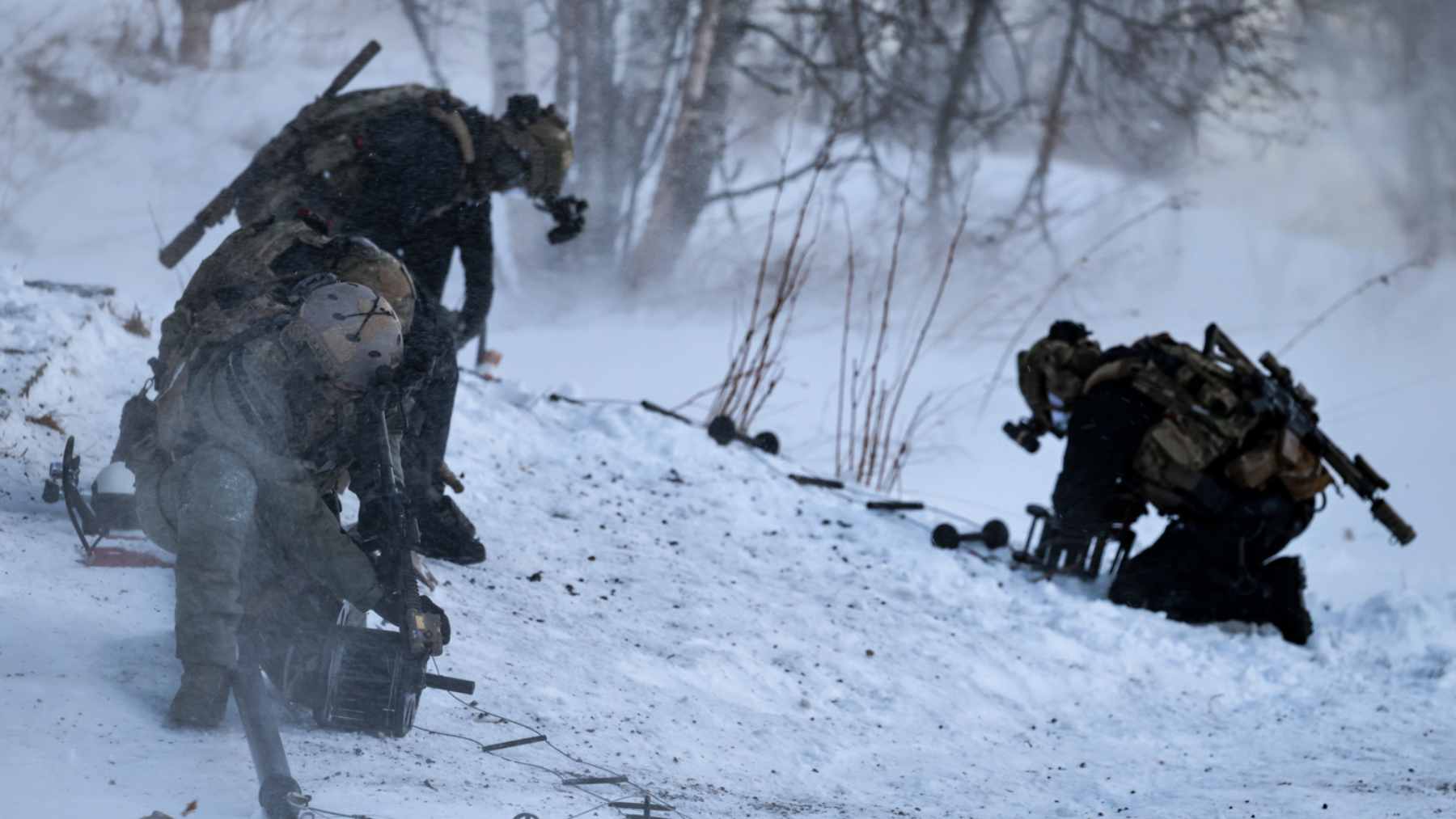
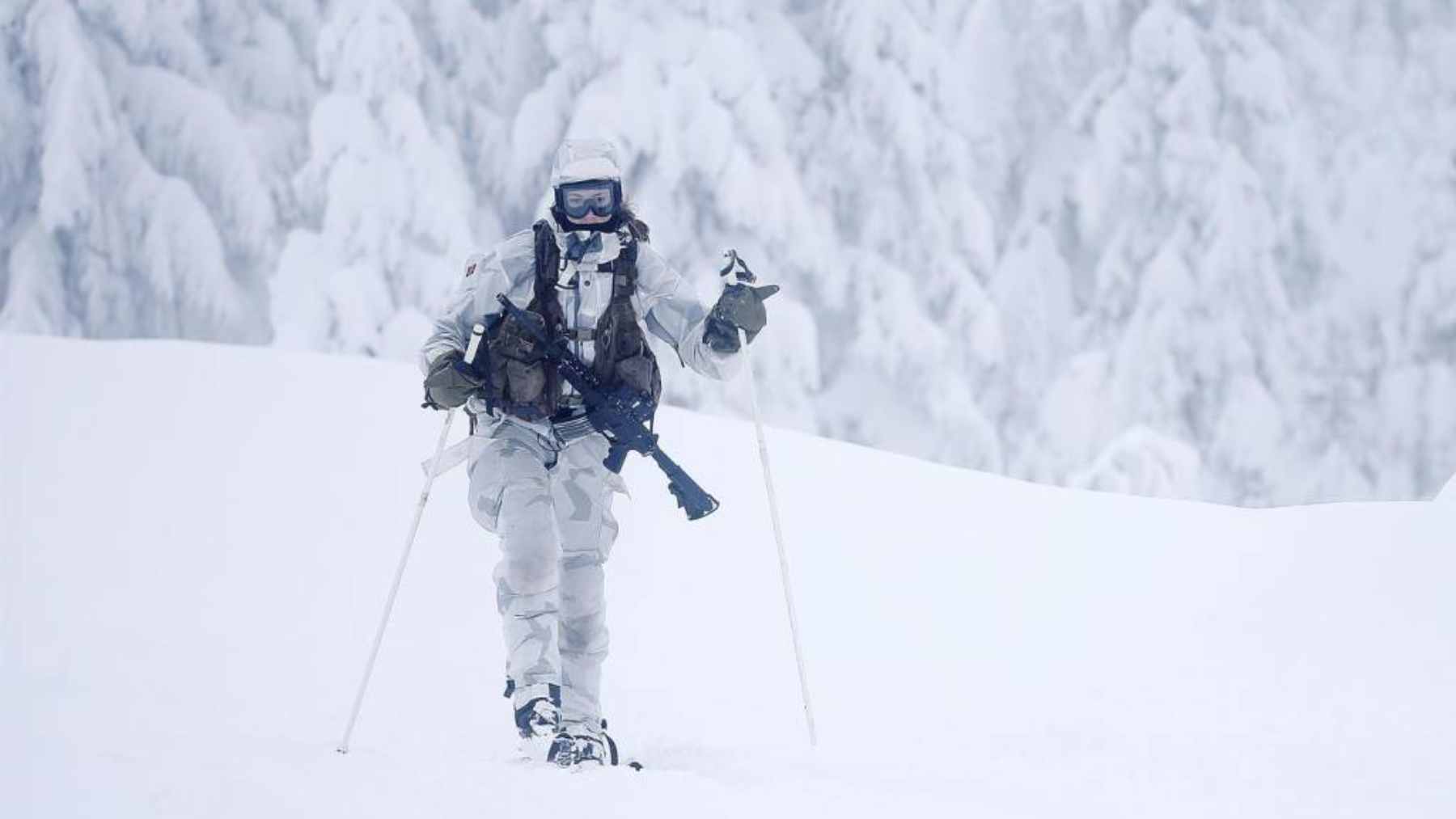
In Norway’s largest military exercise of 2026, one of the smartest answers to modern drone warfare looks almost prehistoric. Elite reconnaissance troops are still digging quinzhees, hand-built snow caves about 1.5 meters high and 2 meters wide, to stay hidden from aerial sensors during Cold Response 2026.
The exercise runs from March 9 to March 19 and brings together 32,500 participants from 14 countries across Norway and Finland. Anyone who has seen fresh footprints linger after a snowfall knows how unforgiving snow can be.
In the Arctic, that same surface can expose a soldier just as quickly as it can protect one.
Why the Arctic is becoming a drone warfare testing ground
Why are these exercises important? Because the Arctic is turning into a testing ground for the same drone-heavy battlefield logic already seen in Ukraine. Defense News reported that Royal Marines training alongside Norwegian troops said units often need to move every 15 minutes to avoid detection.
Norwegian forces are also experimenting with winterized surveillance drones, including Skydio and first-person view systems, while Army chief Maj. Gen. Lars Lervik said the broader exercise is also testing attack drones and unmanned ground robots.
That pressure is reshaping the defense business, too. Saab says its Barracuda Mobile Camouflage System is built to reduce detection across multiple sensors and lower vehicle heat, and the company has moved final assembly of some Barracuda kits for British Army Ajax vehicles to the United Kingdom as demand grows.
In practical terms, camouflage is no longer just fabric and paint. It is increasingly sold as “signature management,” a high-tech way of reducing what enemies can see, track, and target.
Why Norwegian soldiers still trust snow as their best concealment
But Norway’s soldiers are making a simpler point. The best camouflage in the Arctic may still be the Arctic itself.
Even with multispectral systems entering the field, the Norwegian unit told Defense News that snow remains its “absolute best concealment” because darkness, fog, fresh snowfall, and quickly buried tracks can still beat expensive sensors most of the time. Old school? Yes. Outdated? Not really.
There is also an environmental angle here that is easy to miss. Norway’s own exercise guidance says environmental protection must take precedence over exercise needs. Protected areas include nature reserves, national parks, breeding zones, and reforested land.
Units are also warned that wetlands and mountain terrain are especially vulnerable, and that reindeer can be harmed by noise and low flying activity. So the snow is not just cover, it is a fragile operating surface.
Modern Arctic warfare between drones, stealth, and survival skills
At the end of the day, modern Arctic warfare looks less like science fiction and more like a tug of war between sensors and survival skills. Drones are everywhere, but so are shovels, silence, and the need not to leave a trace.
The official statement was published on the Norwegian Armed Forces.