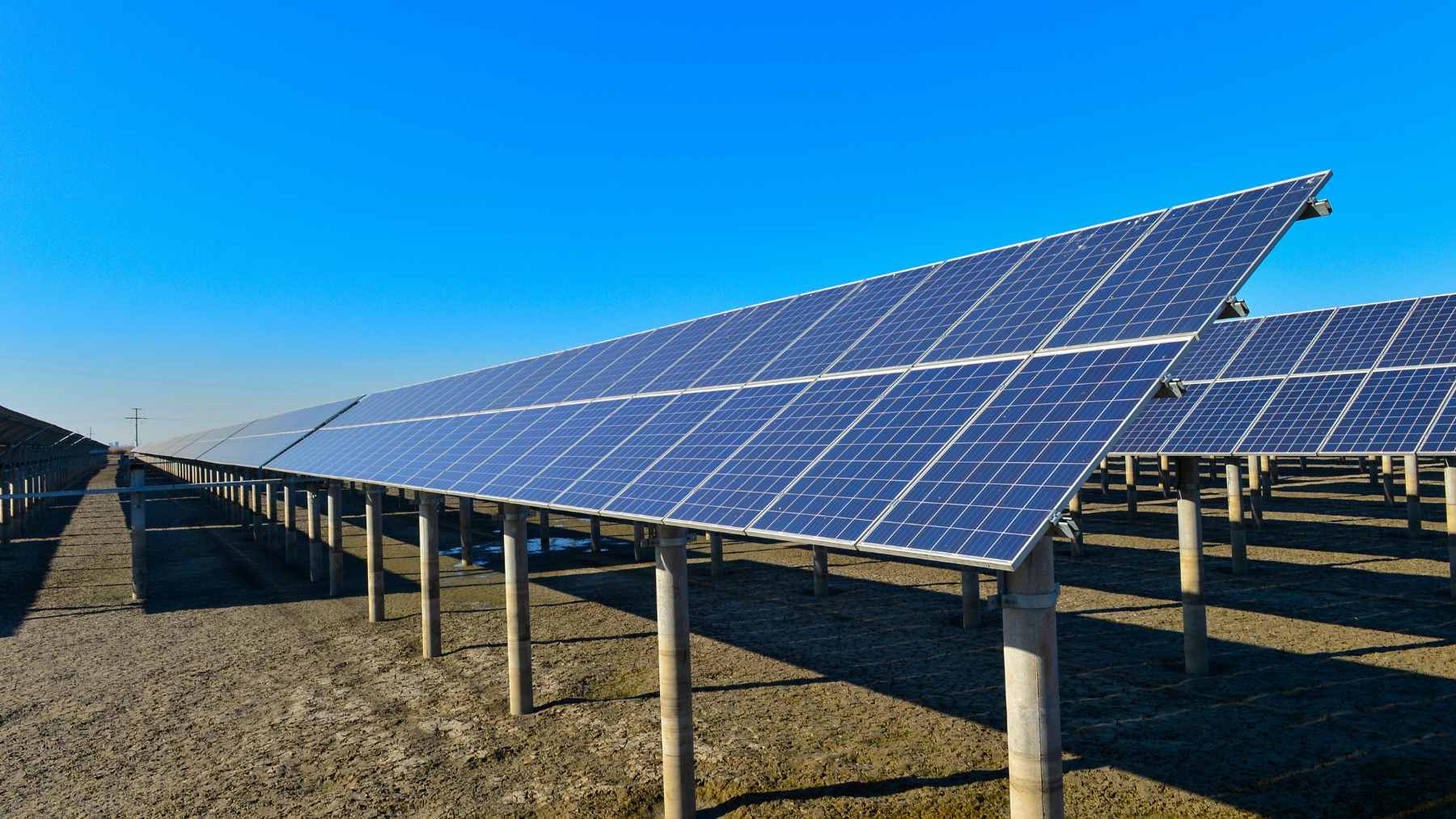
Solar power keeps getting cheaper, yet a stubborn physics ceiling still blocks how much electricity a single solar cell can pull from sunlight. A team led by Kyushu University, working with Johannes Gutenberg University Mainz, says it has found a way to capture energy that would normally be lost.
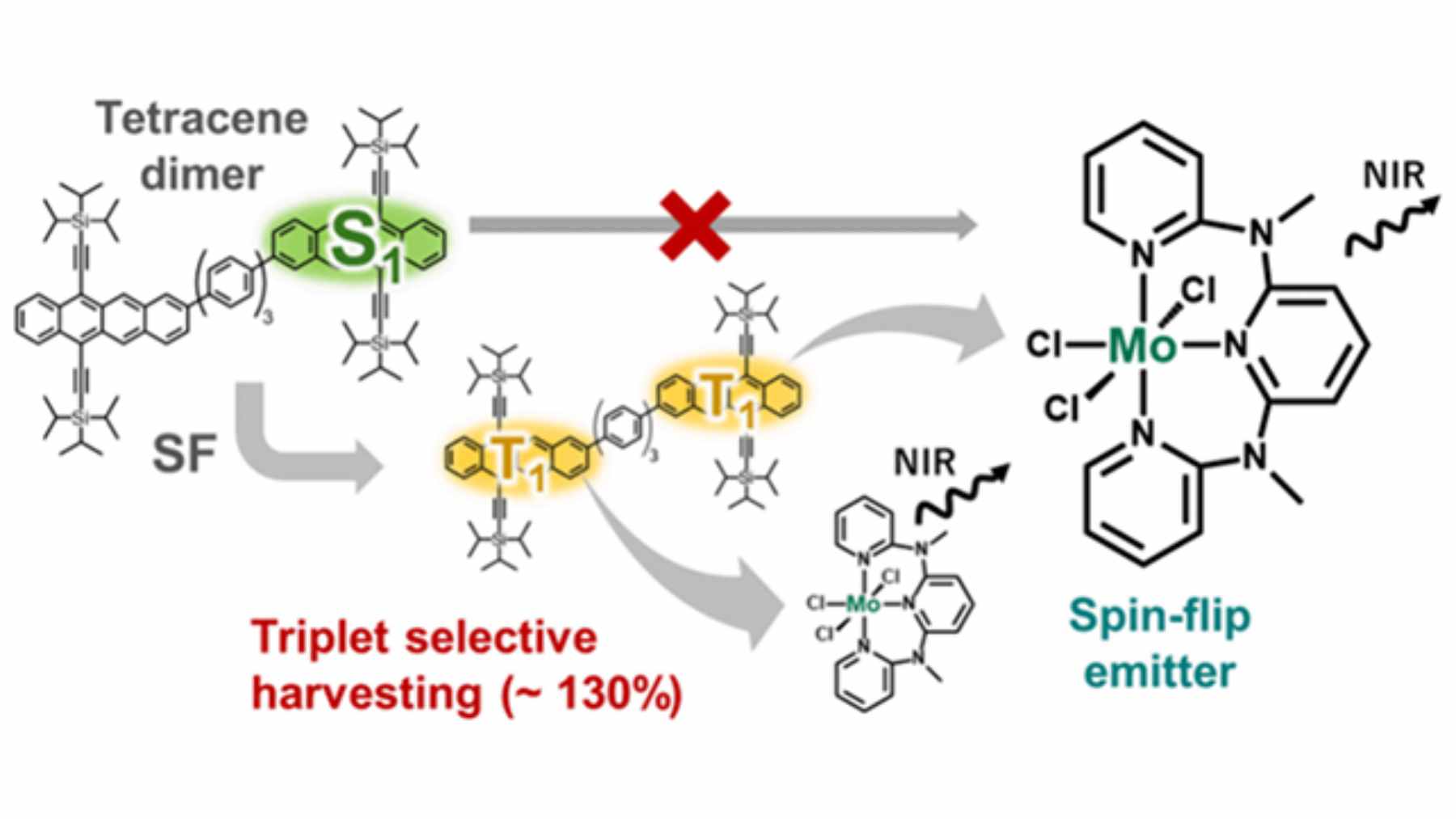
In lab experiments reported on March 25, 2026, their molybdenum-based “spin-flip” complex helped reach about 130% quantum yield when paired with tetracene-based materials.
That headline number does not mean your rooftop panels will suddenly run at 130% efficiency. It means the system produced more usable energy carriers than the number of photons absorbed, which is exactly the kind of improvement that matters when you scale to millions of panels.
Could it ever show up on the electric bill, or in the way the military powers a remote base?
The 130% number explained
Most conventional solar cells face the same bottleneck. Some photons are too low-energy to do useful work, while higher-energy photons waste the extra as heat, and that is why single-junction devices have a well-known theoretical ceiling called the Shockley-Queisser limit.
Peer-reviewed work describes that ceiling for single-junction, silicon-class approaches as roughly in the low 30% range under standard illumination conditions.
The Kyushu-led team focused on singlet fission, a process that can turn one high-energy excitation into two lower-energy “triplet” excitons.
The trick is harvesting those triplets before they disappear, and the researchers note the energy can be “stolen” via “Förster resonance energy transfer (FRET)” in competing pathways.
Their molybdenum “spin-flip” emitter is designed to accept the triplet energy selectively, and in solution tests, the group reports about 130% quantum yield, or roughly 1.3 excited molybdenum complexes per photon absorbed.
Why efficiency is an environmental issue
Solar is already doing heavy lifting on decarbonization. The International Energy Agency says solar PV generation increased by about 320 TWh in 2023, and solar reached about 5.4% of global electricity generation. With that kind of growth, even modest efficiency gains can add up to a lot of avoided fossil generation over time.
Higher efficiency can also shrink the footprint of solar buildouts. In practical terms, more watts per panel can mean fewer acres for the same output, which can ease land-use conflicts and lower material demand per delivered kilowatt-hour as deployment accelerates.
It is also an everyday angle, when the electric bill jumps during that sticky summer heat, more productive solar helps meet peak demand without building more fossil backup.
The business reality check
The solar market is enormous and fiercely competitive. The IEA notes global PV module spot prices fell about 50% between December 2022 and December 2023 as competition intensified, and solar investment in 2023 surpassed USD 480 billion.
That is why manufacturers watch any pathway that could raise performance without blowing up costs.
But moving from a beaker to a factory line is the hard part. The Kyushu release calls the current work proof-of-concept and points to solid-state integration as the next step toward working solar cells. PV industry reporting has echoed that reality, with researchers emphasizing interface design and solid-state performance as the make-or-break challenge for real devices.
Energy security and defense are part of the story
For militaries, energy is not just about carbon, it is about risk and logistics. NATO has estimated that 3,000 US soldiers were killed or wounded in attacks on fuel and water convoys in Iraq and Afghanistan between 2003 and 2007, which is one reason fuel efficiency keeps showing up in defense planning.
Better solar and better storage are not only green options, they can be operational advantages.
The cost incentives are real, too. A US Government Accountability Office report notes the Department of Defense is the largest energy consumer in the federal government, and that in fiscal year 2014 the Navy, Air Force, and Army purchased about 3.8 billion gallons of petroleum fuel and other fuel products at a total cost of about $14.4 billion.
If future solar stacks can deliver more power from the same surface area on a base or in a deployable system, that is less fuel to move, fewer vulnerable supply lines, and more resilience when the grid is disrupted.
For now, this is a lab result that points to a new route past familiar losses.
The study was published on Journal of the American Chemical Society.