If you have ever squeezed past a wall of black garbage bags on a New York sidewalk, you already know the problem is not abstract.
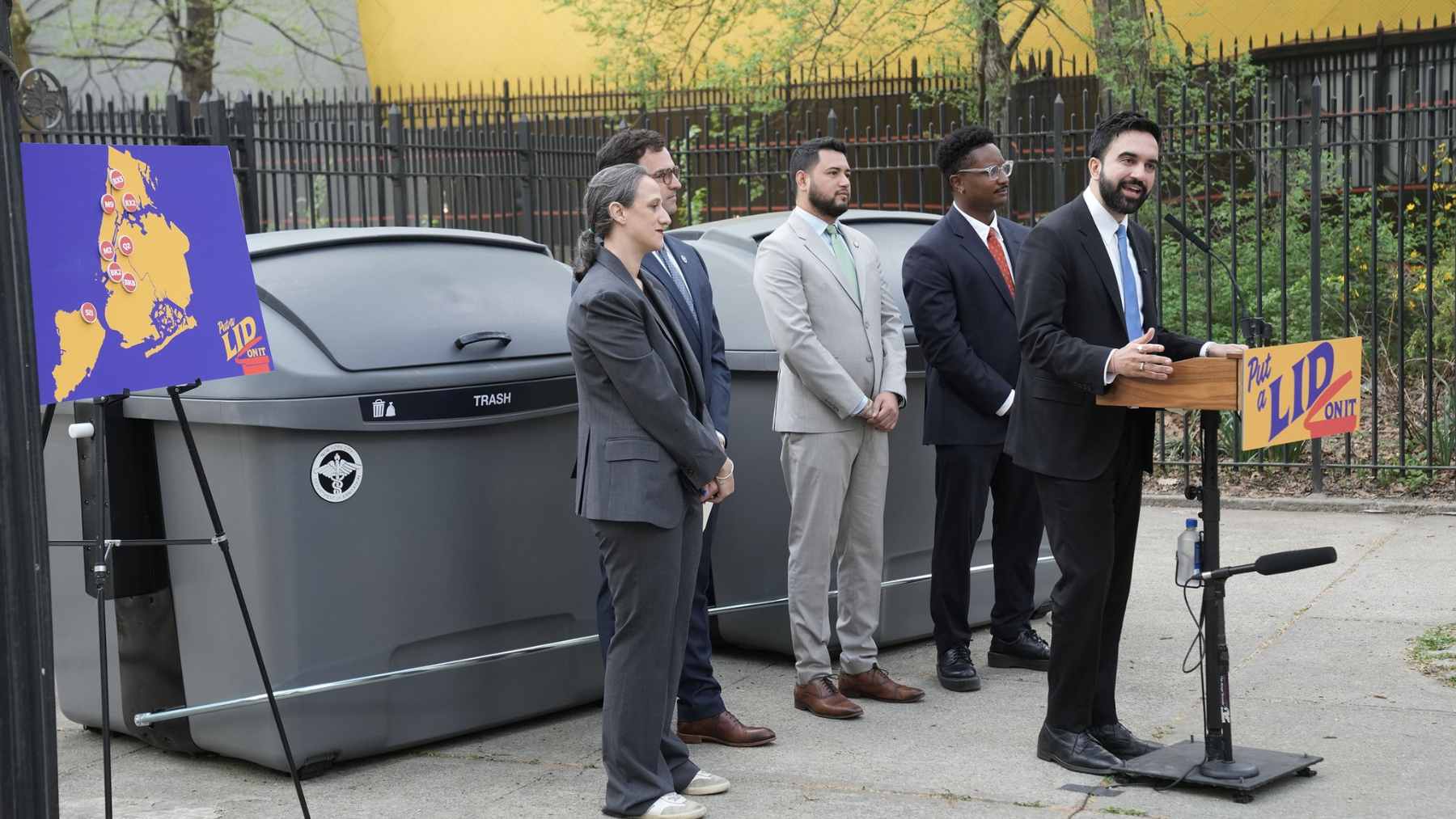
City Hall says it is finally turning that daily nuisance into a timed infrastructure project, with Mayor Zohran Kwame Mamdani announcing that six community districts will get locked, on street “Empire Bins” by the end of 2027, and that all trash bags should be off city streets by the end of 2031.
The city expects the expansion to use more than 6,500 bins serving more than 3,500 medium and high-density buildings.
This is also an ecology story hiding in plain sight. Containerized waste can limit rat access to food, cut down on torn bags and oozing mess, and make sidewalks easier for everyone from delivery workers to parents pushing strollers.
But it also forces a real trade-off over curb space, budgets, and supply chains, and it will only “work” if the city proves it with data, not just cleaner looking blocks.
A timeline that finally has dates
The first wave targets one district in each borough, starting with Brooklyn Community District 8, Bronx Community Districts 2 and 5, Manhattan Community District 2, Queens Community District 2, and Staten Island Community District 1.
More specifically, that means neighborhoods like Prospect Heights, Crown Heights, and Weeksville in Brooklyn, plus Hunts Point and Longwood in the Bronx, and Sunnyside and Woodside in Queens. The official goal is 100% containerization in those districts by the end of 2027, with citywide completion by the end of 2031.
The bins are aimed at higher-density residential buildings, with DSNY planning to assign Empire Bins to buildings with more than 30 units and offering an option to buildings with 10 to 30 units after one to one outreach.
The city points to West Harlem’s Manhattan Community District 9, which has been fully containerized since June 2025, and it says Brooklyn Community District 2 is scheduled to receive Empire Bins in fall 2026. That is the blueprint the administration is now trying to scale.
Money and timing are part of the story, too, and City Hall is being unusually specific about both. In the press conference transcript, Mamdani said the city is adding about $15 million to next year’s expense budget and about $35.5 million in capital funding across this fiscal year and next, even as he cited a $5.4 billion fiscal deficit.
He also said about 70% of city trash is already containerized, and that this phase is meant to tackle the remaining 30% that still goes out in bags from larger buildings.
Why rats and runoff are an environmental story
The core reason this matters is scale. DSNY says New Yorkers throw out over 10,000 tons of garbage a day, and piles of curbside bags make that waste highly visible, easy to rip open, and hard to manage cleanly when the weather turns hot and humid. That sticky summer smell is not just unpleasant, it is a sign that food waste and liquids are sitting out in public space.
Early results are one reason the city feels confident expanding. In the official press conference transcript, DSNY Commissioner Gregory Anderson said 311 rat complaints in Morningside Heights and West Harlem were down by as much as 25% compared with the same time last year.
The 2025 West Harlem announcement also reported six straight months of fewer rat sightings after residential container requirements went into effect. One pilot does not guarantee citywide success, but the direction is clear enough that officials are betting big on it.
The public health angle matters more than most people think
Rats are not only a quality of life issue, they are a disease vector, and sanitation work can put people close to that risk. The CDC notes that leptospirosis bacteria spread through the urine of infected animals and can contaminate water or soil, sometimes persisting for weeks to months in the environment.
The CDC also lists “sewage and sanitation workers” among people at higher occupational risk, and includes “military and first responders” in that higher-risk group as well.
That is where containerization quietly overlaps with safety and resilience, the kind of “boring” systems that matter when emergencies hit. Fewer exposed bags can mean fewer chances for workers and building staff to handle wet, torn trash that may have been in contact with rodents.
City officials have not promised this will eliminate disease, and it would be irresponsible to claim that, but reducing exposure opportunities is still a meaningful part of modern urban hygiene.
The tech behind a cleaner curb is not glamorous, but it is real
Empire Bins are not just bigger containers, they come with access control and specialized collection equipment. In the official transcript, Commissioner Anderson said the bins are assigned to individual buildings and accessible to building managers with a key card, with an app “coming soon.”
He also said managers like the flexibility, since they can load trash on their own schedule and free up indoor space that used to be dedicated to piled-up bags.
The collection trucks are the other half of the system. The mayor’s office says the bins will be serviced by North America’s first automated side-loading trucks, and Anderson added that these trucks “did not exist in North America two years ago.”
He described the challenge as marrying a North American chassis with a European truck body, and even noted the friction of getting inches and centimeters to line up, which helps explain why the city is rolling this out district by district instead of flipping a switch overnight.
A transatlantic business deal with real stakes
There is a business story here that goes well beyond New York. Multiple reports describe DSNY procuring “Empire Bins” from Contenur, a Spain-based manufacturer, with the bins currently manufactured in Europe.
Fast Company previously reported a 10-year, $7 million contract that covered up to 1,500 bins during the earlier phase of the program, which hints at how quickly procurement scales when a pilot becomes a citywide plan.
The truck ecosystem is similarly international. The mayor’s office says DSNY was able to get the side-loading trucks built ahead of schedule with developers from Torino, Italy and from Hicksville and Brooklyn, New York, and the commissioner emphasized that the supply chain now crosses the Atlantic.
If the city keeps ordering at higher volumes, officials have suggested manufacturing could eventually shift to the United States, but for now this remains an import-heavy logistical lift.
The curbside trade-offs are where politics shows up
The friction point is obvious, and New Yorkers will feel it block by block. These bins sit on the street, often in parking lanes, and Fast Company reported that in the West Harlem pilot they took up about 4% of curbside parking in that district.
Commissioner Anderson also said that after the next phase of expansion, the city could have nearly 10,000 Empire Bins on its streets, which is a lot of curb space no matter how you feel about driving.
So what should readers watch next, besides whether the sidewalk looks cleaner? Watch the city’s measurement habits, including 311 rat complaints, missed pickups, and whether access control actually prevents abuse and illegal dumping as the program scales.
Also watch whether DSNY follows through on testing shared bins for smaller buildings without losing accountability, since Anderson said the agency is open to it but wants to avoid misuse.
The press release was published on NYC Mayor’s Office.