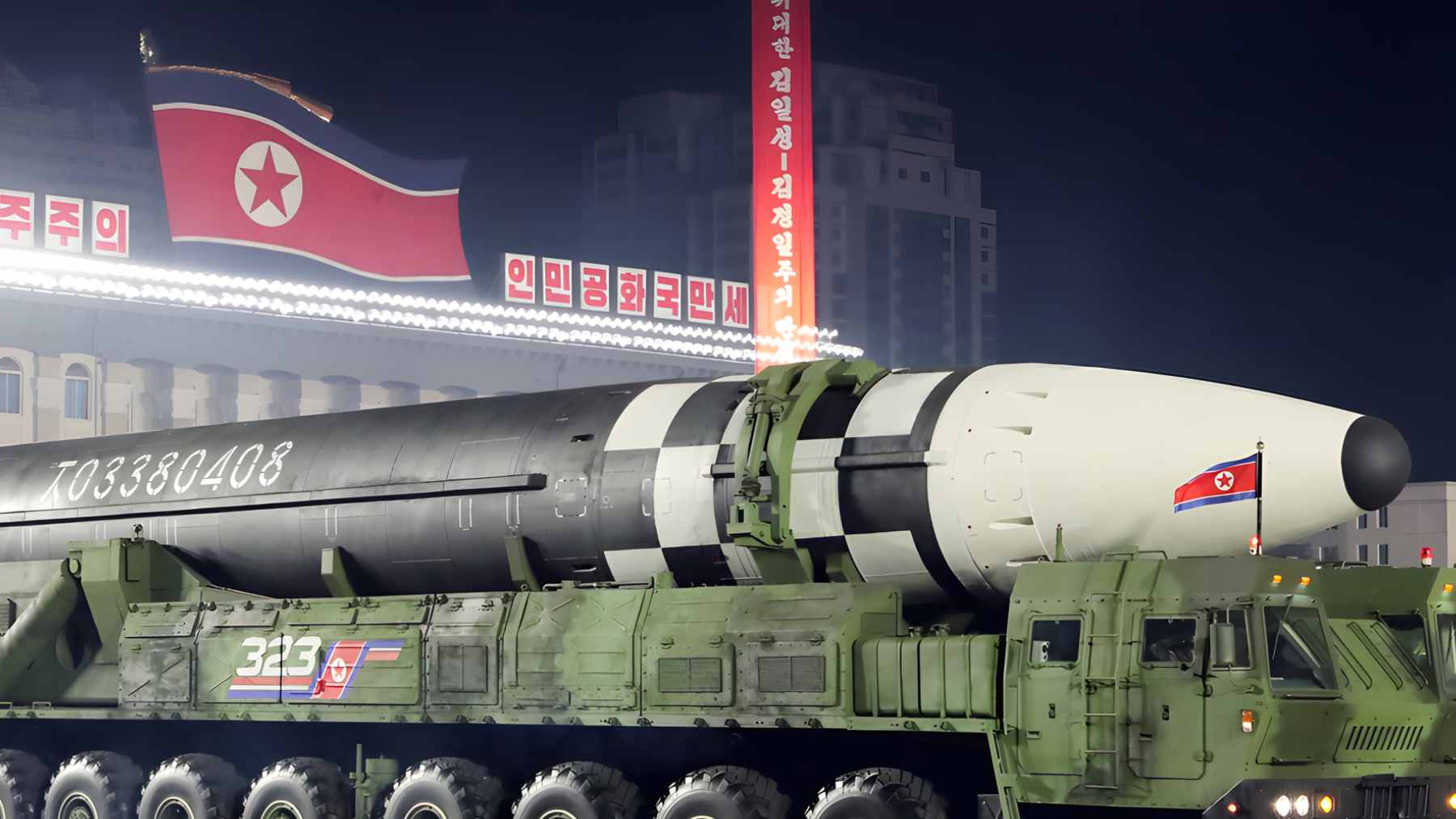
Ukraine’s Ministry of Defense says its engineers have been picking through the wreckage of North Korean KN-23 and KN-24 ballistic missiles used in strikes on Ukrainian cities. The ministry describes manufacturing that looks decades behind modern standards, paired with control units that include civilian electronics that appear to have been sourced by skirting sanctions.
It is a military story, but it is also an environmental one. When a missile fails or gets intercepted, it does not vanish, it breaks into fuel residues, scorched metals, and shattered electronics that can end up in soil and waterways. Where does all that material go after the headlines move on?
What Ukraine found in the wreckage
In a release dated April 16, 2026, Ukraine’s defense ministry says it conducted laboratory studies on fragments from a missile that fell in Kharkiv on January 2, 2024. The team matched parts to drawings from South Korean scientific publications and to factory photos, pointing to seven design similarities that helped confirm the weapons as KN-23 and KN-24.
The ministry also highlights geometry it says is hard to fake. It describes the KN-23 as 110 cm in rear diameter, narrowing toward the front, a dimension it calls unique to North Korea, while the KN-24 is closer to 100 cm. It says the findings feed war crimes investigations and can influence sanctions policy.
Less efficient propulsion and older manufacturing
Ukraine’s defense ministry says the North Korean missiles use a “less energetic” solid propellant, and that their engines are roughly 1.5 times larger and longer than Russian counterparts to reach similar range. It also says “outdated methods” show up in production, including soldering quality it describes as about 50 years old.
For thermal resistance, the ministry says designers added a graphite fairing, calling it a relatively cheap workaround when modern materials are out of reach.
Those details matter beyond the engineering trivia. Bigger engines and older processes usually mean more material input and more waste per unit of performance, a little like a gas guzzler that still struggles up a hill. Only here, the leftovers can land in neighborhoods and fields.
Civilian chips and the hidden e-waste problem
Ukraine’s defense ministry says it found civilian-purpose components from leading brands in missile control blocks and adds that Pyongyang is apparently buying chips in circumvention of sanctions. That turns a battlefield weapon into a global tech supply chain story almost overnight.
There is also a quieter environmental angle that is easy to miss. The UN-backed Global E-waste Monitor reports 68 billion kg of e-waste generated worldwide in 2022 and says only 22.3% was formally documented as collected and recycled.
If you have an old phone sitting in a drawer, you already know how fast electronics pile up, and war just makes that pile messier.
War’s climate ledger and a reporting gap
Missile forensics sits inside a much larger climate and pollution picture. Ecoaction, summarizing work with the Initiative on GHG Accounting of War, estimates that emissions tied to warfare, reconstruction, fires, energy infrastructure damage, and displacement reached 230 MtCO2e from February 24, 2022 through February 23, 2025, with the third year alone adding 60 million tons of CO2 equivalent.
Money and accountability are starting to follow the carbon. Reuters reported that Ukraine was preparing a roughly $44 billion claim linked to wartime emissions, using estimates near 237 million tons of added CO2 equivalent since 2022.
Yet experts also warn that military emissions reporting is inconsistent, and a 2024 CEOBS framework found that among the 20 top military spending countries in 2021, only Germany reported military fuel emissions in line with basic UNFCCC requirements.
Cleanup and recovery efforts
On the ground, the environmental work looks less like diplomacy and more like heavy lifting. It is debris sorting, safe handling, and keeping contaminated material from washing into rivers after the next storm.
UNDP says it has helped Ukraine clear 1 million tons of debris while building local capacity for safer handling, reuse, and recycling during reconstruction. UNEP has also described new funding that includes environmental recovery support for war-affected Ukraine, a reminder that cleanup is now part of the security conversation, too.
What businesses and policymakers should watch
For tech companies and distributors, the key takeaway is not that every shipment is suspect. It is that “know your customer” and “know your reseller” now connect to environmental harm, because conflict can turn electronics into hazardous waste with no formal recycling path.
For policymakers, Ukraine’s missile studies underline how sanctions enforcement, export controls, and environmental recovery are linked.
The official statement was published on Ministry of Defence of Ukraine.