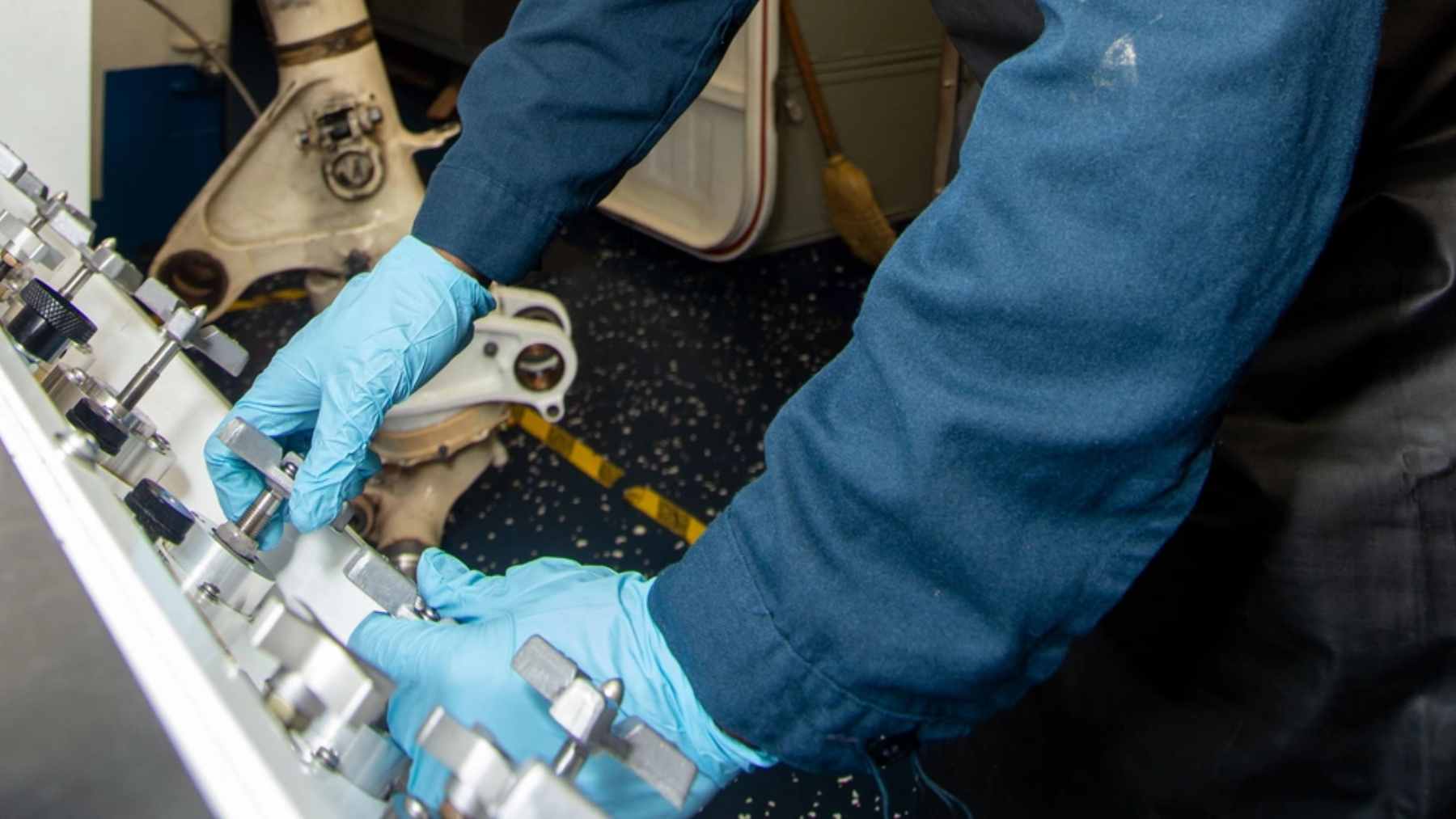
If your phone dies or your car won’t start, you usually have options. You fix it yourself, take it to a local shop, or shop around for parts and labor. In parts of the U.S. military, that basic flexibility can vanish the moment a contract says “only the manufacturer can touch it.”
The readiness and budget impacts are real, but there’s another layer that rarely gets airtime. The Department of Defense is also trying to cut its greenhouse gas emissions, and the way it buys and repairs equipment affects how many parts get manufactured, how many people have to travel to do simple work, and how long high-emitting platforms sit idle waiting for a specialist.
And that’s where “right to repair” stops being a niche procurement fight and starts looking like an environmental story, too.
When repairs stall, emissions keep running
The core complaint is straightforward. Restrictive agreements can leave troops unable to repair equipment they operate daily, even for routine work, which can mean waiting weeks or months for contractors to show up and do jobs service members are trained to handle.
ProPublica captured how absurd that can get at sea. One former officer described a davit crane manual written in Norwegian and said the Navy spent thousands of dollars to fly a contractor from Norway to change two fuses, while sailors logged long weeks in port “doing, honestly, nothing.”
Here’s the climate link that’s easy to overlook: DoD defines “Scope 3” emissions as those tied to activities like procurement of goods and services and business travel, and it says those Scope 3 emissions may be equal to or greater than its direct Scope 1 and 2 footprint.
When repairs require extra travel, extra shipping, and extra replacement parts, those decisions show up in the Pentagon’s emissions math even if they look like “just logistics.”
Technical data is the real spare part
The “right to repair” argument in defense often comes down to technical data. Service members need detailed information to diagnose faults, identify part numbers, and perform repairs safely, and without it, even capable maintainers can end up stuck filing requests and waiting.
The F-35 program illustrates how this plays out on the ground. In the GAO’s reporting, maintainers described technical data gaps that prevent certain repairs, and the agency noted cases where maintainers waited 30 to 60 days for responses to technical data requests, sometimes longer when problems were complex.
Modern tech raises the stakes. If a unit wants to fabricate a replacement part with a 3D printer or a CNC machine, that only works when the government has access to the right digital files and specifications, and that access is often treated as proprietary.
In practical terms, the military can own the hardware, but not the “instructions” that make it usable in the field.
The F-35 shows how vendor lock plays out
On paper, DoD has said it wants to transition more maintenance responsibilities from contractors to government personnel.
In practice, the GAO found maintenance challenges were hurting F-35 readiness, with the fleet’s mission-capable rate around 55% in March 2023 and more than 10,000 components waiting to be repaired above desired levels.
The details get even more telling in the GAO’s full report. Depot officials said maintenance manuals could be ambiguous and not detailed enough to complete repairs, and the lack of technical data and disputes over proprietary information contributed to delayed activations of depot workloads.
Imagine owning a car where the repair manual is vague on purpose and the parts catalog is locked away.

There’s also an environmental knock-on effect that doesn’t require fancy modeling to understand. If repair turnaround times stay slow, programs can lean toward buying replacements instead of repairing what they already have, which pushes more manufacturing and shipping through the supply chain.
That is more material throughput, more energy use, and more waste risk, even before you count the aircraft sitting idle.
Why contractors fight repair access
Defense industry groups often frame repair restrictions as an intellectual property issue. Their basic claim is that loosening control over technical data could weaken incentives to invest in research and development, especially for advanced platforms.
But DoD’s own competition analysis warns that intellectual property and data rights practices can be used to limit competition and induce “vendor lock,” leaving the government dependent on a single company for upgrades, sustainment, and even basic lifecycle support.
It also notes that DoD has tools to require broader rights in certain technical data needed for operation, maintenance, installation, or training, but those choices have to be made early and negotiated hard.
There’s a business model question here that lawmakers and watchdogs keep circling back to. A one-pager tied to the Warrior Right to Repair Act argues that monopolizing repairs has been a consistent profitability driver for contractors, and the legislation aims to force “fair and reasonable” access to parts, tools, and information.
If repairs are where the margin lives, giving the customer more self-service is naturally going to face resistance.
What to watch in the next defense bill
In late 2025, the right-to-repair push ran into a familiar wall. Wired reported that key provisions were removed from the finalized Fiscal Year 2026 National Defense Authorization Act, despite support that advocates said stretched across party lines and included senior voices, and Senators Elizabeth Warren and Tim Sheehy publicly criticized the removal.
The money story is not subtle, either. Reuters reported that Warren has pressed defense industry groups on repair-related profits and highlighted examples where a small component could carry a radically higher price tag when the government had to buy it through contractor-controlled channels.
For taxpayers, it’s the same feeling as paying a surprise “service fee” for a simple fix, except the bill is national and the stakes are readiness.
There are still signs the policy is moving, at least in parts. Warren and Sheehy pointed to the Pentagon using existing authorities, and Warren’s office has highlighted the Army’s stated intent to bake right-to-repair provisions into contracts and pursue modifications to current ones, which could reduce contractor travel and speed up field repairs.
If DoD is serious about cutting emissions tied to procurement and business travel, repair access is one of those unglamorous levers that can matter.
The press release was published on Senator Elizabeth Warren’s website.