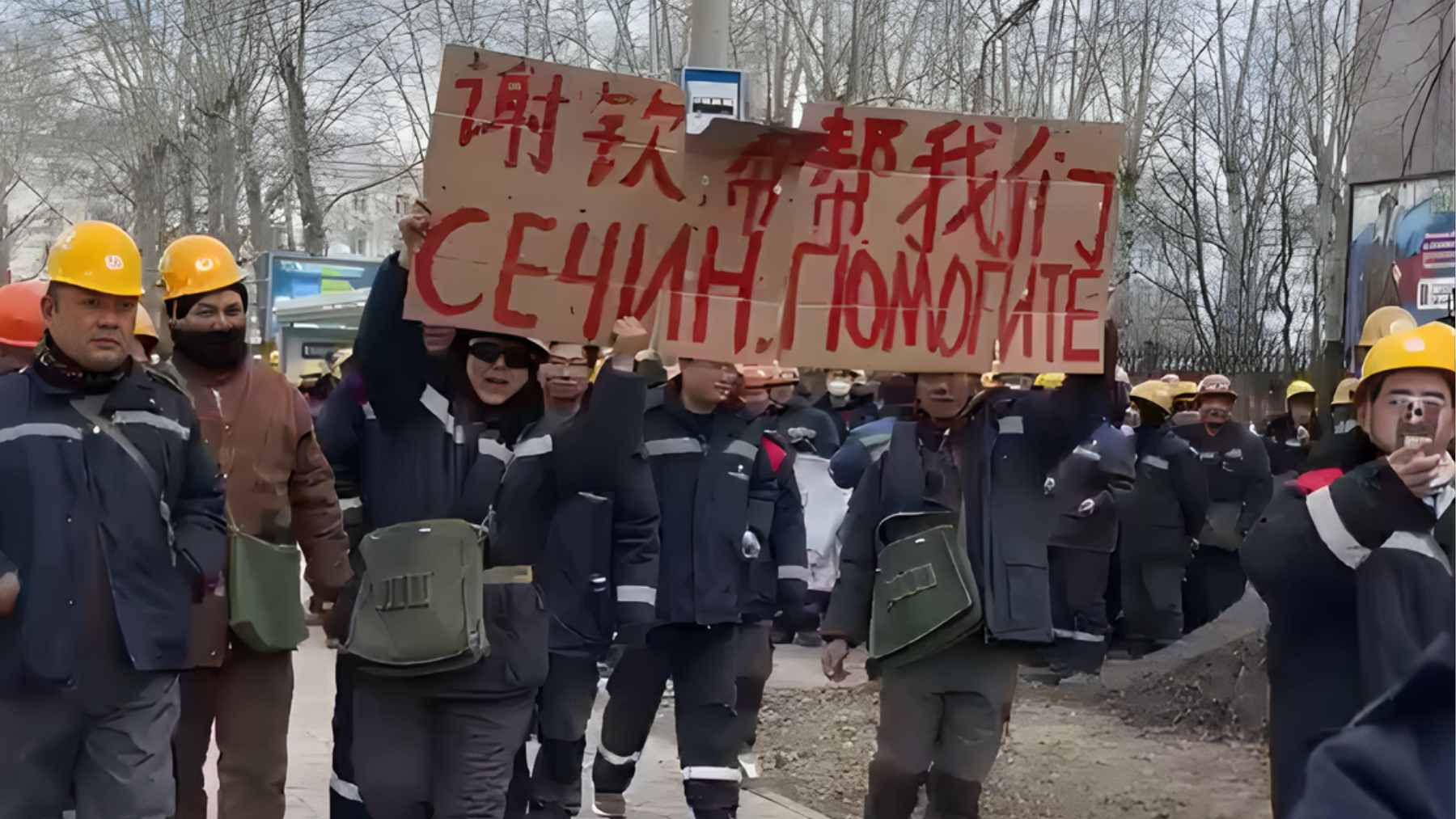
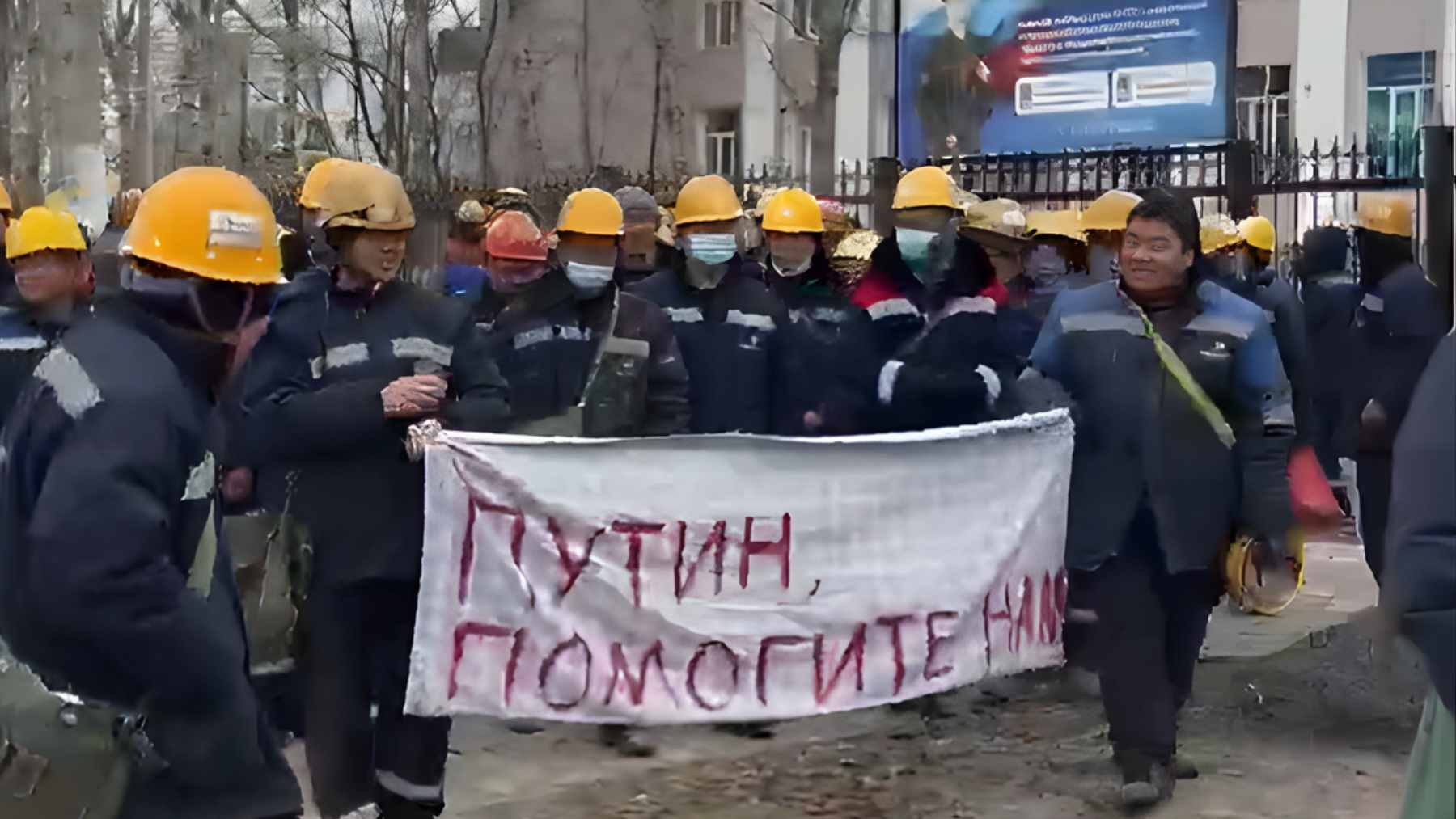
More than 100 Chinese workers marched through Komsomolsk on Amur in Russia’s Far East on April 12 to protest what they say are unpaid wages tied to work at a Rosneft refinery site. Some reports put the crowd closer to 200, and videos showed demonstrators carrying signs that appealed directly to President Vladimir Putin and Rosneft CEO Igor Sechin for help.
On paper, this is a labor dispute involving a contractor and a payment chain. But in the real world, when industrial projects stall and workers stop trusting the system, safety checks can slip, upgrades can freeze, and emissions can quietly climb. What happens to leak repairs when paychecks stop showing up?
What happened in Komsomolsk on Amur
Reports from regional and independent outlets say the protesting workers were employed by Petro Hehua, described as a Russian-Chinese contractor working near the Komsomolsk refinery. After the march, some protesters sat on sidewalks and lawns along a central avenue while police and national guard forces were visible nearby.
Local authorities acknowledged the dispute and said officials had “established contact” with the workers and promised to “provide assistance.”
In the same breath, officials also claimed the refinery had paid Petro Hehua in full and did not owe wages directly to the contractor’s personnel, which hints at a breakdown somewhere between invoices and individual pay.
This was not the first time Chinese workers connected to the site have protested over pay, with past reporting pointing to similar unrest years earlier. That detail matters because repeat disputes can be a warning sign that working conditions and oversight are still not stable on remote, high pressure industrial projects.
A refinery that sits at the intersection of fuel and geography
Rosneft describes the Komsomolsk refinery as a key supplier of petroleum products to Russia’s Far East, with crude distillation capacity of 8.0 million tons per year. The company also says the plant specializes in motor fuels and jet fuels, which makes it economically important even when global markets feel far away.
The same Rosneft profile notes that past upgrades helped the refinery transition to producing gasoline that meets environmental grades 4 and 5. That is the nuts and bolts side of “cleaner fuel” policy, meaning better specifications and fewer pollutants, even if it still starts with oil.
In practical terms, a refinery like this is not just a set of tanks and pipes. It is also a maintenance calendar, a workforce that needs to show up every day, and a long line of suppliers that keep critical parts moving across huge distances.
When paychecks stop, pollution risks can rise
Refineries and fuel projects run on routine, and routine is fragile. When contractors walk off a site or slow work down, the first visible impact can be delays and cost overruns, but the hidden impact can be postponed inspections and slower repairs of small leaks.
That matters because methane and other hydrocarbon leaks across the fossil fuel supply chain are a major climate issue. The International Energy Agency estimates the energy sector was responsible for nearly 130 million tons of methane emissions in 2023, with oil operations alone responsible for around 50 million tons.
Then there is the part that hits close to home. The IEA also estimates that around 30% of fossil fuel methane emissions in 2024 could have been prevented at no net cost, largely because captured gas can be sold instead of wasted. That is the kind of inefficiency that shows up in the atmosphere, and eventually, on long and hot summer days.
Sanctions and conflict are squeezing the energy system
Rosneft’s pressure is not happening in a vacuum. In October 2025, the US Treasury announced sanctions targeting Rosneft under Executive Order 14024 for operating in Russia’s energy sector, part of a broader effort to restrict revenue streams connected to Moscow’s actions.
The European Union also tightened its transaction ban on Rosneft in an October 2025 sanctions package, explicitly naming the company alongside other major state-linked energy players. For businesses, that can mean harder financing, more compliance checks, and fewer counterparties willing to touch deals that feel legally risky.
At the same time, the war is putting physical stress on energy infrastructure. Reuters has documented a renewed wave of Ukrainian drone attacks on Russian energy sites in recent weeks, including refinery disruptions and fires at oil terminals, which adds another layer of operational risk across the sector.
Tech is making emissions harder to ignore
The oil system used to be easier to look away from, especially in remote regions. Not anymore. The IEA says measurement-based approaches are improving, including the use of satellites, and it notes revisions to estimates for downstream emissions as new pipeline data and satellite detection become part of the picture.
Regulators are pushing in the same direction. The European Commission says the EU’s Methane Regulation entered into force in August 2024 and requires operators to measure, monitor, report, and verify methane emissions, while also pushing action on leaks and limits on routine flaring and venting.
Even when a barrel never enters the EU, that kind of policy helps set expectations for what “responsible supply” should look like.
There is a business angle here, too. If satellites and reporting rules make emissions more visible, then cutting leaks becomes less like a public relations move and more like a competitiveness issue, especially for firms trying to keep buyers, insurers, and shippers on board.
What readers should keep in mind next
The immediate question is simple: will the workers get paid, and will construction and maintenance move forward without more disruptions? Prosecutors have said they are investigating labor law compliance, and local officials say they have opened channels with the protesters, so the next steps should leave a paper trail.
The bigger takeaway is harder to shake. When sanctions, conflict, and cash flow problems stack up inside the oil economy, environmental risk does not stay neatly contained, and the warning signs can start with something as basic as a missing paycheck.
The official statement was published on U.S. Department of the Treasury OFAC.