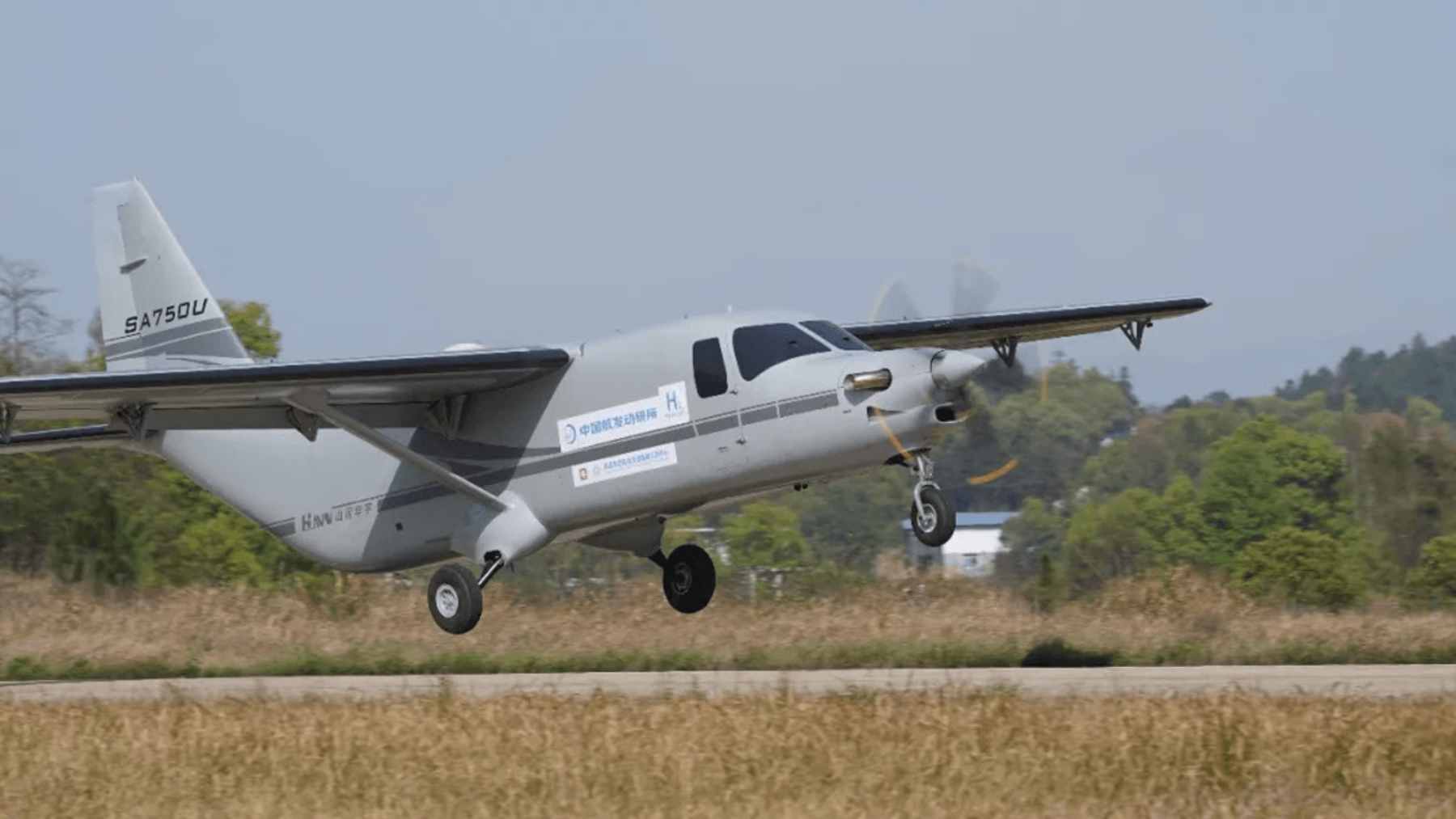
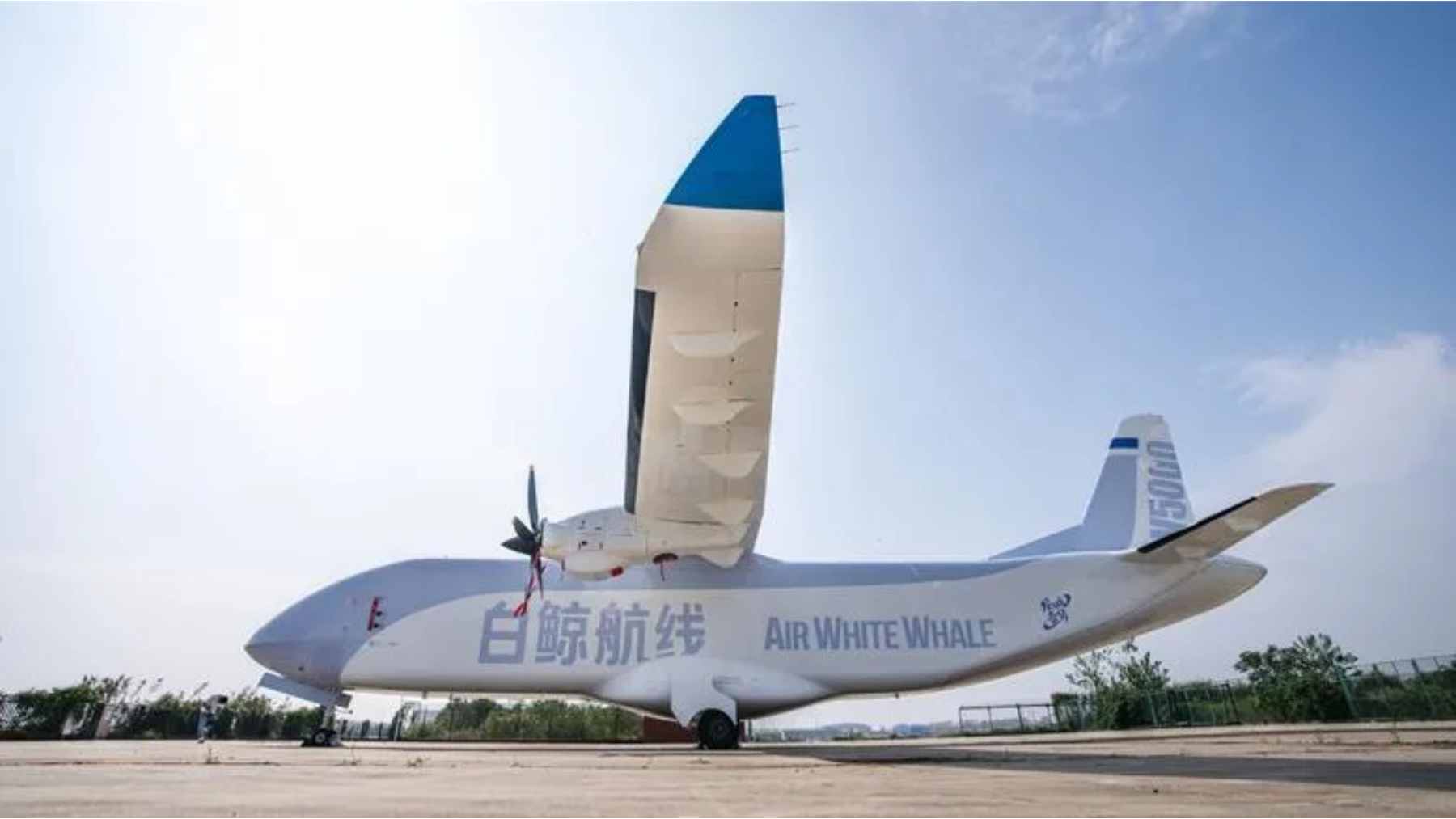
What if the first real step toward zero-emission flight is not a sleek passenger jet, but an unmanned workhorse hauling boxes between regional airfields? On April 4, 2026, a 7.5 metric ton unmanned cargo aircraft in central China completed a short test flight powered by a megawatt-class hydrogen turboprop engine called AEP100.
It was only 16 minutes and 36 kilometers, but it moved hydrogen aviation from lab hardware toward something closer to operations.
Not bad for a first outing. The test also came with a blunt message from the developers that this is as much about building an industrial chain as it is about flying an airplane.
What happened in Zhuzhou
Xinhua reported the aircraft took off from Zhuzhou Lusong Airport in Hunan Province, reached a maximum speed of 220 km per hour (about 137 mph), and flew at about 300 meters (about 984 feet) altitude before returning safely.
The aircraft covered 36 kilometers (about 22 miles), and the Aero Engine Corporation of China (AECC) said the engine ran normally and stayed in good condition through the full flight profile.
The engine, AEP100, was developed by AECC’s Hunan Power Machinery Research Institute, according to Xinhua’s reporting. State media and AECC also described the test as the world’s first flight of a megawatt-class hydrogen-fueled turboprop engine.
That claim may be broadly true in the specific category they are defining, but some industry reporting has flagged that “first” depends on what you count and how you measure a system’s power level. If you have ever followed clean tech, you have seen this movie before.
Why a megawatt changes the conversation
A megawatt is roughly 1,341 horsepower, which is firmly in “real aircraft” territory. Still, it is below the power levels used by many larger turboprops, so this flight looks like the start of a scaling curve, not the finish line.
For comparison, the ATR 72-600 regional airliner lists takeoff power around 2,050 kW per engine. In practical terms, that means the megawatt-class is already in the neighborhood for short-haul aircraft and heavy cargo drones, the platforms that rack up hours without the spotlight.
Cargo drones make the test bed less risky, and that matters for business. Fewer people onboard means fewer certification steps at the start, and shorter hops mean you can build fueling sites in a limited number of places. It is the same logic that made early electric vehicles popular in city fleets.
The climate promise and the fine print
Aviation is not the biggest emitter, but it is one of the toughest to clean up. The International Energy Agency estimates aviation produced about 2.5 percent of global energy-related CO2 emissions in 2023, almost 950 million metric tons of CO2.
Even that understates aviation’s climate influence to some extent, because non-CO2 effects like contrails add warming on top of CO2. That is one reason aviation has become a test case for climate policy that can feel abstract until you are staring at a flight board.
Hydrogen can eliminate CO2 at the point of use, whether it is used in a fuel cell system or burned in an engine. But the climate math changes if hydrogen is made from fossil fuels without deep emissions controls, and hydrogen combustion can still create nitrogen oxides that regulators care about.
The supply chain problem everyone runs into
Hydrogen is light by weight but bulky by volume, and liquid hydrogen is cryogenic. Hydrogen liquefies around minus 253 degrees Celsius, which turns tanks, insulation, and boil-off control into first-order engineering problems for aircraft and airports.
AECC’s messaging makes it clear they are thinking beyond the nacelle. The official reporting describes work across renewable hydrogen production, storage and transport, refueling infrastructure, and new materials, all packaged as a “complete technological chain.”
This is where the business competition gets real. Building hydrogen at scale means electricity, water access, and capital, and every one of those inputs shows up on somebody’s bill when that sticky summer heat kicks in. So even a successful test flight can be the easy part.
Why defense planners are watching too
Unmanned logistics is not just a consumer convenience story. Short-range cargo aircraft can support disaster response, remote communities, and supply runs when roads are blocked or ports are jammed, and those missions tend to happen under tight time pressure.
There is also an obvious dual-use angle. A heavy lift cargo drone is a natural platform for military logistics, and defense organizations have long looked for ways to reduce fuel convoy risks and improve energy security, even if carbon accounting is not always the main driver.
What comes next is not another flashy headline, but repeatability. Longer flights, wider weather envelopes, and clear lifecycle emissions accounting will decide whether hydrogen aviation becomes a niche tool or a broader shift.
The official report was published on Xinhua.