When the power goes out, most of us don’t think about “energy strategy.” We think about the fridge, the phone battery, and whether the house is getting too hot.
That’s exactly the moment a 19-year-old entrepreneur in Palm Harbor, Florida, is trying to redesign, with a portable backup unit he says can keep homes running through hurricane outages without gas fumes or generator noise.
The bigger point is hard to miss. U.S. outage hours are being driven by major storms, and the official numbers show 2024 customers averaged about 11 hours without electricity, nearly double the decade before, with hurricanes accounting for most of that time.
That reality is pushing “quiet power” from a nice-to-have gadget into a climate resilience tool with real business and even military implications.
A garage-built answer to blackout anxiety
Noah Bild told FOX 13 Tampa Bay he started building batteries after tinkering with RC cars and a sport called one-wheeling, then spent two years developing his OffGrid Pro in his home garage. “Anything hands-on, anything electric” became the theme, and last year’s hurricane season made it feel urgent.
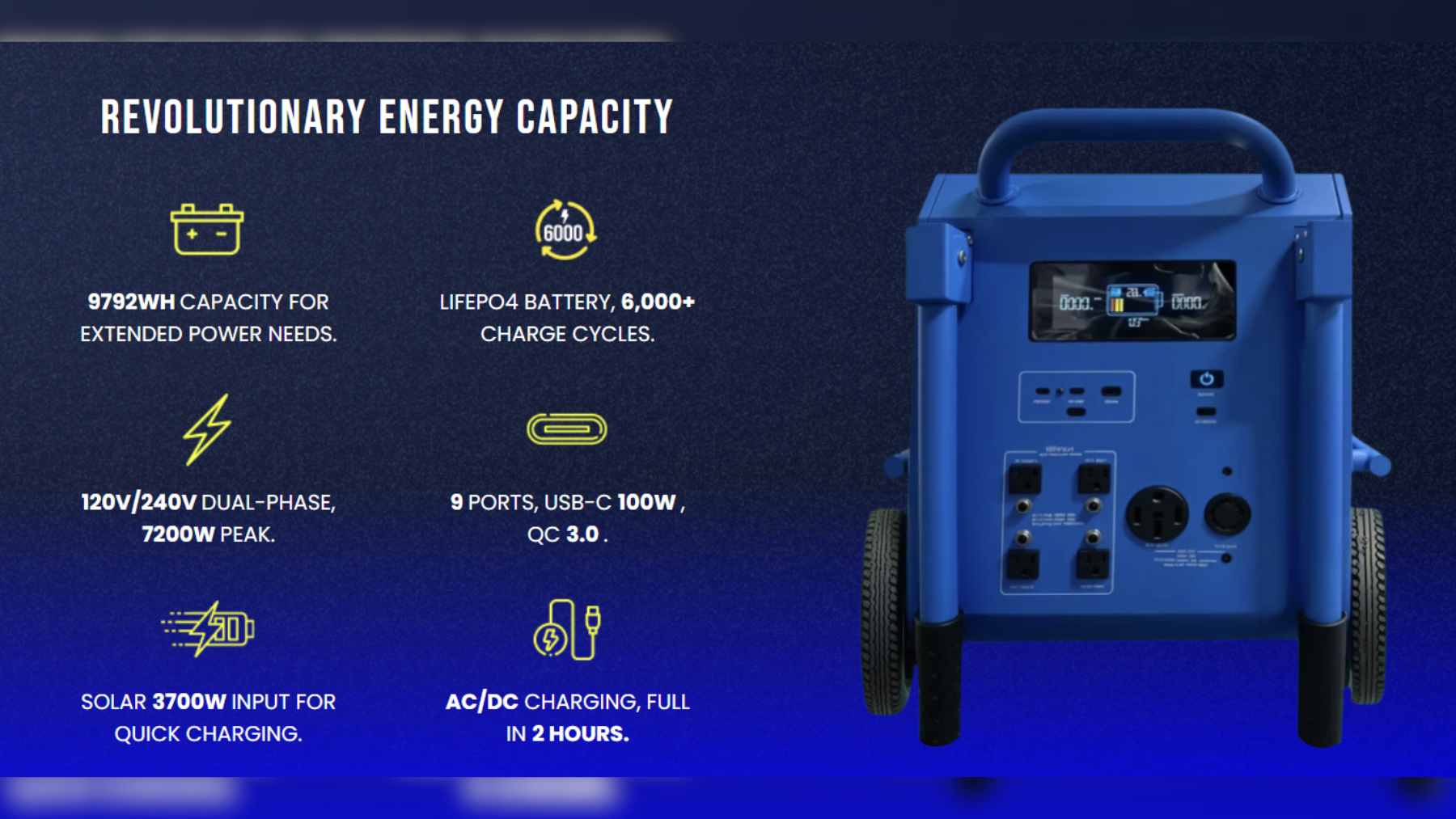
His pitch is simple and practical. Bild says the unit is “odorless, fumeless, silent” and uses lithium iron phosphate batteries, and he claims a fridge can run “2 to 3 days” on the power bank alone, with solar panels extending that dramatically.
His mother, Traci Bild, also told FOX 13 they’ve been working through certifications and electrical standards, which is the unglamorous part of turning a prototype into a real product.
The hidden health and pollution cost of gas generators
Here’s the uncomfortable truth: portable generators can be deadly when used incorrectly, because they produce carbon monoxide, the odorless gas people cannot sense until it’s too late.
In a 2024 safety release tied to Tropical Storm Helene, the U.S. Consumer Product Safety Commission cites the CDC saying more than 400 people die each year in the U.S. from carbon monoxide poisoning, with about 92 deaths linked to portable generators.
That matters for the environment, too, in a very local way. Batteries don’t burn fuel at the curbside, which means no exhaust fumes drifting toward open windows on a muggy night, and no idling engine noise in a neighborhood already under stress.
Still, batteries are not magic boxes, so buyers should treat safety as a feature to verify, not a marketing word.
Business is betting big on “half the cost” backup power
Bild told FOX 13 the OffGrid Pro is meant to rival the Tesla Powerwall, which he said can retail for more than $10,000, and he framed his product as offering similar capability for about half the price. That is a bold claim, and it lands in a market where shoppers are already doing hard math about outages, financing, and the electric bill.
Industry pricing is also messy because installation and permitting can swing totals. A 2026 consumer cost guide from Angi puts typical installed Powerwall systems in a wide range–roughly $11,000 to $30,000 depending on configuration, with an average around $17,000.
In other words, “half price” can mean very different things once electricians, permits, and home wiring upgrades enter the picture.
Battery chemistry is where tech meets sustainability
OffGrid Pro uses lithium iron phosphate, often shortened to LFP, which is getting serious attention because it tends to trade a bit of energy density for stability and long life.
One open-access comparative study published in 2024 found LFP batteries showed safer profiles, lifecycles beyond 2,000 cycles, and costs about 30% lower than similar alternatives in that analysis, while also discussing environmental footprint differences across chemistries.
But the nuance matters. Even “clean” batteries still depend on mining, manufacturing, and end-of-life handling, and the greenest kilowatt-hour is usually the one you do not need to store because your home is efficient in the first place.
At the end of the day, resilience tech works best when it’s paired with smarter consumption, not just bigger batteries.
The defense angle hiding in plain sight
Portable backup power is not only a homeowner story. Military planners have been wrestling with energy resilience for years because fuel supply lines and centralized power can become vulnerabilities, especially when weather or adversaries disrupt logistics.
A U.S. Army professional journal article on tactical microgrids argues the Army recognizes logistical vulnerabilities and pollution tied to diesel dependence, and it points to energy storage and limited renewables as part of modernizing deployable power.
The same theme shows up in defense policy circles.
A National Defense University Press piece warns that defense facilities draw most electricity from the national grid, describes that grid as increasingly vulnerable to failures from natural disasters and cyberattacks, and argues for microgrids and integrated energy storage to improve resilience and security.
If your town is thinking about shelters, water pumps, and emergency communications, that overlap is hard to ignore.
What to watch before buying the next “silent generator”
So what should readers keep in mind before spending real money? Look past the headline specs and ask about third-party safety certifications, indoor-use guidance, and how the system behaves under heavy startup loads like refrigerators and window AC units. Those details matter when everyone’s trying to charge phones at once and the heat will not quit.
And if you still rely on a gas generator, follow the basics every single time. The CPSC says never operate one inside a home or garage and keep it at least 20 feet away from the house, because opening windows is not enough to stop carbon monoxide buildup. In a blackout, simple habits save lives.