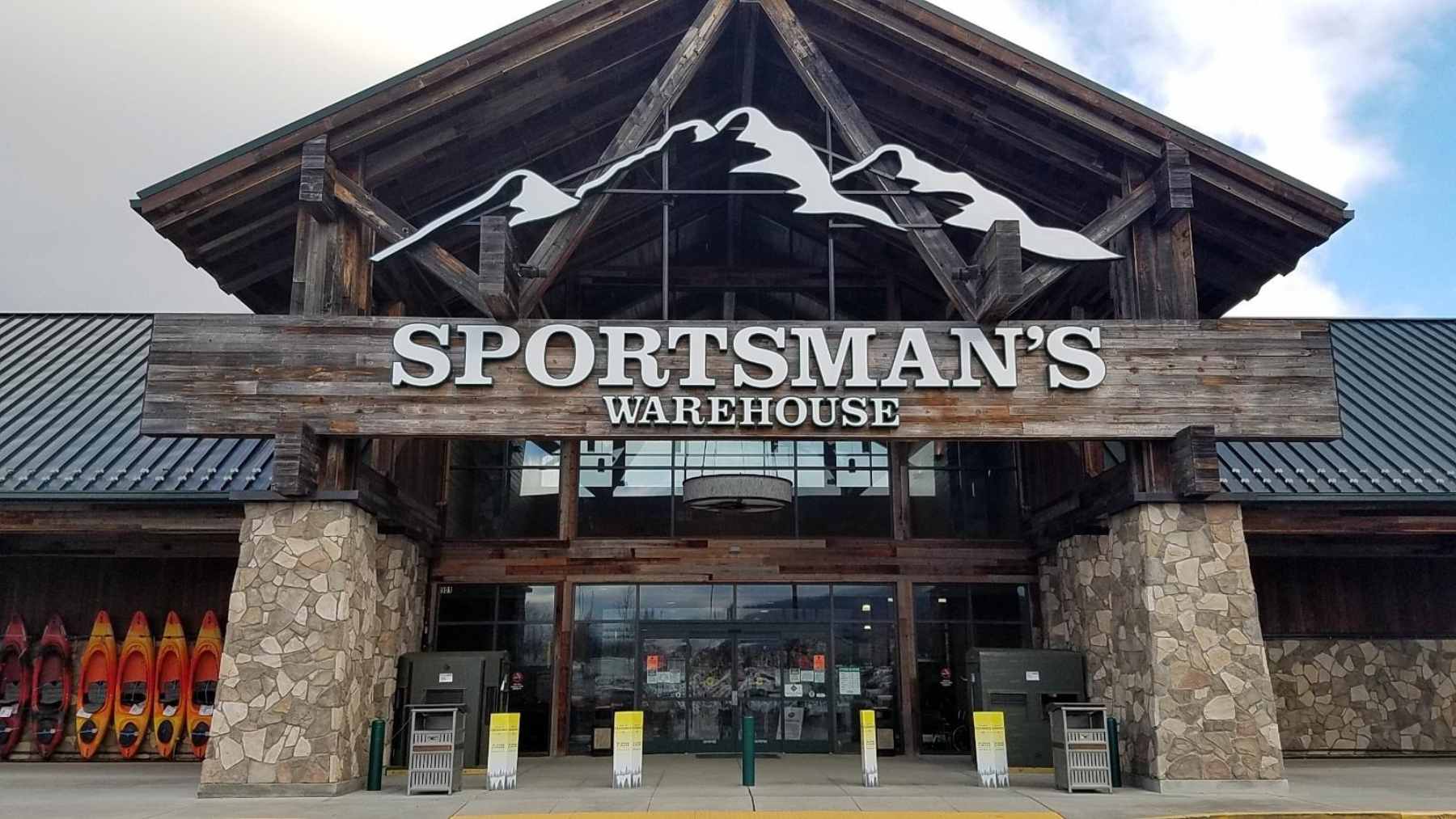
Sportsman’s Warehouse is weighing the closure of about five stores after identifying locations hurt by “underperformance and lack of profitability,” even though the retailer’s preliminary fiscal 2025 results came in ahead of its own expectations.
The company said full-year net sales should reach about $1.21 billion, same-store sales should rise 1 percent, net debt should fall 6.1 percent to about $90 million, and inventory should drop 8.5 percent to roughly $312.9 million.
How can both things be true at once? In practical terms, a retailer can show modest improvement and still decide some stores are no longer worth keeping.
Sportsman’s Warehouse said those five locations together would have contributed about $1.5 million in negative adjusted EBITDA, which helps explain why a smaller footprint is now under review.
Why closures are still on the table
Chief executive Paul Stone said the fourth quarter “exceeded our expectations” after a softer start in November and early December. He also said 2025 marked the first year of positive same-store sales growth since 2020. But better sales do not automatically fix weak stores, lease costs, or the pressure to keep cash flowing.
That is the part retail shoppers usually do not see when they run in for boots, bait, or a last-minute camping stove.
The chain still has a wide reach. As of November 1, 2025, Sportsman’s Warehouse operated 146 stores across 32 states, with a strong concentration in the West. That footprint gives it scale, but it also means local slowdowns can hit hard when consumer demand turns uneven.
A warning sign inside a big outdoor economy
That is what makes this more than a routine store story. By the federal government’s own figures, outdoor recreation accounted for 2.4 percent of U.S. GDP in 2024, or $696.7 billion in value added, while gross output reached $1.3 trillion.
Even so, growth cooled. Real GDP for the outdoor recreation economy rose 2.7 percent in 2024 after a 5.3 percent jump in 2023.
So, yes, Americans are still spending on life outdoors. But not every seller of fishing rods, hunting gear, and camping supplies gets an easy ride. For the most part, Sportsman’s Warehouse looks like a retailer trying to keep a turnaround alive while cutting loose stores that no longer fit the math.
The press release was published on GlobeNewswire.